
Understanding ICANN’s Financial Framework: A Deep Dive into Registry and Transaction Fees
The intricate world of internet governance, spearheaded by the Internet Corporation for Assigned Names and Numbers (ICANN), is often unseen by the average user. Yet, its operations are fundamental to the stability and accessibility of the global digital landscape. A critical aspect of ICANN’s function involves the management of Top-Level Domains (TLDs) and, by extension, the financial agreements that underpin this vast system. These agreements, particularly those concerning registry and transaction fees, represent a complex tapestry woven from historical precedents, market dynamics, and ongoing negotiations.
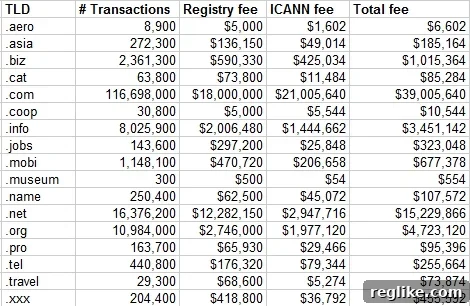
For those interested in the economics behind domain names, examining ICANN’s revenue model provides fascinating insights. Its financial structure, especially regarding existing TLDs, has evolved through a series of bespoke arrangements, often reflecting the internet’s early growth and the dominance of foundational domains. ICANN’s recently published draft budget offers a rare glimpse into how it forecasts its revenue from these diverse contracts, painting a detailed picture of its financial ecosystem. When we juxtapose these registry fees with the additional transaction fees ICANN collects from every domain registration or renewal, the financial architecture becomes even more compelling.
ICANN’s Revenue Streams: A Dual Approach to Funding Internet Governance
ICANN operates as a non-profit public-benefit corporation, tasked with coordinating the global Internet’s systems of unique identifiers. This monumental task requires substantial resources, which are primarily generated through two distinct but interconnected revenue streams: fees paid by registry operators and transaction fees levied on domain registrations. Understanding these streams is crucial to comprehending how the organization sustains its global operations and initiatives.
Registry Operator Fees: A Legacy of Diverse Agreements
Registry operators are the entities responsible for maintaining the database of domain names for a specific TLD. For example, VeriSign manages the .com and .net registries. ICANN’s contracts with these operators are anything but uniform. They represent a “hodgepodge” of one-off arrangements, a testament to the organic and often reactive growth of the internet’s domain name system over the past few decades. These contracts vary significantly in structure, reflecting different eras of internet development, negotiation power, and market conditions.
Some registry agreements stipulate a flat annual fee, paid irrespective of the number of domains registered within that TLD. This model, often found in older, highly established TLDs, can result in a remarkably low per-domain cost for the registry operator, especially as the number of registered domains grows exponentially. Other contracts are structured around a per-domain fee, where the registry operator pays ICANN a set amount for each domain name under their management. This model is more common among newer TLDs and provides ICANN with a direct revenue stream tied to the TLD’s growth. There are also hybrid models that combine elements of both, perhaps with a minimum annual fee coupled with a per-domain charge above a certain threshold.
The historical context behind these varied arrangements is vital. In the early days of the internet, when the commercial value and scale of domain names were less understood, contracts were often negotiated on an ad-hoc basis. These foundational agreements, particularly for highly popular TLDs like .com, have since become deeply entrenched, making renegotiation a complex and often contentious process. This legacy structure continues to shape ICANN’s revenue projections and influence ongoing debates about fairness, competition, and the future evolution of domain name fees.
Transaction Fees: The “Domain Tax” on Every Registration
Separate from the fees paid by registry operators, ICANN also collects a transaction fee, often referred to as a “domain tax,” on virtually every domain name registered or renewed across all TLDs. This fee is typically a small, fixed amount per domain per year, passed on to ICANN by registrars, who in turn collect it from registrants. While individually small, this fee aggregates into a substantial and consistent revenue stream for ICANN, given the billions of domain name transactions occurring globally each year.
The purpose of the transaction fee is to provide a broad and stable financial base for ICANN’s operational costs, including policy development, technical operations, and enforcement. It ensures that all participants in the domain name system contribute to its upkeep, reflecting the shared benefit of a secure and stable internet. However, it also means that the final cost of a domain name to an end-user includes not only the registrar’s markup and the registry operator’s fee, but also this direct contribution to ICANN’s coffers.
The intriguing aspect arises when comparing the revenue generated from these two sources for specific TLDs. In some cases, the “domain tax” collected by ICANN from registrants can exceed the registry fee it receives from the operator of that TLD, highlighting an interesting dynamic in ICANN’s funding model and the long-term implications of its historical contractual agreements.
A Closer Look: .COM vs. .NET – VeriSign’s Varied Agreements
The differences in ICANN’s financial arrangements become particularly clear when examining the contracts for two of the internet’s most prominent TLDs: .com and .net, both managed by VeriSign. The disparities in these agreements offer a compelling case study in the complexities of internet governance and the impact of legacy contracts.
The .COM “Sweet Deal”: A Flat Fee and Dominant Market Share
One of the most striking observations in ICANN’s revenue data is the agreement VeriSign holds for the .com registry. VeriSign currently pays ICANN a flat annual fee of $18 million for the privilege of operating the .com TLD. Given the enormous number of .com domains in existence—well over 150 million—this flat fee translates to an astonishingly low cost of approximately 15 cents per domain for VeriSign annually, purely in terms of its payment to ICANN.
This “sweet deal” for VeriSign is often a point of discussion and contention. It is a product of historical agreements from a time when the internet was nascent and the explosive growth of .com domains was unimaginable. The flat fee structure means that as the .com domain space continues to expand, VeriSign’s per-domain cost to ICANN effectively decreases, enhancing its profitability from this highly lucrative TLD. What makes this even more intriguing is that ICANN collects an 18-cent per-domain transaction fee from registrants for every .com domain. This means ICANN collects more revenue from its “domain tax” on .com domains than it does from VeriSign’s registry fee. This peculiar inversion underscores the enduring power of legacy contracts and the significant role of transaction fees in ICANN’s overall budget.
The .com contract’s structure has been a subject of intense scrutiny during its renewal periods, with debates focusing on pricing caps, competition, and the fairness of an arrangement that significantly benefits a single entity managing such a critical piece of internet infrastructure. Despite the low per-domain fee paid to ICANN, the market value and demand for .com domains allow VeriSign to set wholesale prices for registrars that ultimately make .com one of the more expensive TLDs for end-users, reflecting its unparalleled brand recognition and trust.
The .NET Contract: A Per-Domain Fee Structure
In stark contrast to the .com agreement, VeriSign’s contract for the .net TLD operates on a different financial model. For .net, VeriSign pays ICANN a set fee of 75 cents per domain. This per-domain structure means that VeriSign pays five times as much per .net domain to ICANN than it does for a .com domain. This disparity highlights the lack of standardization across ICANN’s TLD contracts and the varying terms negotiated over time.
The difference in fee structures between .com and .net, despite both being managed by the same registry operator, raises interesting questions about market dynamics and pricing. As the original text points out, “And yet .com domains cost more.” This seemingly counterintuitive observation can be explained by several factors. While VeriSign pays a higher per-domain fee to ICANN for .net, the ultimate price paid by the end-user is influenced by more than just this single component. It includes VeriSign’s wholesale price for .net (which might be set lower to encourage adoption or compete with other TLDs), and the registrar’s markup. The immense market demand, brand prestige, and perceived value of .com often allow registrars and VeriSign to command a higher price, irrespective of the relatively lower registry fee paid to ICANN.
Broader Implications and The Future of TLD Economics
The examination of ICANN’s registry and transaction fees reveals a complex financial ecosystem with significant implications for the internet. The “hodgepodge” of contracts for legacy TLDs, particularly the lucrative .com deal, contrasts sharply with the more standardized and often per-domain fee structures seen in newer generic Top-Level Domains (gTLDs). The new gTLD program, launched in 2012, introduced hundreds of new TLDs with generally more uniform contractual terms, often involving minimum annual fees and/or per-domain charges, aimed at ensuring a more consistent and transparent revenue stream for ICANN.
The ongoing challenge for ICANN lies in balancing the need for stable funding with principles of fairness, transparency, and fostering competition within the domain name space. As the internet continues to evolve, so too will the debates surrounding these fees. Are legacy contracts still fit for purpose? How should ICANN ensure its funding model supports its global mission while minimizing the burden on registrants and promoting a healthy, competitive market? These questions remain central to the discourse on internet governance.
Ultimately, these fees, whether from registry operators or directly from registrants, collectively power the machinery that keeps the global internet running smoothly. They fund the coordination of unique identifiers, the development of policies that safeguard the internet’s security and stability, and the ongoing efforts to make the internet accessible and beneficial for users worldwide. Understanding these financial underpinnings is essential for anyone seeking to grasp the full scope of internet governance and its profound impact on our digital lives.