
Mastering Domain Investing: Unleash the Power of NameBio Trends
In the dynamic and often complex world of domain investing, success isn’t merely about guessing what might be valuable; it’s about making informed, data-driven decisions. The ability to accurately predict market demand, understand end-user buying patterns, and identify emerging trends is what separates speculative ventures from truly profitable investments. This article delves into how you can sharpen your domain investment strategies by leveraging one of the most powerful and often underutilized tools in the industry: NameBio, particularly its comprehensive Trends section.
Whether you’re a seasoned domain investor or just starting, comprehending what domain names end users are actively purchasing is absolutely critical. This insight forms the bedrock of a robust investment portfolio, allowing you to acquire digital assets that are genuinely sought after, thereby maximizing your potential for resale value and return on investment. Our journey through NameBio will equip you with the knowledge to identify these valuable opportunities and navigate the market with confidence.
The Foundation of Smart Domain Investing: Market Intelligence
At its core, successful domain investing hinges on superior market intelligence. Without a clear understanding of what’s selling, to whom, and at what price, investors are essentially flying blind. Popular keywords serve as a vital indicator of current and future demand. These aren’t just buzzwords; they represent the digital footprints of consumer interest, business expansion, and technological innovation. Tracking these keywords allows investors to anticipate market shifts and position their portfolios strategically.
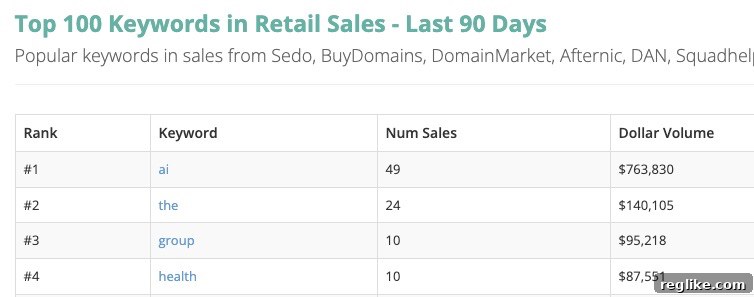
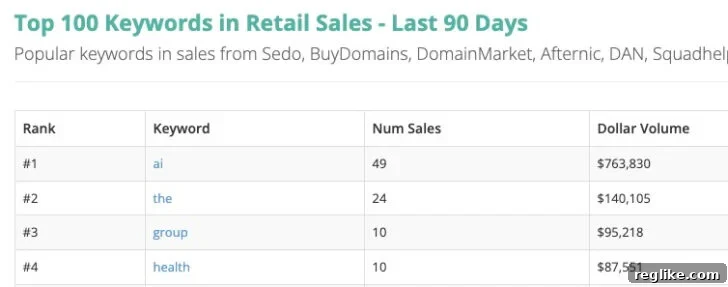
While resources like Afternic’s monthly list of top 20 keywords in sales can offer a general overview, they often come with a delay and lack the granular detail needed for in-depth analysis. Such lists are a starting point, signaling broad areas of interest, but they don’t provide the historical context or sales data necessary to make precise investment choices. For truly actionable insights, investors need a more robust database that aggregates real-world sales transactions across various platforms and timeframes.
This is where specialized tools become indispensable. Imagine having access to millions of sales records, allowing you to trace the lifecycle of different domain categories, observe price fluctuations, and identify consistent buyer behavior. This level of data empowers you to move beyond speculation and engage in strategic asset acquisition, focusing on domains that align with demonstrable market demand rather than fleeting fads.
NameBio: Your Gateway to Unparalleled Domain Sales Data
For many years, NameBio has stood as a cornerstone resource for the domain industry, meticulously compiling and organizing an colossal database of over 6 million domain name sales. This incredible repository is a goldmine for investors, researchers, and brokers alike, offering an unprecedented look into the historical performance and valuation of digital real estate. Before NameBio, much of this valuable sales data remained fragmented and inaccessible, making informed decision-making a significant challenge. Today, it democratizes access to information that is crucial for understanding market dynamics.
NameBio’s utility extends far beyond mere record-keeping. It provides powerful search functionalities that enable users to filter sales data by keyword, extension, price range, sales venue, and even specific dates. This allows investors to conduct precise research, whether they’re trying to value a specific domain name, identify hot niches, or analyze the performance of various top-level domains (TLDs). For instance, an investor might search for all .com sales containing the keyword “AI” over the last two years to gauge the market’s response to artificial intelligence-related domains. This capability is invaluable for building a data-informed investment thesis.
The sheer volume of data, combined with user-friendly search parameters, makes NameBio an indispensable tool for:
- Valuation: Accurately pricing domains for sale or purchase by comparing them to similar past sales.
- Trend Spotting: Identifying emerging or declining interest in specific keywords or industries.
- Niche Discovery: Uncovering underserved or highly profitable domain categories.
- Risk Assessment: Understanding the historical volatility and liquidity of different domain types.
Unlike simple keyword lists, NameBio presents actual sales data, offering concrete proof of market demand and perceived value. It illustrates what real buyers have been willing to pay, providing a pragmatic foundation for your investment decisions.
Unlocking Deeper Insights with NameBio Trends
While NameBio’s core search functionality is incredibly powerful, a particularly worthwhile but often overlooked feature is its dedicated Trends section. This dynamic feature transforms raw sales data into digestible, visual insights, making it easier than ever to spot patterns, predict future movements, and evaluate the long-term viability of various domain types. The Trends section is where the true strategic advantage of NameBio shines, allowing investors to move beyond individual sales records to grasp the broader market narrative.
The Trends interface typically allows users to:
- Visualize Keyword Performance Over Time: You can input a specific keyword or category (e.g., “Metaverse,” “NFT,” “Insurance,” “Software”) and observe its sales volume, average price, and highest sales price over user-defined periods. This visual representation helps in understanding whether a trend is gaining momentum, peaking, or declining.
- Identify Emerging or Declining Interest: By looking at the trajectory of sales and prices, investors can identify nascent trends before they become mainstream, or recognize when a previously popular niche is losing steam. This foresight is crucial for both acquisition and divestment strategies.
- Understand Price Points and Volatility: The graphs illustrate how the average sale price for certain keywords has fluctuated. This helps in understanding the premium buyers are willing to pay and the stability of value within different market segments. For instance, comparing the average price of a 4-letter .com to a 5-letter .com over several years can reveal significant valuation differences and trends.
Using NameBio Trends with a Critical Eye
While the data provided by NameBio Trends is invaluable, it’s paramount to approach it with a “critical eye.” Raw data alone doesn’t tell the whole story; context and nuanced analysis are essential. The video linked below offers an excellent demonstration of this critical evaluation, but here are key considerations:
- Not All Sales Are Equal: A high average sale price for a keyword might be skewed by a few exceptionally large sales of ultra-premium domains. It’s important to look at the distribution of sales, not just the average. Are there many smaller sales, indicating broad demand, or just a few outliers?
- Context is Key: Analyze sales in conjunction with other factors such as the domain’s extension (.com, .net, .io, etc.), length, brandability, and potential for end-user development. A “premium” keyword in a lesser-known TLD might not command the same value as in a .com.
- Distinguish Between Fads and Sustainable Trends: Some keywords might experience a sudden surge in sales due to temporary hype (e.g., a specific cryptocurrency project). A critical investor will look for consistent growth over a longer period, indicating a more sustainable trend rather than a fleeting fad. Cross-reference with external data sources like Google Trends or industry news to validate longevity.
- The “Why” Behind the Numbers: Always ask why a particular trend is emerging or declining. Is it due to technological advancements, cultural shifts, new legislation, or increased corporate interest? Understanding the underlying drivers helps in making more informed predictions.
By combining the quantitative data from NameBio Trends with qualitative analysis and external market research, you can develop a robust and proactive domain investment strategy.
Understanding NameBio’s Segmentation: Retail vs. Wholesale
NameBio continually evolves to provide more granular and useful data. A relatively new and highly valuable segmentation that NameBio has introduced aims to separate retail sales from wholesale sales venues. This distinction is crucial for investors, as it helps in understanding the true nature of domain transactions and their implications for valuation.
- Retail Sales: These typically represent sales to end-users – businesses or individuals who intend to develop and use the domain name for their operations. End-user sales often command higher prices because the buyer is acquiring the domain for its inherent utility, brand value, or strategic importance to their venture. A high number of retail sales for a particular keyword often indicates strong intrinsic demand and a healthier market.
- Wholesale Sales: These are transactions between domain investors, where a domain is bought with the primary intention of reselling it for a profit. While wholesale transactions are vital for market liquidity, they generally occur at lower price points compared to end-user sales, reflecting the investor’s need for a margin. Analyzing wholesale trends can help investors understand fellow investor sentiment and potential areas of oversupply or opportunity within the investment community.
The segmentation attempts to categorize sales platforms into retail-focused or wholesale-focused. For example, some marketplaces are predominantly used by end-users, while others are geared more towards investor-to-investor transactions. Understanding which sales fall into which category can profoundly impact your valuation models and investment decisions. If a domain typically sells for $5,000 in a retail environment but only $1,000 on a wholesale platform, knowing the context of a sale is vital.
However, as the video also highlights, this separation isn’t always perfect. The lines between retail and wholesale can sometimes blur:
- Some platforms cater to both types of buyers, making precise classification challenging.
- An investor might occasionally purchase a domain with the intent to use it, blurring the definition of a “wholesale” transaction.
- The exact intent of every buyer and seller is not always transparent to the data aggregator.
Despite these imperfections, this segmentation is a significant step forward. It provides a more refined lens through which to view market activity, enabling investors to make even more informed decisions about whether a domain’s value is driven by end-user demand or investor liquidity.
Practical Demonstration: See NameBio Trends in Action
To truly grasp the power of NameBio Trends and its new segmentation, nothing beats a practical demonstration. The video below provides an insightful walkthrough, showing you exactly how to navigate the Trends section, apply a critical eye to the data, and understand the nuances of retail versus wholesale sales. We highly recommend watching it to complement your reading and gain hands-on understanding.
This video will guide you through the process, offering practical tips and demonstrating how to extract meaningful insights that can directly impact your domain investment portfolio.
Conclusion: Empower Your Domain Investment Journey with Data
Becoming a truly successful domain investor in today’s competitive landscape demands more than intuition; it requires a commitment to data-driven analysis. NameBio, with its extensive database of over 6 million sales and its powerful, yet often overlooked, Trends section, provides the ultimate toolkit for achieving this. By diligently studying what end-users are buying, analyzing popular keywords, and critically evaluating market trends, you can make smarter, more profitable investment decisions.
The ability to differentiate between fleeting fads and sustainable demand, coupled with the insights gained from NameBio’s retail versus wholesale segmentation, offers an unparalleled advantage. Don’t leave your domain investments to chance. Leverage the immense power of NameBio Trends to identify valuable opportunities, assess risks, and build a robust portfolio of digital assets that are poised for growth. Start exploring NameBio today and transform your approach to domain investing.