
The Metaverse Domain Rush: Unpacking the Surge in ‘Meta’ Domain Demand
In the dynamic world of the internet, a common lament often echoes: “All the good domains are taken.” This sentiment suggests that the digital landscape has been fully mapped, with every valuable piece of online real estate long since claimed. However, this perspective frequently overlooks the internet’s inherent ability to evolve, to invent new concepts, and to create entirely fresh vocabularies. The digital realm is not static; it is a perpetually expanding universe where new opportunities emerge with every technological leap and cultural shift. Just as terms like “blog” were once novel and eventually necessitated their own digital addresses, so too do the cutting-edge concepts of today, such as the metaverse, spawn entirely new categories of desirable domain names.
The sudden and explosive popularity of the word “metaverse” serves as a compelling testament to this ongoing evolution. While the foundational domain metaverse.com was indeed registered way back in 1994, its early registration did not signify an end to related domain opportunities. On the contrary, the past year has witnessed a remarkable scramble for associated domain names, many of which have been acquired and subsequently resold for substantial sums. This phenomenon is not merely a fleeting trend; it underscores a profound shift in how we perceive and value digital assets, proving that the best domains are not just those registered decades ago, but also those that align with the next wave of innovation.
Understanding the Metaverse Phenomenon and Its Impact on Digital Real Estate
The concept of the metaverse, often described as a persistent, interconnected, and immersive virtual world, is far from new. Its roots can be traced to science fiction novels like Neal Stephenson’s “Snow Crash” in the early 1990s. For years, it remained a niche concept, primarily explored within specific tech communities and gaming platforms. However, 2021 marked a pivotal year for the metaverse, propelling it into mainstream consciousness. This surge in visibility culminated dramatically with Facebook’s groundbreaking announcement that it would rebrand its parent company as Meta Platforms, explicitly stating its intention to become a global leader in metaverse technology and development. This strategic move by one of the world’s largest tech giants instantly amplified the word’s prominence, signaling a future where digital and physical realities increasingly intertwine.
The ripple effect of this announcement on the domain market was immediate and immense. Astute domain investors, demonstrating remarkable foresight, had already begun acquiring “meta”-related domains long before any whispers of Facebook’s rebrand or its ambitious metaverse plans became public. This proactive investment strategy highlights a crucial aspect of successful domain investing: the ability to anticipate future trends and secure valuable digital assets before they become widely recognized. These early acquisitions have significant implications, not only for the investors who profited but also for Meta Platforms itself. The widespread pre-existing usage and ownership of “meta” domains by various entities will undoubtedly complicate Meta Platforms’ efforts to establish and protect “meta” as an exclusive brand. In a way, this decentralization of ownership serves a greater good, preventing a single corporation from monopolizing a word that has diverse applications and existing users, affirming that the metaverse belongs to no single entity.
The Data Don’t Lie: A Statistical Glimpse into the ‘Meta’ Domain Frenzy
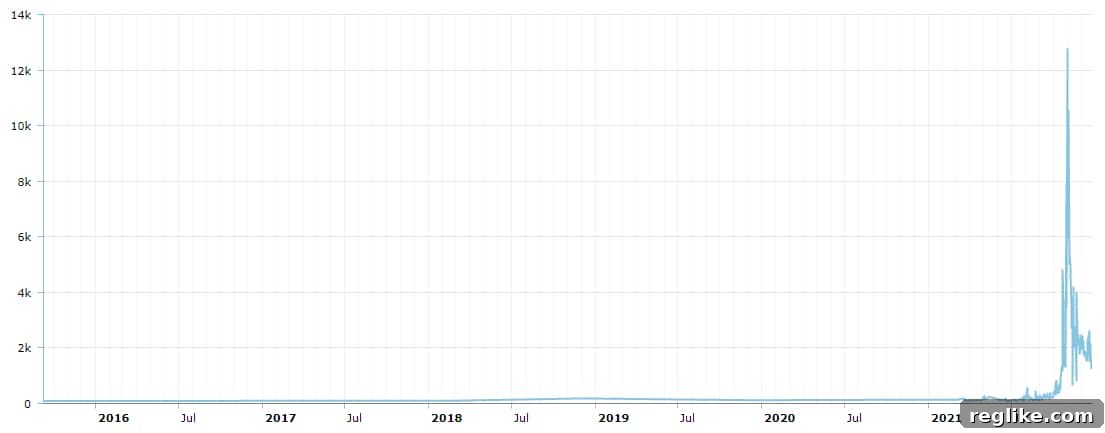
The following chart, sourced from Estibot, provides compelling empirical evidence of how the term “meta” exploded in popularity within the domain registration landscape this year. While the chart specifically tracks domains containing “meta” and therefore includes some words unrelated to the metaverse (e.g., “metal”), the sheer scale of the increase in registrations unmistakably points to the metaverse phenomenon as the primary driver. For years, from 2016 to 2017, the daily average of domain registrations containing “meta” hovered around 100. This figure saw a modest increase to approximately 100-150 registrations per day in 2018, gradually climbing to 150-300 by the summer of 2021. However, following Facebook’s pivotal announcement, the demand skyrocketed, peaking at an astounding figure of over 10,000 “meta” domain registrations in a single day. This exponential surge is an extraordinary indicator of how quickly a major corporate announcement can reshape an entire segment of the digital asset market.
This unprecedented surge in demand for metaverse-related domains has not only been remarkable in volume but also in valuation. Several domains, once acquired for relatively modest sums, have been flipped for five-figure prices within mere weeks of their initial purchase, demonstrating the rapid appreciation of these digital assets. Furthermore, this trend has transcended the traditional dominance of the .com TLD, with other extensions like .io, .so, and .net also witnessing significant activity and high-value sales. This diversification underscores the growing acceptance and perceived value of alternative domain extensions in the burgeoning digital economy.
Leading the Charge: Top ‘Meta’ Domain Sales of the Year
The public sales data further solidifies the narrative of a booming “meta” domain market. According to NameBio, a leading resource for domain sales data, the following represent some of the highest public sales involving the term “meta” this year, showcasing the significant financial investment and speculative value placed on these digital properties:
- metaverse.io: $175,000 – A premier sale indicating the high value placed on a direct, industry-specific name within a popular TLD for tech startups. This sale occurred in March, long before the Facebook rebrand became public knowledge, highlighting exceptional foresight by the investor.
- meta.so: $149,000 – The significant price for this domain shows the rising importance and value of country code Top-Level Domains (ccTLDs) like .so (Somalia), especially when they cleverly align with global linguistic trends, resembling “so” for “social” or “solution.”
- meta.io: $100,000 – Another early and high-value sale from March, emphasizing the appeal of short, memorable, and industry-relevant domains. The .io TLD is highly popular among technology and startup companies, making this an ideal asset for a metaverse venture.
- metaversegroup.com: $75,000 – This domain clearly targets a business or community focused on the metaverse, demonstrating the commercial potential of establishing a group or entity within this new digital frontier.
- metarx.com: $60,000 – A specific application of “meta” potentially in the medical or pharmaceutical (“Rx”) space within the metaverse, illustrating the diverse industry-specific opportunities emerging.
- metapayments.co: $52,450 – Reflects the anticipated financial infrastructure and transaction systems required within virtual economies, highlighting the intersection of fintech and the metaverse. The .co TLD is a popular choice for businesses.
- metaavatars.net: $44,000 – Points to the critical role of digital identity and representation (avatars) in the metaverse, suggesting a focus on virtual character creation or marketplaces.
- metatime.com: $40,000 – A broad, conceptual name with wide potential applications, possibly for scheduling, events, or a platform related to time management in virtual environments.
- metadating.net: $35,000 – This domain clearly identifies a social application, indicating the expansion of human interaction, including romantic relationships, into the metaverse.
- metanfts.io: $30,000 – A powerful combination of two of the hottest tech trends of 2021: the metaverse and Non-Fungible Tokens (NFTs). This domain suggests a platform or marketplace for digital assets within the metaverse, bridging two significant areas of innovation.
It is particularly noteworthy that some of the highest-value sales, such as metaverse.io and meta.io, transpired in March, significantly preceding any public disclosure or even widespread speculation about Facebook’s impending rebrand. This fact underscores the acumen of certain domain investors who possess a keen understanding of technological trajectories and the foresight to identify emerging linguistic and conceptual trends before they reach mass adoption.
The inclusion of “NFTs” in the last domain name, “metanfts.io,” further highlights the interconnectedness of emerging technologies. Non-Fungible Tokens were another word that exploded in popularity in 2021, showcasing how multiple, concurrent tech waves can converge to create new categories of highly valuable digital assets and domain names. The synergy between these trends creates unprecedented opportunities for those who are prepared to capitalize on them.
Lessons for the Future: Navigating the Evolving Digital Landscape
The extraordinary surge in “meta” domain demand offers critical lessons for both businesses and investors operating in the digital realm. For businesses, the takeaway is clear: proactive domain acquisition is paramount. Waiting for a technology or concept to become mainstream, or for a competitor to stake their claim, can result in significant missed opportunities and increased costs. A forward-thinking brand strategy must include vigilance over emerging tech trends and the foresight to secure relevant digital real estate well in advance. Protecting one’s brand in the digital age requires not just legal vigilance but also strategic digital asset management.
For domain investors, the “metaverse” phenomenon reaffirms the enduring value of trend analysis, market intelligence, and predictive investing. Tools like Estibot and NameBio are invaluable for identifying nascent shifts and understanding market valuations. The ability to discern which technologies or cultural phenomena will gain traction, and then to act decisively, can yield substantial returns. It’s a high-stakes game that rewards deep understanding and strategic patience.
In conclusion, the myth that “all the good domains are taken” has been emphatically debunked by the metaverse domain rush. The internet is a continually expanding frontier, constantly generating new terms, new technologies, and new opportunities for digital real estate. The story of “meta” domains is a powerful reminder that the digital landscape is far from static. It is a vibrant, evolving ecosystem where foresight, agility, and a keen eye for innovation are the ultimate currencies. As we venture further into interconnected virtual worlds and beyond, the ability to anticipate and adapt to these shifts will define success in the ever-expanding digital universe.