
Wall Street Journal Says Irving Might Be a Candidate for Microsoft’s Top Spot.
Blake Irving Emerges as a Key Candidate for Microsoft CEO: A Deep Dive into the Future of Tech Leadership
The technology world, and particularly Silicon Valley, has been abuzz with speculation since Steve Ballmer announced his intention to step down as CEO of Microsoft within the next year. This announcement marked the end of an era and ignited an intense global search for a successor capable of navigating the venerable software giant through its next pivotal phase. The stakes are incredibly high for Microsoft, a company grappling with rapid shifts in mobile computing, cloud services, and consumer technology. Among the myriad of names being floated, one figure has steadily risen to prominence, catching the attention of analysts, industry insiders, and major financial publications: Blake Irving, the current Chief Executive Officer of GoDaddy.
The Quest for Microsoft’s Next Visionary Leader
Microsoft stands at a critical juncture, facing formidable challenges and immense opportunities. The departure of Steve Ballmer, a charismatic leader who helmed the company for over a decade, has left a void that the board is meticulously working to fill. The consensus among many industry observers is that Microsoft needs a transformative leader, someone with both a deep understanding of the technology landscape and the vision to innovate and adapt. There’s a strong leaning towards an “outsider” — someone who can bring a fresh perspective, unburdened by internal legacy issues, yet also possess enough gravitas and experience to command respect within the organization and the broader tech community.
The search committee is tasked with identifying a CEO who can not only stabilize Microsoft’s traditional revenue streams but also accelerate its growth in emerging sectors like cloud computing (Azure), mobile devices, and artificial intelligence. This requires a delicate balance of strategic acumen, operational excellence, and an unwavering commitment to fostering a culture of innovation. The choice will undoubtedly shape Microsoft’s trajectory for decades to come, influencing its competitive standing against rivals like Apple, Google, and Amazon, and determining its relevance in an increasingly digital-first world.
Blake Irving: A Profile in Tech Leadership
Blake Irving’s candidacy for the top role at Microsoft is particularly intriguing given his rich and diverse background, which blends deep institutional knowledge with recent transformative leadership in another major tech company. His journey through the tech industry positions him as a strong contender, offering a unique blend of experience that could be precisely what Microsoft needs.
Early Career and Microsoft Years
Irving spent a significant portion of his career, over a decade, within the halls of Microsoft. During his tenure, he held various high-level leadership positions, giving him an intimate understanding of the company’s vast operations, its corporate culture, and its technological prowess. His roles often involved managing large-scale software initiatives and consumer-facing platforms, providing him with firsthand experience in developing and launching products that impact millions globally. This period was foundational, allowing him to gain deep insights into Microsoft’s strengths in enterprise software, its challenges in consumer markets, and the complexities of managing a global technology behemoth. His history with Microsoft means he isn’t a complete unknown to the company’s inner workings, offering a valuable perspective that pure outsiders might lack.
Transforming GoDaddy
Perhaps even more compelling for Microsoft’s board is Irving’s most recent role as CEO of GoDaddy. When he took the helm of the domain name registrar, GoDaddy was a well-known entity, but often perceived as quirky and primarily focused on domain sales. Irving spearheaded a dramatic transformation, rebranding the company, modernizing its services, and significantly broadening its appeal to small businesses and entrepreneurs. Under his leadership, GoDaddy shifted its focus to providing a comprehensive suite of web services, including hosting, website builders, and online marketing tools, effectively positioning itself as a vital partner for small enterprises looking to establish an online presence. He successfully guided GoDaddy towards a highly anticipated initial public offering (IPO), demonstrating his capability to drive substantial growth, enhance brand value, and navigate a company through a pivotal market transition. This experience showcases his ability to innovate, execute strategic shifts, and cultivate a customer-centric approach in a competitive, fast-growing segment of the tech market.
Why Blake Irving is a Compelling Choice for Microsoft
The confluence of Irving’s past at Microsoft and his recent achievements at GoDaddy paints a picture of a leader uniquely suited for the challenges that lie ahead for the Redmond giant.
Insider Knowledge, Outsider Perspective
One of Irving’s most significant advantages is his dual perspective. His long history at Microsoft means he understands the company’s DNA, its technological infrastructure, and its vast ecosystem of products and partners. This “insider knowledge” allows him to grasp the intricate details of Microsoft’s operations without a steep learning curve. Simultaneously, his time leading GoDaddy provides him with an “outsider’s perspective” – a fresh, unbiased viewpoint gained from successfully operating a different type of tech company in a rapidly evolving market. This blend could enable him to challenge entrenched ideas, foster innovation, and implement necessary changes without alienating key internal stakeholders, a balance crucial for a company of Microsoft’s size and legacy.
Focus on Cloud and Digital Transformation
Irving’s leadership at GoDaddy emphasized cloud-based services and digital solutions for small businesses, a strategic alignment with Microsoft’s own “mobile-first, cloud-first” mantra. His experience in building and scaling web services, managing large-scale cloud infrastructure, and understanding the needs of a diverse customer base translates directly to Microsoft’s push with Azure, Office 365, and its broader cloud initiatives. He possesses a proven track record in driving digital transformation, a critical skill set for Microsoft as it continues to transition from a software licensing model to a services-oriented platform company. His expertise in consumer-facing services could also revitalize Microsoft’s efforts in areas where it has traditionally faced stiff competition.
Proven Track Record in Growth and Modernization
The successful turnaround and growth trajectory of GoDaddy under Irving’s stewardship speak volumes about his leadership capabilities. He demonstrated an ability to pivot a company, streamline operations, and prepare for significant market events like an IPO. These are precisely the qualities Microsoft would seek in a CEO to propel it into a new era of growth and innovation. His leadership style, focused on market responsiveness and strategic execution, could inspire a renewed sense of purpose and agility within Microsoft, helping it to compete more effectively in dynamic tech markets.
The Wall Street Journal’s Report and Broader Speculation
The whispers around Blake Irving’s potential candidacy gained significant traction when the Wall Street Journal published a story explicitly naming him among a shortlist of five possible successors to Steve Ballmer. This high-profile report underscored the seriousness of his consideration. The article, which emerged after reporters consulted with leading industry analysts, highlighted a prevailing sentiment that the new CEO should ideally be an outsider. This preference for an external perspective, combined with Irving’s deep roots within Microsoft, makes him an exceptionally appealing choice—he’s an outsider who intimately knows the inside. While the WSJ report mentioned other candidates, Irving’s inclusion signals that his unique blend of experience and recent success has not gone unnoticed by those closely observing the tech landscape and Microsoft’s strategic future. The analyst community believes that a fresh pair of eyes, backed by a proven track record, is essential to shake up Microsoft’s corporate culture and drive necessary strategic shifts.
Microsoft’s Strategic Crossroads: The Challenges Awaiting the New CEO
The individual who steps into the CEO role at Microsoft will inherit a company with immense resources and global reach, but also one facing profound strategic challenges that demand immediate and decisive action. The path forward for Microsoft is complex, requiring a leader capable of visionary thinking and robust execution.
Navigating the Mobile-First, Cloud-First World
Microsoft has openly embraced the “mobile-first, cloud-first” mantra, but fully realizing this vision remains its paramount challenge. While Azure is a strong contender in the cloud computing space, it still faces intense competition from Amazon Web Services and Google Cloud. On the mobile front, Windows Phone has struggled to gain significant market share against iOS and Android, necessitating a clear, innovative strategy to integrate Microsoft services seamlessly across all platforms, regardless of the underlying operating system. The new CEO must define how Microsoft truly thrives in a world where mobile devices are primary computing hubs and cloud services are the backbone of enterprise and consumer applications.
Reinventing the Core Business and Fostering Innovation
The new leader will also be tasked with continually reinventing Microsoft’s traditional pillars: Windows, Office, and Xbox. These products, while still highly successful, operate in rapidly changing markets. Windows needs to evolve beyond the PC; Office must maintain its dominance through cloud-based subscriptions and collaborative features; and Xbox faces fierce competition in gaming and entertainment. The challenge is not just to maintain these products but to innovate them in ways that keep Microsoft relevant and competitive. Furthermore, fostering a more agile and innovative corporate culture that can respond quickly to market shifts will be critical for long-term success, potentially requiring a significant cultural shift from a company known for its vast, sometimes bureaucratic, structure.
Irving’s Response and Personal Considerations
When pressed for an “official” comment on the speculation, Blake Irving provided a characteristically diplomatic, yet revealing, response:
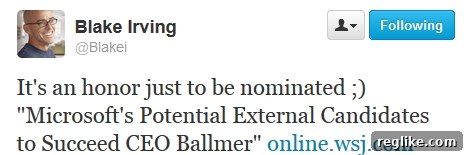
His understated reply, delivered through an image, offers a glimpse into his priorities. It’s evident that Irving finds immense satisfaction in his current role at GoDaddy, a company he has been instrumental in transforming and guiding towards a highly anticipated IPO. Leading a “fast-growing, pre-IPO company” like GoDaddy offers a unique blend of agility, direct impact, and the potential for significant personal and professional reward. The energy and momentum of building something new and rapidly expanding can be incredibly exhilarating for a leader.
However, the call from Microsoft represents something different entirely. It’s an invitation to lead one of the world’s most iconic and influential technology companies, a role that comes with unparalleled global impact and a legacy-defining opportunity. While Irving might prefer the current trajectory of GoDaddy, the chance to steer a company like Microsoft into its next era is not something any leader could easily dismiss. It would be a career-defining move, a testament to his capabilities, and a challenge of immense proportions. It’s a decision that weighs personal preference against the allure of a colossal, world-shaping role, making it understandable that he would, at the very least, engage in serious conversation with the Microsoft board.
The Weight of a Potential Decision
The speculation around Blake Irving’s potential candidacy highlights the immense pressure on Microsoft’s board to make the right choice. Their decision will not only impact the company’s 100,000+ employees and millions of shareholders but also influence the broader technology industry. For Irving, should he formally be considered and offered the role, the decision would be equally momentous. Leaving GoDaddy at such a crucial stage of its growth, on the cusp of an IPO he meticulously prepared, would be a significant sacrifice of his personal investment and vision for that company. Yet, the opportunity to lead Microsoft, a company with which he has a long history, into its next chapter is a rare one, offering a platform to shape the future of technology on a global scale. It’s a testament to his leadership and strategic vision that he finds himself at the center of such intense speculation for one of the most coveted positions in the tech world.
Conclusion: A Pivotal Moment for Microsoft and a Leader in Demand
Microsoft stands at a truly pivotal moment in its illustrious history, with the search for Steve Ballmer’s successor representing a critical turning point. The industry is keenly watching, anticipating the choice that will define the company’s direction for years to come. Blake Irving, with his blend of deep Microsoft roots and recent transformative leadership at GoDaddy, presents a compelling and credible option. His unique profile offers the promise of an “outsider’s” fresh perspective combined with an intimate understanding of Microsoft’s complex ecosystem. While his heart might currently be with the exhilarating growth of GoDaddy, the sheer magnitude of the Microsoft CEO role—a position that offers the chance to influence the future of technology on a global scale—is undoubtedly a powerful draw. As the selection process unfolds, all eyes remain on Redmond, eager to see who will ultimately take the reins and guide this tech giant into its next era of innovation and success, with Blake Irving certainly being a candidate who embodies the necessary experience and vision.