
CVE.org Domain Dispute: Unpacking the MITRE UDRP Victory and the Nuances of “Bad Faith”
In the intricate world of domain name disputes, decisions often hinge on nuanced interpretations of established policies. One such case, involving the prominent cybersecurity acronym CVE.org, recently concluded with a ruling that, while seemingly straightforward, raises significant questions about the application of the Uniform Domain-Name Dispute-Resolution Policy (UDRP), particularly concerning the definition of “bad faith” in the context of inactive domains. This article delves into the details of the MITRE Corporation’s successful UDRP complaint for CVE.org, offering an analytical perspective on why the determination of bad faith use in this scenario remains a subject of considerable debate.
The UDRP Ruling: A Seemingly Clear-Cut Victory for MITRE
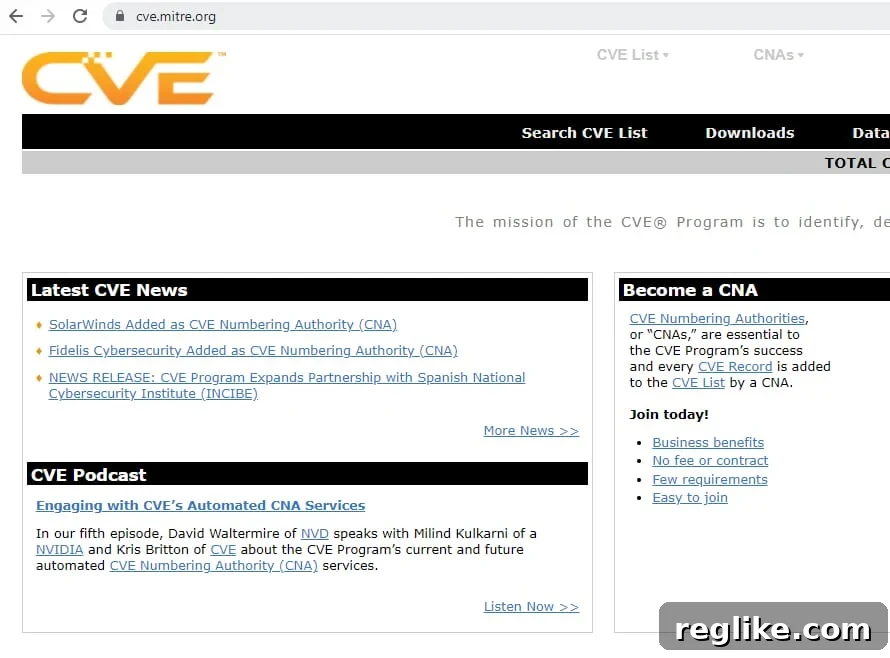
A panelist at the National Arbitration Forum recently awarded the domain name CVE.org to The MITRE Corporation, resolving a cybersquatting dispute in their favor. The decision, rendered by panelist Ho Hyun Nahm, Esq., appeared to be an uncomplicated one on the surface. MITRE is globally recognized for its contributions to cybersecurity, most notably through its Common Vulnerabilities and Exposures (CVE) program. This vital initiative, managed in collaboration with the U.S. Department of Homeland Security and the Cybersecurity and Infrastructure Security Agency (CISA), serves as a cornerstone for identifying and categorizing cyber threats. Furthermore, the domain name owner failed to respond to the UDRP complaint, a factor that often simplifies the panelist’s task significantly.
Given MITRE’s established reputation and the critical nature of the CVE program, coupled with the respondent’s non-appearance, the outcome might seem an open-and-shut case. However, a deeper examination reveals complexities, particularly around the core UDRP requirement of “bad faith registration and use,” that challenge the notion of this being an unequivocally “right” decision.
Understanding MITRE and the Significance of the CVE Program
Before delving further into the specifics of the dispute, it’s crucial to appreciate the context provided by MITRE’s role and the importance of the CVE program. MITRE is a non-profit organization that manages federally funded research and development centers. Its CVE program is an international, community-based effort that maintains a list of publicly disclosed cybersecurity vulnerabilities. Each vulnerability is assigned a unique CVE ID, facilitating communication and coordination across the cybersecurity landscape. This standardized system is indispensable for security professionals, researchers, and organizations worldwide, making the CVE brand synonymous with critical vulnerability information. MITRE’s active use of cve.mitre.org for its official program underscores its strong association with the acronym.
The UDRP Framework: Pillars of a Successful Complaint
To succeed in a UDRP complaint, a complainant must satisfy three cumulative elements as outlined in paragraph 4(a) of the UDRP policy:
- The domain name is identical or confusingly similar to a trademark or service mark in which the complainant has rights.
- The respondent has no rights or legitimate interests in respect of the domain name.
- The domain name has been registered and is being used in bad faith.
In the CVE.org case, the first two elements were relatively straightforward. MITRE clearly demonstrated rights in the CVE mark, and the respondent’s non-response made it difficult to argue for any legitimate rights or interests. The crux of the author’s skepticism, however, lies squarely in the third element: proving both “bad faith registration” and “bad faith use,” especially when the domain in question is inactive.
MITRE’s Arguments for “Bad Faith”: An Examination
MITRE put forth arguments regarding the domain’s ownership, suggesting two primary scenarios for how CVE.org came to be held:
- The domain is currently owned by an individual linked to the now-dissolved non-profit organization CVE, Inc., operating under inaccurate Whois information.
- The domain was acquired by a different individual after the non-profit’s dissolution.
If the first scenario were true, the original registration might not inherently constitute bad faith, as it could have been registered legitimately by the non-profit. However, if the second scenario holds—which historical Whois records reviewed by the original article’s author suggest is more likely—then the possibility of bad faith registration emerges. The lack of a response from the domain owner further obscures the precise circumstances.
Despite the domain’s inactivity, MITRE presented a comprehensive case for bad faith, asserting:
The Respondent registered and is utilizing the disputed domain name in bad faith. Whether the Respondent is affiliated with the inactive organization CVE, Inc., and has provided false registration information on WHOIS, or if the Respondent is not affiliated with CVE, Inc., their actions create confusion and disrupt the Complainant’s business for potential commercial gain. The registration and use of the domain name also demonstrate bad faith by preventing the Complainant from registering its established mark as a domain name. Furthermore, the Respondent’s inactive website disrupts the Complainant’s operations by fostering an impression that the Complainant no longer exists or by potentially diverting the Complainant’s consumers away from its official CVE product. The Complainant presumes that the Respondent derives commercial benefits from this practice, having acquired the disputed domain name with prior knowledge of the Complainant’s extensive rights in the CVE mark.
Challenging the “Bad Faith” Premise: An Analytical Viewpoint
The core of the dissenting perspective rests on whether mere domain inactivity, without overt malicious use, truly satisfies the UDRP’s “bad faith” requirement. If the domain owner had actively used CVE.org to host a competing security product, a phishing site, or even a parked page filled with security-related advertisements, the evidence of bad faith would be undeniable. Such actions would clearly demonstrate an intent to confuse, divert traffic, or commercially exploit the complainant’s mark.
However, the assertion that an *inactive* domain owner “presumably gains commercially” from this inactivity is highly debatable. In fact, common business sense would suggest the opposite: an inactive domain, generating no traffic or revenue, typically results in a financial loss (registration fees, maintenance) rather than gain. Proving commercial gain from a dormant asset, especially without any evidence of attempted sales or illicit activities, presents a significant evidentiary hurdle that the UDRP decision seems to have cleared with considerable leniency.
While CVE is undeniably strongly associated with MITRE’s program – a quick Google search confirms that most first-page results pertain to the Common Vulnerabilities and Exposures initiative – this strong association alone doesn’t automatically translate to bad faith registration and use under UDRP guidelines, particularly for a short, acronymic .org domain that is not actively misdirected or leveraged for profit. The UDRP is designed to combat abusive registrations, not simply to consolidate all domains related to a famous acronym, especially if they were registered in a different context or remain dormant.
The Ambiguity of Intent and Acronymic Domains
The inherent ambiguity surrounding the domain owner’s true intent further complicates the bad faith finding. Without a response, the panelist had to infer intent. While the UDRP does allow for inferences, especially in cases of non-response, these inferences must still align with the established criteria for bad faith. The argument that preventing a complainant from registering its mark constitutes bad faith usage is a common one, but it’s typically viewed in conjunction with other malicious acts or a clear pattern of abusive registration. When a domain is simply inactive, proving this “preventative” bad faith becomes more challenging.
Moreover, three-letter acronyms (TLAs) are particularly challenging in UDRP disputes. While CVE has become strongly tied to MITRE’s program, it is not an inherently fanciful or unique term. Other entities might conceivably use “CVE” for different purposes, or it could have been registered by an organization (like CVE, Inc.) that existed prior to or concurrently with MITRE’s program in its current prominence. The specific character of the .org top-level domain, traditionally associated with non-profit organizations, further adds a layer of complexity to these historical considerations.
Conclusion: A Contested Victory in the Domain World
Ultimately, while MITRE’s stature and the invaluable nature of its CVE program are beyond question, the UDRP decision awarding CVE.org raises important questions about the threshold for establishing “bad faith registration and use,” especially for inactive domains. The author’s initial skepticism about squeezing this particular dispute into the stringent requirements of the UDRP, and finding that the Complainant definitively proved bad faith, remains pertinent.
This case serves as a valuable reminder that even in seemingly clear-cut domain disputes, the nuances of UDRP policy, the specific evidence (or lack thereof), and the interpretation of intent can lead to outcomes that, while legally valid, may not fully align with all perspectives on fairness and equity in the digital landscape. It underscores the ongoing challenge of balancing legitimate brand protection with the principles of open domain registration, particularly when the domain in question lies dormant.