
The Waning Influence of .mobi Domains: A Deep Dive into Declining Registrations
The landscape of domain names is ever-evolving, reflecting shifts in technology, user behavior, and market dynamics. Among the specialized top-level domains (TLDs) introduced to cater to specific niches, the .mobi domain was launched with significant fanfare and a clear purpose: to optimize the internet experience for mobile users. However, recent data from July 2009, compiled by ICANN, reveals a concerning trend for this mobile-centric TLD.
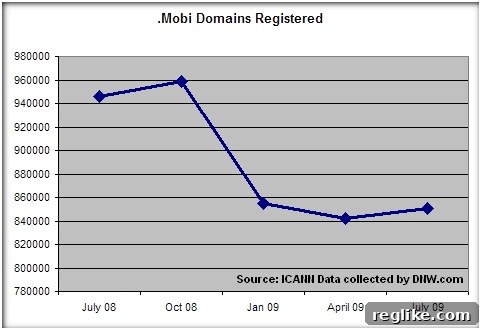
The total number of registered .mobi domain names has experienced a noticeable downturn, falling to 850,712. This figure represents a significant 10% decline when compared to the 946,357 registrations recorded in the same month of 2008. This drop signals a potential reassessment of the .mobi domain’s value and relevance within the rapidly changing digital ecosystem.
The Initial Vision and Ambitious Marketing Push
When the .mobi domain was introduced, it was envisioned as a crucial step towards a more accessible and optimized mobile internet. The idea was simple yet powerful: create a dedicated space where websites would inherently be designed for the smaller screens and unique constraints of mobile devices. This initiative predated the widespread adoption of smartphones with advanced browsers and the ubiquitous responsive web design principles we see today.
The registry behind .mobi, mTLD (Mobile Top Level Domain), embarked on one of the most aggressive and well-funded marketing campaigns ever seen for a new TLD. Their strategy was multifaceted, aimed at establishing .mobi as the standard for mobile web presence. This included significant outreach to businesses, developers, and the general public, emphasizing the benefits of having a mobile-specific web address.
mTLD didn’t just market; they innovated. They released software tools and guidelines designed to help domain registrants develop mobile-friendly websites, ensuring that the promise of a superior mobile experience was technically achievable. Furthermore, they forged critical alliances with major players in the tech industry. Their partnership with GoDaddy, one of the largest domain registrars globally, was particularly impactful, with GoDaddy reportedly accounting for approximately half of all .mobi domain registrations. These strategic moves were complemented by collaborations with mobile device manufacturers, aiming to integrate the .mobi standard deeper into the mobile ecosystem.
Stagnation and Shifting Sands: Why the Numbers Plateaud
Despite these robust marketing efforts and strategic partnerships, the number of .mobi domains registered has largely stagnated throughout the current year, hovering persistently around the 850,000 mark. This plateau, following a notable decline, suggests that the initial momentum has dissipated, and new registrations are not offsetting the number of domains lapsing or being dropped.
One of the primary factors contributing to this stagnation and eventual decline is the rapid evolution of web technologies and mobile devices. In the years following .mobi’s launch, smartphones became increasingly sophisticated. Mobile browsers, once limited, gained significant capabilities, allowing them to render full, desktop-version websites more effectively. More importantly, the concept of “responsive web design” began to gain traction. This approach allows a single website to adapt its layout and content seamlessly across various screen sizes, from large desktop monitors to tablets and small smartphone displays.
The advent of responsive design significantly eroded the unique selling proposition of the .mobi domain. If a business could maintain a single website (e.g., example.com) that automatically adjusted for mobile users, the need for a separate, dedicated mobile domain (example.mobi) became less compelling. This technological shift offered a more efficient and cost-effective solution for businesses to reach their mobile audience without the overhead of managing a separate domain and mobile-specific content.
The Role of Speculation and a Faltering Resale Market
The .mobi domain, like many new TLDs, initially attracted a significant number of domain speculators. These individuals or entities purchased numerous .mobi domain names with the hope of reselling them at a higher price later, capitalizing on anticipated demand for mobile-specific web addresses. In the early days, with high expectations for the mobile web and aggressive promotion by mTLD, many believed .mobi domains would become highly valuable assets.
However, as the broader digital landscape shifted and responsive design emerged as the preferred method for mobile optimization, the resale market for .mobi domains began to falter. The anticipated surge in demand from end-users looking for mobile-specific domains never fully materialized to the extent speculators had hoped. Consequently, the value of many speculative .mobi registrations diminished, leading to widespread frustration among those who had invested heavily in the domain.
It’s plausible that much of the criticism directed at mTLD for “not promoting the domain more” stems not from a genuine lack of marketing effort, but rather from the disappointment of these speculators regarding the poor return on their investments. mTLD did indeed market the domain extensively; the challenge lay in the market’s fundamental shift away from the premise upon which .mobi was built.
The ‘Magic Number’ and a Brief IDN Boost
The persistent hovering around 850,000 registrations suggests that this might be a kind of “magic number” for .mobi domains – representing a core group of registrants who either still see value in their .mobi presence, use it for specific legacy purposes, or simply haven’t let their registrations lapse yet. This figure could reflect the foundational base of users who adopted the domain during its peak marketing phase and continue to maintain it, despite broader trends.
Interestingly, the .mobi domain recently experienced a temporary boost in its registration numbers, adding approximately 100,000 domains. This surge was attributed to the launch of certain Internationalized Domain Names (IDNs) within the .mobi space. IDNs allow domain names to be registered in non-Latin scripts, catering to a global audience. While this provided a noticeable, albeit temporary, bump in the overall count, it did not signify a fundamental shift in the domain’s long-term trajectory or a resurgence in its core appeal. Rather, it represented an expansion into a specific niche within the existing domain space.
Looking Ahead: Lessons from .mobi
The journey of the .mobi domain offers valuable insights into the dynamics of the domain name industry and the rapid pace of technological change. While its initial vision was commendable and its marketing efforts robust, the inability to adapt to or anticipate broader technological shifts ultimately impacted its sustained growth and relevance.
As the digital world continues to evolve, the story of .mobi serves as a reminder that even well-intentioned and heavily promoted initiatives can be overtaken by innovation. The internet’s strength lies in its adaptability, and solutions that offer flexibility and universality, such as responsive web design, often prevail over more specialized, siloed approaches.
In the coming days, we will delve into the performance of other specialized top-level domains, such as .asia and .tel, to provide a comparative analysis and further illustrate how different TLDs navigate their unique challenges and opportunities in this complex digital landscape.