
Panelist Slams Musician’s Company and Lawyers Over Flawed Cybersquatting Claim
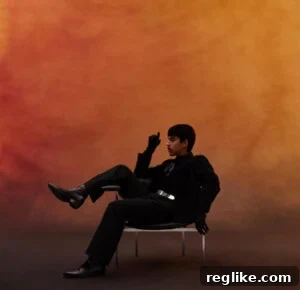
The digital landscape often presents unique challenges for public figures, especially when it comes to securing their online identity. Such was the case for Mexican-American singer and songwriter Ivan Cornejo, a rising star in the music industry. Despite his growing prominence, an unfortunate reality emerged: another individual, also named Ivan Cornejo, had already secured the coveted domain name IvanCornejo.com before the musician or his company could.
This pre-existing registration set the stage for a contentious legal battle when Ivan Cornejo LLC, the musician’s company, initiated a cybersquatting complaint against the domain name. However, the case took an unexpected turn, culminating in a significant rebuke from Panelist Sebastian Hughes. Hughes not only found that the complainant failed to demonstrate bad faith registration and use of the domain but also determined the case to be abusive, qualifying it as a severe instance of Reverse Domain Name Hijacking (RDNH).
The Rising Star and the Digital Identity Dilemma
Ivan Cornejo has quickly captured the hearts of many with his soulful music and distinctive style. In an era where a strong online presence is paramount for artists, owning a domain name that directly matches one’s identity is not merely a preference but a commercial necessity. For a celebrity, a personal domain name like IvanCornejo.com serves as a central hub for fans, media, and business partners, offering a controlled platform for information, merchandise, and music releases.
However, the global nature of the internet and the “first-come, first-served” principle of domain registration mean that conflicts can arise when individuals share names. This common occurrence can lead to complex disputes, particularly when one party gains significant public recognition after a domain has already been registered by another person with the same name. The challenge lies in distinguishing between legitimate registration by an individual using their own name and opportunistic cybersquatting.
Understanding Cybersquatting and the UDRP Framework
Cybersquatting is generally defined as the abusive registration of a domain name that is identical or confusingly similar to a trademark belonging to another party, with the intent to profit from the goodwill associated with that trademark. To combat this issue, the Internet Corporation for Assigned Names and Numbers (ICANN) established the Uniform Domain-Name Dispute-Resolution Policy (UDRP). The UDRP provides a streamlined, administrative process for resolving domain name disputes without resorting to traditional litigation, which can be costly and time-consuming.
For a complainant to succeed under the UDRP, they must prove three crucial elements:
- Identical or Confusingly Similar: The domain name is identical or confusingly similar to a trademark or service mark in which the complainant has rights.
- No Rights or Legitimate Interests: The registrant of the domain name has no rights or legitimate interests in respect of the domain name.
- Bad Faith Registration and Use: The domain name has been registered and is being used in bad faith.
All three elements must be affirmatively proven by the complainant for the panelist to order the transfer or cancellation of the disputed domain name. The burden of proof rests entirely on the complainant, a critical aspect that played a decisive role in the Ivan Cornejo case.
The Heart of the Dispute: IvanCornejo.com and the Chronological Impossibility
The core of the dispute revolved around the domain name IvanCornejo.com. Ivan Cornejo LLC, representing the musician, argued that the domain constituted cybersquatting and sought its transfer. However, a meticulous examination of the timeline by Panelist Sebastian Hughes revealed significant discrepancies that ultimately undermined the complainant’s case, particularly concerning the third element of bad faith.
The key dates were as follows:
- The disputed domain name, IvanCornejo.com, was registered in 2020.
- Ivan Cornejo LLC, the musician’s company and complainant, was incorporated in 2022.
- The trademark for “Ivan Cornejo” was filed in 2023.
- While the company claimed a “first use in commerce” for the trademark as early as 2021, this claim lacked sufficient supporting evidence for the period prior to the domain’s registration.
The chronological order is critical. For a domain name to be registered in bad faith against a trademark, the trademark (or at least robust common law rights) must generally predate the domain’s registration. In this instance, the musician’s company and its formal trademark registration simply did not exist at the time the domain IvanCornejo.com was acquired by the respondent. This fundamental temporal disconnect made it logically impossible for the domain registrant to have registered the name with “actual or constructive knowledge” of the complainant’s non-existent trademark rights.
The complainant also failed to provide compelling evidence that the musician had established significant common law trademark rights in his name by 2020, or that any such rights had been properly transferred to Ivan Cornejo LLC by the time the complaint was filed. Without these crucial proofs, the bad faith element, a cornerstone of any UDRP complaint, could not be satisfied.
Panelist Hughes’s Stern Admonition: A Finding of Reverse Domain Name Hijacking (RDNH)
In light of these glaring inconsistencies, Panelist Sebastian Hughes delivered a powerful and critical ruling. Not only did he find against Ivan Cornejo LLC, but he also went a step further, declaring the case to be abusive and qualifying it as Reverse Domain Name Hijacking (RDNH). This is a serious finding within UDRP jurisprudence, reserved for cases where a trademark owner abuses the UDRP process in an attempt to unfairly obtain a domain name from a legitimate registrant.
Hughes’s decision highlighted the lack of due diligence on the part of the complainant and their legal representatives. As he eloquently articulated:
In light of the fact both the [Complainant’s company] and its registration for the Trademark did not exist at the time of registration of the disputed domain name, Complainant and its legal representatives ought to have known that it would be impossible to demonstrate that, as contended by Complainant in the Amended Complaint, Respondent registered the disputed domain name with actual or constructive knowledge of Complainant’s then non-existent Trademark….
…Nonetheless, in all the circumstances, there can be no question that Complainant and its legal representatives ought to have appreciated that it would be unable to establish the third limb under paragraph 4(a) of the Policy.
This statement underscores a fundamental principle: a domain cannot be registered in bad faith against a trademark that did not exist at the time of registration. The panelist concluded that the complainant and their legal team “ought to have known” that proving bad faith would be impossible given the undisputed timeline. An RDNH finding serves as a cautionary tale, emphasizing the importance of thorough legal analysis and ethical conduct in pursuing UDRP complaints. It signifies that the complaint was brought in bad faith, aiming to strip a legitimate owner of their domain.
The “Own Name” Defense: A Legitimate Interest
Adding another layer to the panelist’s decision was the crucial fact that the domain registrant also shared the name Ivan Cornejo. Even if the musician’s common law or registered trademark rights had predated the domain registration, the registrant would likely still have a strong defense. Under UDRP, a registrant has “rights or legitimate interests” in a domain name if they are commonly known by that name, even if they have acquired no trademark rights.
The UDRP policy explicitly recognizes that a respondent can demonstrate legitimate interest by showing that they are using, or have made demonstrable preparations to use, the domain name in connection with a bona fide offering of goods or services, or that they are “commonly known by the domain name, even if they have acquired no trademark or service mark rights.” When an individual registers a domain name that matches their own personal name, it is often considered a legitimate act, free from any intent to unfairly profit from another’s identity, especially if there’s no evidence of targeting a specific celebrity.
The respondent in this case had also reported an offer of $20,000 for the domain name via GoDaddy’s broker service. While such unsolicited offers can sometimes be used as evidence of bad faith intent to sell for profit, in this context, it was not compelling. The panel found no definitive proof that this offer originated from the musician’s company, and more importantly, a legitimate domain owner is entitled to receive and consider offers for their property without it automatically implying bad faith registration.
Lessons Learned: Navigating Celebrity, Trademarks, and Domain Disputes
This case serves as a powerful reminder of the complexities inherent in intellectual property law and domain name disputes, particularly for public figures. For celebrities and their legal teams, it highlights the absolute necessity of conducting thorough due diligence before initiating any UDRP complaint. Understanding the chronological relationship between domain registration dates and trademark rights (both registered and common law) is paramount.
The finding of Reverse Domain Name Hijacking against Ivan Cornejo LLC and its legal representatives carries significant weight. It underscores the UDRP’s purpose as a mechanism against true cybersquatting, not as a tool for trademark holders to retroactively claim desirable domain names that were legitimately registered by others. Legal professionals are reminded of their responsibility to advise clients appropriately and avoid filing complaints that are clearly unwinnable based on existing facts and UDRP precedent.
Ultimately, this case reinforces the principle that prior registration, coupled with a legitimate interest (especially when the domain matches the registrant’s own name), provides a strong defense against cybersquatting allegations, even when confronted by a celebrated public figure. The digital world demands vigilance, strategic foresight, and adherence to established legal frameworks from all parties involved.
Blank Rome LLP represented the musician’s company, Ivan Cornejo LLC, while Howard & Howard Attorneys PLLC represented the domain name owner.