
Beyond .COM: The Global Dominance of Country Code Top-Level Domains (ccTLDs)
For many internet users, especially those based in the United States, the digital landscape often appears to be overwhelmingly dominated by the .com domain extension. It’s an understandable perception; nearly every website encountered seems to conclude with .com, rarely the country’s specific .us domain. This prevalent view, however, belies a much more diverse global reality where country code top-level domains (ccTLDs) play a significantly more central role in defining national online identities.
Venture beyond the U.S. borders, and the digital landscape shifts dramatically. Across Europe, Latin America, and other continents, the preference for local ccTLDs over the ubiquitous .com is not just a trend but a deeply ingrained norm. This isn’t merely anecdotal evidence; recent comprehensive data analysis solidifies this divergence, revealing a fascinating mosaic of online preferences and national digital pride.
Unveiling the Global Domain Landscape: .COM vs. ccTLDs
To truly understand this global dynamic, we turn to insightful research. Data company DataProvider.com recently conducted an extensive analysis, quantifying the usage patterns of ccTLDs versus .com domains across numerous countries. Their findings paint a clear picture: the internet is far from a monolithic .com entity, emphasizing the importance of international domain strategies.
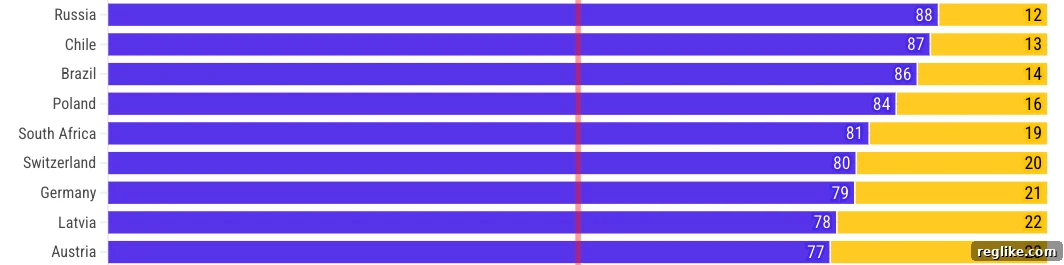
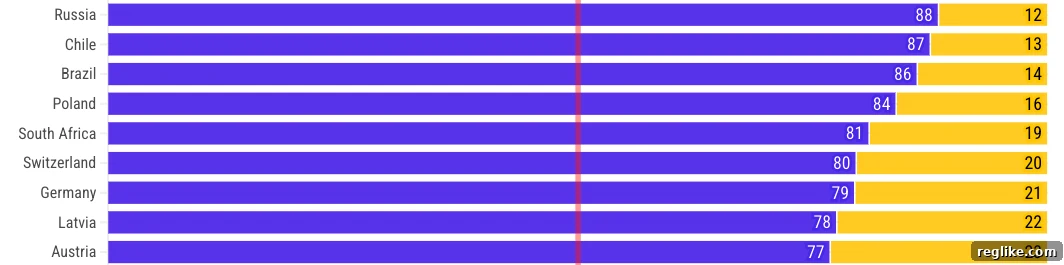
A prime example of this preference is Germany. If you’ve ever navigated the German web, you’d quickly notice that the .de domain reigns supreme. DataProvider.com’s analysis confirms this observation, showing that .de holds a staggering 79% share of websites within the country, dwarfing .com’s 21%. This comparison specifically focused on the country’s native ccTLD against .com, excluding other generic top-level domains (gTLDs) to highlight the direct contrast in local versus global domain preference.
The dominance of .de in Germany is hardly surprising. With over 15 million registrations, .de is not only one of the most popular ccTLDs globally but also a symbol of German digital identity. Its widespread adoption underscores a strong cultural and practical preference for local domains, fostering trust and a sense of national online community. This robust presence demonstrates how vital ccTLDs are for national brand recognition and effective local SEO strategies.
Countries Where ccTLDs Lead the Digital Charge
The trend of ccTLD dominance extends far beyond Germany, encompassing a broad range of countries across different continents. DataProvider.com’s research highlighted several other nations where local domains form the backbone of the internet, showcasing a powerful lean towards national digital identities. The countries exhibiting the highest concentration of ccTLD usage include:
- Russia (.ru): With an impressive 88% ccTLD usage, demonstrating a strong national digital ecosystem and a clear preference for local online platforms and services. This high percentage highlights the strategic importance of .ru domains for businesses targeting the Russian market.
- Chile (.cl): Boasting 87% ccTLD adoption, showcasing a clear preference for local online identities and a vibrant national internet community. For businesses in Chile, a .cl domain is essential for building local trust and credibility.
- Brazil (.br): At 86%, Brazil illustrates Latin America’s strong embrace of country-specific domains. The .br domain is widely used by both businesses and individuals, reinforcing local presence and fostering a sense of national belonging in the digital space.
- Poland (.pl): Showing 84% ccTLD usage, reflecting a similar pattern seen across Central and Eastern Europe. The .pl domain is critical for Polish companies seeking to connect authentically with their domestic audience and optimize for local search engines.
- South Africa (.za): A key example from the African continent, where .za domains are significantly preferred. This preference underscores the importance of regional identity in online interactions and digital marketing efforts within South Africa.
These figures are compelling indicators of how diverse the global internet truly is. They challenge the notion that .com is the universal default, revealing robust and thriving local domain environments that demand tailored digital strategies for global businesses.
The U.S. Anomaly: Why .COM Reigns Supreme Domestically
While many countries strongly favor their ccTLDs, the United States stands out as an outlier. As DataProvider.com’s analysis confirmed, the USA records the lowest percentage of ccTLD (.us) usage compared to .com. For anyone living in the U.S., this isn’t groundbreaking news; the overwhelming presence of .com in daily online interactions makes this an intuitive observation. The reasons for this unique American preference are multifaceted and deeply rooted in the history of the internet’s commercialization.
Historically, the internet’s early commercialization largely took root in the United States. Consequently, .com emerged as the de facto commercial domain, quickly gaining global recognition and becoming synonymous with “the internet” itself. This early adoption and widespread international use from a U.S. base solidified .com’s position, making it the natural choice for American businesses and individuals alike. The .us domain, while available, never gained the same traction, partly because .com already served as the perceived “national” and international standard. Furthermore, the vast size and diversity of the U.S. market often mean that a generic .com is sufficient to cover all regions, without the same imperative to signal local presence as in smaller, more nationally distinct markets.
Why Do ccTLDs Matter? The Power of Local Digital Identity
The preference for ccTLDs in many countries is not merely a statistical anomaly; it’s driven by a compelling combination of cultural, practical, and strategic factors that underscore their enduring importance in the digital landscape:
- Local Trust and Credibility: For many users, a local ccTLD like .de, .fr, or .jp signifies a business or organization that is genuinely local, understands the local market nuances, and adheres to local regulations. This builds a powerful sense of trust and credibility that a generic .com might not convey, making consumers more likely to engage with and purchase from local entities.
- Enhanced Local SEO: Search engines like Google often use ccTLDs as a strong signal for geotargeting. A website with a .de domain is naturally favored in German search results, improving visibility for local audiences. This is a crucial advantage for businesses aiming to connect with a specific national market, as it directly impacts organic search rankings and discoverability.
- Cultural Identity and National Pride: In many cultures, using the national domain is a matter of pride and identity. It reinforces a connection to the country and its digital community, resonating more deeply with local consumers who appreciate businesses that embrace their national digital space.
- Brand Availability and Uniqueness: The .com namespace is increasingly crowded, making it exceptionally difficult to find desirable, short, and memorable domain names. ccTLDs often offer significantly greater availability, allowing businesses to secure ideal brand names that might be long gone or prohibitively expensive in the .com space. This provides a distinct advantage in branding and online identity formation.
- Clear Market Segmentation: For international businesses, having separate websites on country-specific ccTLDs (e.g., example.de, example.fr, example.co.uk) clearly signals to users which market each site serves. This improves user experience by delivering highly relevant content, language, and pricing, leading to higher engagement and conversion rates.
- Legal and Regulatory Compliance: In some countries, owning a ccTLD can be a requirement or strongly recommended for certain types of businesses, especially those operating in sensitive sectors, ensuring compliance with local laws and regulations.
Implications for Global Businesses and Digital Strategy
For businesses looking to establish or expand their online presence internationally, understanding the nuanced landscape of domain preferences is critical. A “one-size-fits-all” .com strategy may severely limit reach and impact in markets where ccTLDs are dominant, hindering growth and market penetration.
Ignoring local domain preferences can lead to several missed opportunities and strategic disadvantages:
- Reduced Local Visibility: Without a ccTLD, a business might struggle to rank effectively in local search results, missing out on valuable organic traffic from highly targeted local audiences.
- Lower User Trust: Consumers in ccTLD-dominant regions might view a .com site as less relevant, less trustworthy, or simply not geared towards their local needs, impacting brand perception and customer loyalty.
- Weakened Brand Localization: Relying solely on a .com domain can dilute efforts to localize content, pricing, and services, making the brand appear less integrated into the local market and potentially alienating local customers.
- Competitive Disadvantage: Competitors utilizing ccTLDs will likely gain an advantage in local search and consumer perception, making it harder for a .com-only brand to compete effectively.
Instead, a thoughtful and effective international domain strategy should involve a multi-pronged approach:
- Thorough Market Research: It is paramount to investigate the domain preferences and digital habits of target countries. Data from reputable sources like DataProvider.com is invaluable for making informed decisions.
- Strategic ccTLD Acquisition: Registering and actively using relevant ccTLDs for key markets demonstrates a genuine commitment to local audiences and significantly optimizes for local SEO. This often involves localized content management and potentially regional hosting.
- Consistent Global Branding: While utilizing different ccTLDs, it’s crucial to maintain consistent visual branding, messaging, and overall brand identity to ensure global recognition and cohesion across all localized sites.
- Effective Geo-Targeting Implementation: Leverage tools like Google Search Console’s international targeting features to ensure search engines correctly associate your ccTLDs with their respective geographic regions, thereby maximizing local search performance.
- Consider Subdomains or Subdirectories: If acquiring multiple ccTLDs is not feasible, using subdomains (e.g., de.example.com) or subdirectories (e.g., example.com/de/) can be an alternative, though ccTLDs generally offer stronger geotargeting signals.
DataProvider.com’s Methodology: A Closer Look at the Data
The insights provided by DataProvider.com are based on a robust methodology designed to capture the true scale of domain usage. The company clarified that their data encompasses all available websites, including what they term “placeholder” websites. This comprehensive approach ensures that the analysis isn’t skewed by only including active, fully developed sites but reflects the entire registered domain landscape, offering a more complete picture of domain distribution.
Their findings are derived from DataProvider.com’s proprietary crawler technology combined with other reliable data sources. This blend of automated discovery and curated information lends significant weight and credibility to their conclusions, offering a credible and expansive snapshot of global domain distribution and preferences.
The Future of Domain Usage: A Diverse Digital Ecosystem
As the internet continues to evolve and globalize, the interplay between ccTLDs and generic top-level domains (gTLDs) will remain a fascinating area of study. While new gTLDs offer fresh branding opportunities and expand the choices beyond .com, the strong national identities embodied by ccTLDs suggest their continued relevance and perhaps even growth in specific markets.
The lesson from DataProvider.com’s analysis is clear: the digital world is far more diverse than a simple .com assumption suggests. For anyone navigating the complexities of international online presence, recognizing and respecting these local domain preferences is not just good practice—it’s absolutely essential for achieving sustainable global digital success.
Ultimately, the internet’s true power lies in its ability to connect globally while still allowing for strong local expression and identity. Country code top-level domains are a vital component of this delicate balance, ensuring that national identities and local market nuances thrive in the vast, interconnected digital expanse. Embracing this diversity is key to building a truly global and inclusive internet experience.