
Decoding Domain Name Expiration: Key Insights from Nominet’s .uk Industry Report
In the rapidly evolving digital landscape, a domain name serves as the cornerstone of an individual’s or organization’s online identity. Losing control of this vital asset due to expiration can have significant repercussions, ranging from a disrupted online presence to potential brand damage. Understanding the dynamics of domain name expiration and renewal is therefore paramount for both registrants and the broader domain industry. This critical need for insight was expertly addressed by Nominet, the official registry for the widely used .uk country code Top-Level Domain (ccTLD), through its comprehensive 2009 Domain Name Industry Report (PDF).
This landmark report provided an invaluable deep dive into the statistics surrounding domain renewal rates and, more importantly, illuminated the diverse reasons why registrants allow their valuable domain names to expire. The data presented within this document has been, and continues to be, immensely useful for various stakeholders, including policy-making bodies like the ICANN Working Group, which actively examines the complex issue of expiring domains on a global scale. By analyzing registrant behavior within the .uk space, the report offers transferable lessons and best practices that resonate across the entire domain name ecosystem.
Unique Characteristics of .uk Domain Registration
Before delving into the specific findings, it’s essential to acknowledge a couple of distinct differences that characterize .uk domain registrations compared to many other popular TLDs, such as .com or .net. These unique aspects likely play a role in shaping registrant behavior and the effectiveness of renewal processes:
- Two-Year Registration Term: Unlike the more common one-year registration period offered by many other domain extensions, .uk domains are typically registered for a minimum of two years. This longer initial term might influence how registrants perceive their commitment to a domain and how frequently they are prompted to consider renewal. A two-year cycle could lead to a less frequent interaction with renewal notices, potentially increasing the risk of oversight if not managed proactively.
- Dual Renewal Reminders: A significant protective measure within the .uk ecosystem is that Nominet, as the registry, sends renewal reminders directly to customers. This is in addition to the reminders typically sent by the respective domain registrars. This dual reminder system acts as an extra layer of notification, theoretically reducing the chances of an important domain expiring simply due to missed communications from a single source. This proactive approach by the registry highlights a commitment to minimizing inadvertent domain expirations and maintaining a stable domain base.
Understanding these foundational differences provides crucial context for interpreting the renewal statistics and registrant behaviors observed in Nominet’s report. It also offers a comparative lens for other registries and registrars to evaluate their own reminder and registration policies.
Key Drivers Behind Domain Renewal Decisions
The Nominet report meticulously analyzed the factors that compel domain owners to renew their .uk domain names. The findings underscore the critical role of timely communication and, interestingly, a prevalent misconception regarding automatic renewals. For those registrants who successfully renewed their domains, Nominet’s research revealed the following significant insights:
- Registrar Reminders as the Primary Catalyst: A substantial 60% of renewals were directly attributed to reminders received from their domain registrar. This figure remained consistent with similar research conducted in 2007, emphasizing the enduring importance of registrars as the frontline communicators in the domain lifecycle. This highlights the indispensable role registrars play in proactively engaging with their clients, not just at the point of registration, but crucially at the point of renewal. Effective reminder systems, clear communication, and user-friendly renewal processes are vital for maintaining high renewal rates.
- The “Automatic Renewal” Misconception: A notable 25% of surveyed registrants believed that their domain names renewed automatically. This figure saw a slight increase from 22% in 2007, indicating a persistent, and potentially growing, misunderstanding among a significant portion of domain owners. This belief poses a considerable risk, as domains rarely renew automatically without explicit prior setup (e.g., auto-renewal linked to a payment method) or without the registrant actively confirming. This finding points to a critical need for clearer education from both registrars and registries about the mechanics of domain renewal. Misplaced trust in automatic processes can lead to unexpected expirations and subsequent loss of online presence.
- Nominet’s Role in Reinforcement: A smaller, yet still significant, 7.3% of renewals occurred after registrants received reminders directly from Nominet, the registry itself. While this figure was slightly down from 8.6% in 2007, it still demonstrates the value of the registry’s supplementary reminder system. This dual reminder approach, where both registrar and registry send notifications, acts as an important safety net, catching those who might have overlooked or missed their registrar’s communications. It reinforces the idea that redundancy in critical notifications can be highly effective in preventing inadvertent domain lapses.
The Undeniable Impact of Reminders and Accurate WHOIS Data
An overwhelming 98.2% of all surveyed individuals recalled receiving at least one reminder about renewing their domain name. This statistic, while impressive on its surface, warrants deeper analysis. It suggests that the communication channels for renewal notifications are largely effective in reaching registrants. However, the very existence of expired domains indicates that merely recalling a reminder isn’t always enough to guarantee renewal.
This leads us to a crucial point that cannot be overstated: the number one reason why someone neglects to renew an important domain name is often linked to inaccurate, outdated, or false WHOIS data. If contact information – especially email addresses and phone numbers – listed in the WHOIS database is incorrect, renewal reminders, regardless of how many are sent or by whom, simply won’t reach the registrant. Consequences of inaccurate WHOIS data extend beyond just missed renewals:
- Loss of Control: The most direct consequence is the inability to receive critical notifications, leading to the potential loss of the domain.
- Security Risks: Inaccurate data can make a domain more vulnerable to hijacking or unauthorized transfers, as legitimate contact for verification becomes impossible.
- Legal and Compliance Issues: ICANN policies and national regulations often mandate accurate WHOIS data. Non-compliance can lead to domain suspension or other penalties.
- Missed Opportunities: An expired domain can be snapped up by competitors or domain speculators, leading to costly reacquisition or permanent loss of a valuable digital asset.
Therefore, while reminders are essential, their efficacy is entirely dependent on the accuracy of the underlying contact information. Registrants have a fundamental responsibility to ensure their WHOIS data is current and valid, and registrars must make this process easy and regularly prompt users to update their details.
Dissecting the Reasons for Non-Renewal
Understanding why domains expire is as crucial as knowing why they renew. Nominet’s report visually represented the primary reasons registrants chose not to renew their .uk domains. While the specific categories would be detailed in the original report’s graph, common reasons for non-renewal typically include:
- Project Abandonment or Business Closure: Many domains are registered for specific projects, startups, or temporary campaigns. If the venture fails, changes direction, or the business ceases operations, the associated domain becomes obsolete.
- No Longer Needed/Relevant: Over time, a domain’s purpose might diminish. A personal blog might be discontinued, an old marketing campaign might end, or a business might pivot to a new brand identity requiring a different domain.
- Cost Concerns: While domain registration fees are generally modest, cumulative costs over many domains or for a low-value project can sometimes lead to a decision not to renew.
- Transferred to Another Registrar/Owner: Sometimes, a domain appears to expire but has actually been transferred to another registrar or sold to a new owner, who then manages its renewal. From the original registrar’s perspective, it’s a “non-renewal” because it’s no longer under their management.
- Forgotten or Missed Reminders: Despite multiple reminders, oversight can still occur, especially if contact information is slightly out of date, or if the registrant is overwhelmed with other responsibilities.
- Acquired a New Domain: A registrant might have purchased a newer, more suitable domain name and decided to let the old one lapse.
This graph, which would have been present in the original report, would visually explain the breakdown of these reasons, providing a clearer picture of registrant motivations for letting go of their digital assets.
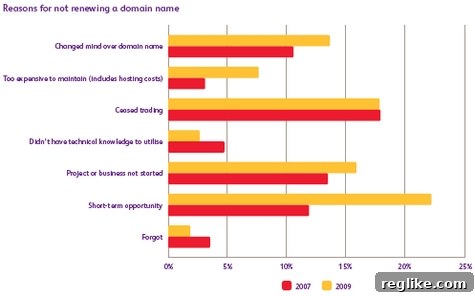
For domain investors and those in the secondary market, understanding these patterns of non-renewal is gold. It helps identify categories of domains that are more likely to become available, informing acquisition strategies. For registrars, it offers insights into customer churn and areas where retention efforts could be improved.
The Power of Sustained Renewal: Loyalty in the Digital Realm
Another fascinating insight from Nominet’s analysis, universally understood but always valuable to quantify, pertains to the lifecycle of domain renewals. The report clearly illustrated a powerful trend: if a registrant is prompted to renew a domain name once, the odds significantly increase that they will continue to renew it repeatedly.
This phenomenon speaks to the inherent value users place on an established online presence. Once a domain becomes integrated into a brand, a business, or a personal identity, its perceived value escalates. Changing a domain name involves considerable effort, including updating branding, marketing materials, email addresses, and search engine optimization. Therefore, the inertia to maintain an existing, functional domain is very strong. This “stickiness” of renewed domains highlights:
- Brand Equity: A domain name often becomes synonymous with a brand or individual. Renewing it preserves this equity.
- Established Online Presence: An active domain means established email services, website content, and search engine rankings, all of which are costly and time-consuming to rebuild.
- Customer Loyalty and Retention: For registrars, this implies that the initial renewal is a critical hurdle. Once a registrant renews for the first time, they are much more likely to become a long-term, loyal customer. This underscores the importance of robust onboarding, effective first-year reminders, and excellent customer service to secure that crucial initial renewal.
- Predictability for the Industry: This trend provides a degree of stability and predictability for registries and registrars, allowing for better forecasting of renewal rates and revenue.
The graph from the report would have visually confirmed this trend, showing a clear curve where the probability of future renewals increases after each successful prior renewal.
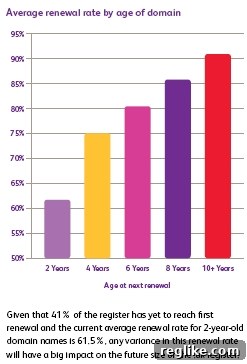
This insight is a cornerstone for customer retention strategies within the domain industry, emphasizing that nurturing existing clients is often more cost-effective than constantly acquiring new ones.
Broader Implications for the Global Domain Industry
While Nominet’s 2009 report focused specifically on .uk domains, its findings carry significant weight and offer valuable lessons for the entire global domain name industry. The challenges and behaviors observed within the .uk space are often mirrored, to varying degrees, across other ccTLDs and generic Top-Level Domains (gTLDs). The insights derived from this report can inform:
- ICANN Policy Development: Data on expiration and renewal rates directly impacts ICANN’s ongoing efforts to refine policies related to domain lifecycle, registrant rights, and the handling of expired domains. Understanding common reasons for non-renewal helps tailor policies that are both effective and fair.
- Registrar Best Practices: The report reinforces the necessity of proactive and multi-channel reminder systems. It also highlights the need for clear communication regarding auto-renewal options and the critical importance of encouraging registrants to maintain accurate WHOIS data. Registrars can leverage these insights to enhance their customer retention strategies and improve their service offerings.
- Registry Operations: For other registries, the .uk model of dual reminders (from both registrar and registry) offers a potential blueprint for reducing accidental expirations. The report encourages registries to assess their own roles in registrant education and support.
- Secondary Market Dynamics: The data on reasons for non-renewal provides critical intelligence for the domain aftermarket. Understanding which types of domains are likely to expire and why helps inform strategies for acquiring valuable expired domains.
- Registrant Education: Ultimately, the report underscores the persistent need to educate domain owners about their responsibilities. This includes understanding renewal cycles, maintaining accurate contact information, and being aware of the consequences of domain expiration.
Conclusion: The Enduring Value of Domain Industry Reports
Nominet’s 2009 Domain Name Industry Report remains a powerful testament to the value of detailed data analysis in understanding the complex behaviors surrounding domain name management. By providing in-depth statistics on renewal rates, the critical role of reminders, the common reasons for non-renewal, and the enduring loyalty of renewing registrants, the report offers actionable insights for every participant in the domain ecosystem.
From individual website owners safeguarding their digital identity to large enterprises managing vast domain portfolios, and from registrars striving for higher retention to registries developing robust policies, the lessons from this report are timeless. The digital landscape continues to evolve at a rapid pace, making accurate domain management more critical than ever. Regularly reviewing such comprehensive industry reports is not merely an academic exercise; it is an essential practice for staying informed, mitigating risks, and capitalizing on opportunities within the ever-expanding world of domain names. The full report, replete with even more renewal and registration data, undoubtedly warrants a thorough review for anyone deeply invested in the health and future of the domain industry.