
Revolutionizing Digital Identity: Oath’s Patent Unites Domain and Trademark Registration for Enhanced Brand Protection
In an increasingly digital world, securing a distinct and legally protected online identity is paramount for individuals and businesses alike. From the initial spark of an idea to the grand launch of a new venture, the journey often begins with registering a domain name. However, the critical step of protecting that brand through trademark registration is often overlooked or postponed, leading to potential legal complications and costly rebranding efforts down the line. A groundbreaking development from Oath Inc. (the entity formerly encompassing Yahoo) seeks to address this very challenge, promising to streamline the process of brand establishment and protection.
A Landmark Patent for Integrated Brand Management
The U.S. Patent and Trademark Office (USPTO) has officially granted patent number 10,956,516 to Oath Inc. This significant patent, titled “Collectively performing domain searches and trademark searches,” outlines an innovative system designed to integrate two historically separate, yet intrinsically linked, processes: searching for available domain names and conducting trademark searches. Applied for in June 2018 and granted recently, this patent paves the way for a more unified approach to establishing an online presence and safeguarding intellectual property.
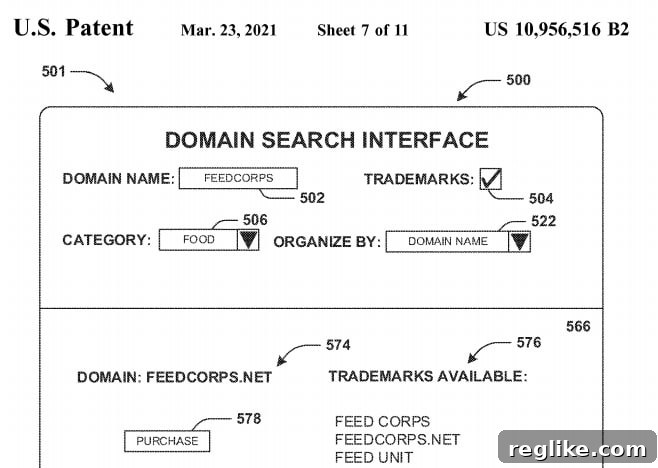
At its core, the patent describes a sophisticated system where users can perform a simultaneous search for both domain availability and potential trademark conflicts or opportunities. This dual functionality is envisioned with two primary use cases, each offering substantial benefits to the domain registrant:
- Cross-selling Trademark Registration: One of the key objectives of Oath’s patented system is to proactively suggest trademark registration to individuals or entities who have just registered a domain name. Imagine registering “example.com” for your new business idea. The system would then intelligently prompt you to consider registering “EXAMPLE” as a trademark. This proactive approach is particularly beneficial for startups and new businesses that might not immediately think of trademark protection, guiding them towards a more comprehensive brand strategy from inception. It’s crucial to note that for a brand-new business, this would typically involve filing an “intent-to-use” trademark application, signaling their future plans to use the mark in commerce.
- Warning Against Potential Trademark Conflicts: Equally vital, the patent envisions a mechanism to warn registrants if the domain they are considering is similar to an existing, registered trademark. This functionality acts as an early warning system, helping individuals and businesses avoid potential legal disputes and infringement claims before they even fully establish their brand. By flagging potential conflicts upfront, the system empowers registrants to make informed decisions, potentially choosing an alternative name or conducting further legal due diligence. This can save significant time, money, and reputational damage that often arise from trademark disputes.
Why Integrated Domain and Trademark Registration is a Game-Changer
The current process for securing an online identity and its corresponding legal protection is often disjointed. An entrepreneur typically begins by searching for an available domain name through a registrar. Once found, they register it. The next, often separate, step involves hiring legal counsel or conducting independent research to determine if their chosen brand name infringes on existing trademarks or if it’s available for trademark registration. This two-step process is prone to oversights, delays, and considerable risk.
Oath’s patent offers a paradigm shift by:
- Streamlining the Brand Launch Process: For startups and small businesses, time and resources are often scarce. Consolidating domain and trademark searches into a single, intuitive interface dramatically simplifies the initial stages of brand development. It ensures that brand protection is considered from day one, rather than as an afterthought.
- Mitigating Legal Risks: Trademark infringement can be a costly affair, leading to legal battles, injunctions, forced rebrands, and significant financial penalties. By integrating trademark search capabilities directly into the domain registration process, the system acts as a preventative measure, helping businesses avoid selecting a name that is already legally protected by another entity. This proactive risk management is invaluable in today’s litigious environment.
- Enhancing Brand Value and Consistency: A strong brand is built on a foundation of legal protection. Ensuring that a domain name is not only available but also clear for trademark use enhances the overall value and consistency of a brand. It provides peace of mind that the chosen identity is unique and defensible in the marketplace.
- Improving User Experience: From a user perspective, the convenience of a “one-stop shop” for digital identity is undeniable. Instead of navigating multiple platforms and services, users can gain a holistic view of their chosen brand name’s availability and legal status within a single interaction.
- Educating Registrants: Many individuals may not fully grasp the distinction between domain names and trademarks, nor the importance of the latter. An integrated system can serve as an educational tool, subtly guiding users toward best practices in intellectual property protection.
Challenges and Future Implementation
While the concept is undeniably powerful, its real-world implementation presents several complexities. As observed, a quick search on Yahoo Domains (the domain registration service operated by Oath) did not immediately reveal this integrated functionality. This suggests that while the patent has been granted, its full implementation might still be in development or could be rolled out in phases.
Key considerations for successful deployment include:
- Complexity of Trademark Law: Trademark law is intricate, involving different classes of goods and services, geographic considerations, “intent-to-use” versus “in-use” marks, and common law rights. An automated system would need sophisticated algorithms and potentially AI to accurately assess potential conflicts and opportunities without providing legal advice, which registrars are typically not equipped to do.
- User Interface Design: Presenting complex trademark information in a clear, concise, and non-overwhelming manner to a broad user base will be crucial. The system needs to be informative without being overly technical or generating false positives that could deter users.
- Integration with Legal Services: While the system can flag potential issues, it cannot replace professional legal counsel. The ideal implementation might include seamless integration with legal services, allowing users to easily connect with trademark attorneys for deeper analysis and filing assistance.
- Scope of Search: Trademark databases are global, whereas the USPTO patent primarily covers U.S. trademarks. Future iterations might explore how to incorporate international trademark databases, or at least provide clear disclaimers regarding the scope of the search.
The Broader Implications for Digital Asset Management
This patent is more than just an incremental improvement; it signifies a broader trend towards the convergence of technical and legal aspects of digital asset management. In an era where online presence dictates market relevance, the holistic management of digital assets – from domain names and social media handles to registered trademarks – is becoming critical. Oath’s innovation pushes domain registrars beyond merely being technical facilitators to becoming proactive partners in brand strategy and protection.
The ability to instantly gauge both technical availability and legal viability of a brand name at the point of origin has far-reaching implications:
- For Entrepreneurs and Startups: It provides a safety net, ensuring their innovative ideas are built on a solid, legally protected foundation. This reduces the risk of costly pivots or disputes later on.
- For Small to Medium-sized Businesses (SMBs): It democratizes access to basic intellectual property screening, which was once primarily the domain of larger corporations with dedicated legal departments.
- For Large Corporations: It can streamline internal processes for launching new products, services, or campaigns, ensuring brand consistency and legal compliance across diverse portfolios.
- For the Domain Industry: It elevates the role of domain registrars, positioning them as key players in the broader brand and intellectual property ecosystem. This could lead to new service offerings and a more competitive landscape focused on value-added features beyond simple domain sales.
Furthermore, this patent could inspire other registrars and technology companies to develop similar integrated solutions, fostering an environment where brand protection becomes an intrinsic part of the online identity creation process. Imagine a future where, when you register a domain, you are also seamlessly guided through securing corresponding social media handles, relevant trademarks, and even monitoring tools for brand infringement – all from a single platform.
Conclusion
Oath Inc.’s patent for “Collectively performing domain searches and trademark searches” represents a significant leap forward in how we approach online brand identity and intellectual property protection. By bridging the gap between domain registration and trademark safeguarding, this innovation promises to make the process more efficient, secure, and accessible for everyone from budding entrepreneurs to established enterprises. While its full implementation and the intricacies of its execution remain to be seen, the underlying concept has the potential to fundamentally transform the landscape of digital asset management, setting a new standard for brand protection in the interconnected world.