
Pioneering Mobile Engagement: How Barack Obama’s 2008 Campaign Leveraged the Mobile Web with .mobi
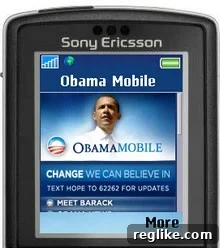
In the pivotal 2008 United States Presidential election, the landscape of political campaigning was undergoing a profound transformation. While traditional media still held sway, the burgeoning digital realm, particularly the nascent mobile web, was emerging as a powerful, untapped frontier for direct voter engagement. Against this backdrop, then-presumptive Democrat nominee Barack Obama’s campaign distinguished itself by proactively embracing this new medium, famously utilizing ObamaMobile.mobi for its dedicated mobile website. This strategic move was not merely a gesture towards technological savvy but a calculated effort to reach voters where they were increasingly spending their time: on their mobile devices.
At a time when smartphone adoption was still nascent and feature phones dominated the market, creating an effective mobile web experience presented unique challenges. Bandwidth was limited, screens were small, and browser capabilities were basic. Most popular websites that claimed mobile versions often resorted to simple redirects from their .com domains, offering a stripped-down, often clunky, experience. The Obama campaign, however, took a significantly more forward-thinking approach by specifically deploying a .mobi domain. Unlike many contemporaries, ObamaMobile.mobi actually resolved directly to a mobile-optimized site, rather than merely forwarding users to a mobile-responsive version of a .com address. This dedication to a native mobile experience underscored the campaign’s understanding of the distinct needs and limitations of mobile users in that era.
Strategic Innovation in Mobile Engagement
The ObamaMobile.mobi site was a testament to intelligent design within the constraints of early mobile technology. It masterfully provided a commendable level of interactivity, proving that even with limited resources, effective digital communication was achievable. A key feature was its integration of a text response number, allowing voters to easily sign up for updates, volunteer information, or policy briefs simply by sending a text message. This low-barrier-to-entry method was crucial for grassroots mobilization and direct communication, circumventing the often cumbersome process of filling out web forms on a small screen.
Furthermore, the campaign intelligently addressed the practical challenges of content delivery. For instance, rather than attempting to force users to download dense whitepapers directly onto their phones – a process that would have been slow, data-intensive, and frustrating on most mobile devices of the time – ObamaMobile.mobi allowed users to request these documents via email. This thoughtful approach ensured that interested voters could access detailed policy information in a more convenient format, to be reviewed later on a desktop or laptop, while still initiating the engagement on their mobile device. Such strategic design choices highlighted a campaign acutely aware of its audience’s technological environment and tailored its solutions accordingly, fostering a sense of accessibility and responsiveness.
Navigating the Domain Name Landscape: Challenges and Missed Opportunities
Despite the innovative spirit behind ObamaMobile.mobi, the campaign’s journey into the mobile web was not without its strategic pitfalls, particularly concerning domain name acquisition. For dedicated .mobi enthusiasts, the primary disappointment lay in the choice of a somewhat lengthy and less-than-ideal domain name. The more intuitive and memorable Obama.mobi, for instance, was unfortunately unavailable, redirecting instead to an Information.com page, indicating it was likely registered by a third party. This scenario underscores a common challenge in the digital age: the preemptive registration of valuable domain names by entities not directly affiliated with the intended subject.
An even greater hurdle emerged with the .com equivalent. The highly desirable ObamaMobile.com was already owned by a New York firm, having been registered prior to the Barack Obama campaign’s rise to national prominence and its subsequent need for a mobile web presence. This pre-registration meant the campaign was unable to secure the most obvious and brand-consistent .com domain for its mobile initiatives, forcing it to opt for the .mobi alternative. While the use of .mobi had its strategic advantages in establishing a dedicated mobile identity, the inability to control the primary .com variant presented a potential branding and redirection challenge, necessitating extra effort to guide users to the correct mobile destination.
A Tale of Two Campaigns: Digital Divides in 2008
The contrast between the Obama campaign’s proactive mobile strategy and that of his Republican counterpart, John McCain, was stark and revealing, particularly as highlighted by observations from industry watchdogs like the dotMobi blog. According to their analysis, Republican candidate John McCain did not possess a dedicated mobile site, at least not one that was readily apparent or actively promoted. This apparent lack of a mobile presence suggested a significant difference in strategic priorities and technological foresight between the two campaigns.
Further investigation into McCain’s domain holdings revealed additional complexities. JohnMcCain.mobi was registered, but not by the candidate’s official campaign; instead, it was held by a company named “Campaign Solutions,” indicating a potential disconnect or a less direct approach to digital asset management. Moreover, while McCainMobile.mobi remained unregistered, the crucial McCainMobile.com domain was notably registered by the same New York firm that controlled ObamaMobile.com. This mirrored situation, where third parties owned key digital real estate for both campaigns, underscored the broader challenges politicians faced in securing their digital identities and highlighted the often-overlooked importance of a comprehensive domain name strategy in modern politics.
The Impact and Legacy of Obama’s Mobile Gambit
Barack Obama’s decision to embrace the mobile web with ObamaMobile.mobi was more than just a technological curiosity; it was a foundational element of his campaign’s overall digital strategy that played a significant role in his historic victory. By actively reaching out to voters through their mobile devices, the campaign tapped into a burgeoning demographic of younger, tech-savvy individuals who were increasingly engaging with information and social networks on the go. This direct channel of communication proved incredibly cost-effective compared to traditional advertising, allowing the campaign to disseminate messages, organize volunteers, and solicit donations with unparalleled efficiency.
The mobile site fostered a sense of grassroots empowerment, making it easier for supporters to stay informed and get involved, irrespective of their location. This strategy was not just about garnering votes; it was about building a movement, brick by digital brick. The innovative use of features like text messaging for engagement and email for detailed content delivery demonstrated a keen understanding of user behavior and technological limitations, setting a new benchmark for political outreach.
In retrospect, the Obama campaign’s early adoption of a dedicated mobile web presence, particularly through a .mobi domain, proved to be remarkably prescient. While the .mobi domain itself eventually became less central as responsive web design evolved to make single .com domains universally accessible across devices, the underlying principle – meeting voters where they are, on their preferred devices, with tailored content – remains a cornerstone of modern political campaigning. The 2008 election, through ObamaMobile.mobi, served as an early indicator of the profound influence that mobile technology would come to exert on democracy, demonstrating that foresight in digital strategy can be as critical as traditional political maneuvering.