
Web Security Under Threat: Unveiling the Dark Side of Parked Domains and Zero-Click Advertising
The digital landscape is constantly evolving, and with it, so are the threats to our online security. A recent investigation has shed light on a sophisticated web of malicious activity exploiting parked domains and the rise of zero-click advertising. This report unveils how seemingly harmless practices are being weaponized by bad actors to distribute malware, scams, and other harmful content.
The Decline of AdSense for Domains and the Rise of a New Threat
Earlier this year, Google’s decision to phase out AdSense for Domains sent ripples through the web security community. Experts predicted that this change would create new avenues for malicious actors to exploit the internet. This prediction has, unfortunately, been validated by recent findings.
As traditional pay-per-click domain parking becomes less lucrative, a growing number of individuals are turning to zero-click advertising, also known as direct advertising, as an alternative monetization strategy. While seemingly harmless, this practice presents a significant security risk.
Zero-Click Advertising: A Direct Path to Malicious Content
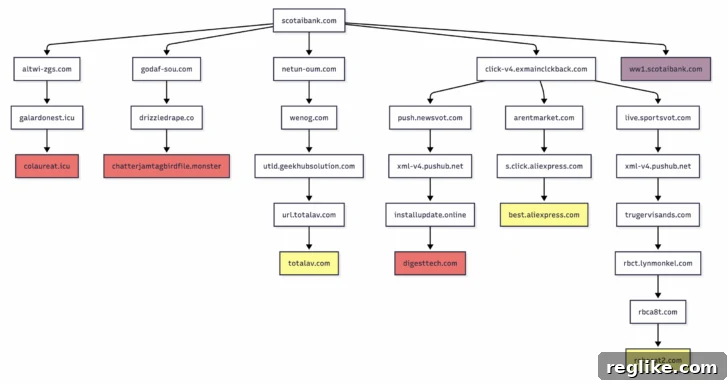
In the zero-click advertising model, visitors who land on a parked domain are immediately redirected to an advertiser’s website, bypassing the traditional page of ads. This direct redirection, while intended to streamline the user experience, often leads unsuspecting visitors to scam websites or sites infected with malware.
Web security firm Infoblox’s recent research has revealed the alarming extent of this problem. According to their findings, malicious redirects are no longer a minority occurrence; they have become the norm. Their analysis indicates that over 90% of visitors to parked domains are now being directed to illegal content, scams, scareware, fraudulent anti-virus software subscriptions, or malware-laden websites. This alarming statistic underscores the severity of the threat posed by the exploitation of parked domains and zero-click advertising.
The Chain of Deception: How Traffic is Monetized and Exploited
It’s important to note that Infoblox’s report does not directly accuse the domain parking and zero-click advertising companies themselves of malicious intent. Many of these companies implement “Know Your Customer” (KYC) protocols to vet advertisers and ensure their legitimacy. However, the problem arises when advertisers resell their traffic to third parties. This creates a complex chain of redirects, often involving five or more hops after a visitor lands on a domain. Each reseller and affiliate in this chain has the potential to sell the traffic to malicious actors, making it difficult to trace the origin of the threat.
This complex network of resellers and affiliates provides a breeding ground for deception. Bad actors can disguise their activities and exploit vulnerabilities in the system to distribute malicious content to unsuspecting users. The lack of transparency and accountability in this ecosystem makes it challenging to combat the growing threat.
Sophisticated Tactics: Hiding Activities and Targeting Specific Users
The report highlights the sophisticated tactics employed by these malicious networks. They often attempt to conceal their activities by tailoring their redirects based on various factors, such as the visitor’s IP address. For example, some networks only initiate zero-click redirects when the visitor is using a residential IP address, suggesting an attempt to avoid detection by security researchers or automated crawlers.
This level of sophistication demonstrates the dedication and resources that these bad actors are investing in exploiting parked domains and zero-click advertising. They are constantly adapting their techniques to evade detection and maximize their reach, making it crucial for individuals and organizations to stay informed and vigilant.
The GoDaddy Typo: An Ironic Case of Misdirection
In a particularly ironic case, the report details an instance where a person is using a typo of GoDaddy’s domaincontrol.com nameserver to capture traffic. What makes this case even more remarkable is that the typo domain itself is registered with GoDaddy. This highlights the pervasive nature of the problem and the vulnerability of even well-established companies to these types of attacks.
This incident serves as a stark reminder that even the most vigilant organizations can be susceptible to typosquatting and other forms of domain-related abuse. It also underscores the importance of comprehensive domain monitoring and security measures to protect against these threats.
The Future of Domain Monetization: A Call for Responsibility
The demise of AdSense for Domains has undoubtedly accelerated the adoption of zero-click advertising as a monetization strategy. While this may seem like a viable alternative for domain owners, it also presents a significant danger to the domain industry and domain investors. The proliferation of malicious redirects can erode trust in the domain ecosystem and create a negative perception of the industry as a whole.
It is crucial for domain investors who utilize parked domain servers to take proactive steps to verify how their traffic is being monetized. They must ensure that their domains are not being used to forward visitors to malicious websites. This requires a thorough understanding of the traffic flow and a commitment to responsible domain management practices.
Transparency and Prevention: A Necessary Step Forward
Furthermore, companies that offer zero-click parking services have a responsibility to explain precisely how they are preventing bad actors from infiltrating their traffic streams. Transparency and accountability are essential to building trust and mitigating the risks associated with this advertising model.
By openly communicating their security measures and actively working to prevent malicious activity, these companies can demonstrate their commitment to protecting users and preserving the integrity of the domain ecosystem.
Protecting Yourself: Staying Vigilant in a Risky Environment
In conclusion, the rise of zero-click advertising and the exploitation of parked domains pose a significant threat to web security. Individuals and organizations must be vigilant in protecting themselves from malicious redirects and other online threats.
Here are some steps you can take to stay safe:
- Be wary of unexpected redirects when visiting websites.
- Double-check URLs to ensure they are accurate and free of typos.
- Install and maintain reputable anti-virus software.
- Educate yourself about common online scams and phishing tactics.
- Report suspicious websites to the appropriate authorities.
By working together, we can mitigate the risks associated with parked domains and zero-click advertising and create a safer online environment for everyone.