
Google’s Core Web Vitals: A New Era for Page Experience and SEO
In a significant move poised to reshape the landscape of search engine optimization, Google announced earlier this year that “page experience” would become a pivotal factor influencing search rankings. Today, the tech giant has confirmed a definitive timeline: this crucial update will officially roll out in May 2021. This means website owners now have a critical window to fine-tune their sites, ensuring they meet Google’s evolving standards before these changes directly impact their visibility in search results.
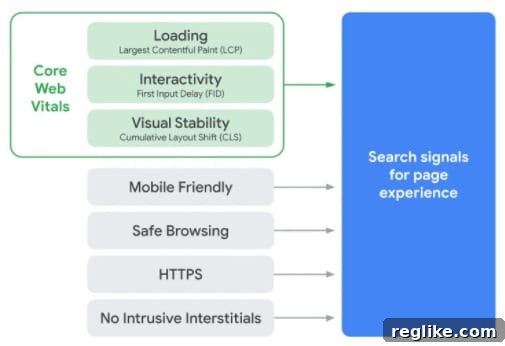
At the heart of this update are three specific metrics collectively known as “Core Web Vitals”: Largest Contentful Paint (LCP), First Input Delay (FID), and Cumulative Layout Shift (CLS). These metrics quantify the real-world user experience of loading, interactivity, and visual stability of a webpage. Essentially, Google is formalizing what many users instinctively know: a slow, janky, or unstable website provides a frustrating experience. Consequently, pages that consistently annoy users by displaying content that constantly shifts or takes too long to respond might find themselves ranking lower in search results.
Understanding the Core Web Vitals: The Pillars of Page Experience
To truly optimize for Google’s new ranking signals, it’s imperative to delve into each of the Core Web Vitals. These aren’t just technical measurements; they represent fundamental aspects of how a user perceives and interacts with your website.
1. Largest Contentful Paint (LCP): The Perception of Load Speed
LCP measures the time it takes for the largest content element in the viewport to become visible. This could be an image, a video, or a large block of text. It’s essentially a proxy for how quickly a user perceives that your page has loaded its main content. A fast LCP reassures users that the page is loading as expected, reducing frustration and bounce rates.
- Why it matters: A slow LCP directly impacts a user’s initial impression of your site’s performance. If the main content takes too long to appear, users are likely to abandon the page.
- How to improve LCP:
- Optimize server response times.
- Compress and optimize images and other large media files.
- Prioritize critical resources for faster loading.
- Implement client-side rendering optimizations.
- Utilize a Content Delivery Network (CDN).
2. First Input Delay (FID): Measuring Interactivity
FID quantifies the time from when a user first interacts with a page (e.g., clicking a link, tapping a button) to when the browser is actually able to respond to that interaction. A low FID score indicates that your page is responsive and processes user inputs quickly, providing a smooth and engaging experience.
- Why it matters: An unresponsive page feels broken and leads to significant user frustration. If a click or tap doesn’t yield an immediate response, users might repeatedly click, assume the page is frozen, or simply leave.
- How to improve FID:
- Minimize JavaScript execution time.
- Break up long-running JavaScript tasks.
- Optimize third-party script loading and execution.
- Use web workers to offload CPU-intensive tasks.
3. Cumulative Layout Shift (CLS): Ensuring Visual Stability
CLS measures the sum total of all unexpected layout shifts that occur during the entire lifespan of a page. An unexpected layout shift happens when a visible element changes its starting position from one rendered frame to the next. Imagine trying to click a button, only for it to suddenly move, causing you to click something else entirely – that’s a negative CLS experience.
- Why it matters: Unexpected layout shifts are incredibly jarring and can lead to misclicks, lost user focus, and overall annoyance. They severely degrade the user experience.
- How to improve CLS:
- Always include width and height attributes on images and video elements.
- Reserve space for dynamically injected content like ads or embeds.
- Avoid inserting content above existing content, unless it’s in response to a user interaction.
- Use CSS transforms for animations instead of properties that trigger layout changes.
Beyond Core Web Vitals: The Holistic Page Experience Signal
It’s important to remember that Core Web Vitals are part of a broader “page experience” signal, not the entirety of it. Google’s page experience also incorporates several other existing search signals that have been fundamental to SEO for years. These include:
- Mobile-Friendliness: Websites that are responsive and perform well on mobile devices are heavily favored.
- Safe-Browsing: Sites free of malware, deceptive content, and other harmful elements.
- HTTPS-Security: Websites secured with an SSL certificate, indicated by “HTTPS” in the URL, are considered trustworthy.
- No Intrusive Interstitials: Google penalizes sites that use pop-ups or other intrusive elements that block content, especially on mobile.
While a site might still rank well if it excels in other areas (like having exceptionally high-quality content), ignoring these page experience signals can put it at a significant disadvantage, particularly when competing with sites that offer comparable content quality.
Why the Focus on Page Experience? Google’s User-Centric Vision
Google’s unwavering commitment to improving user experience drives this update. The goal is to ensure that users not only find relevant information but also access it in a seamless, enjoyable manner. By prioritizing fast-loading, interactive, and visually stable websites, Google aims to:
- Enhance User Satisfaction: A better experience keeps users on websites longer and encourages them to return.
- Future-Proof the Web: As internet speeds and device capabilities evolve, so do user expectations. Google is pushing the web towards higher standards.
- Reward Quality: This update rewards webmasters who invest in a superior technical foundation for their content, complementing existing rewards for content quality.
How to Prepare: Tools and Strategies for Optimization
The good news is that Google provides a robust suite of tools to help website owners diagnose and fix page experience issues. Proactive optimization now will pay dividends in May and beyond.
Website owners should first head to their Google Search Console account. The dedicated “Core Web Vitals” report there provides a site-wide overview of LCP, FID, and CLS performance across different device types. It identifies specific URLs that are performing poorly, categorizing them as “Good,” “Needs Improvement,” or “Poor.”
Once potential issues are identified, more granular analysis and actionable insights can be obtained using Google’s free developer tools:
- PageSpeed Insights: This tool analyzes the content of a web page, then generates suggestions to make that page faster. It provides both lab data (simulated environment) and field data (real user data via the Chrome User Experience Report), giving a comprehensive view of performance across various metrics, including all Core Web Vitals.
- Lighthouse: Integrated directly into Chrome DevTools, Lighthouse is an open-source, automated tool for improving the quality of web pages. It audits performance, accessibility, best practices, SEO, and Progressive Web Apps. Its detailed reports offer specific recommendations, complete with links to documentation on how to implement fixes.
(Note: Both PageSpeed Insights and Lighthouse are hosted on Google’s .dev domain, signifying their developer-centric purpose.)
Beyond these primary tools, general website optimization strategies will also contribute significantly:
- Image Optimization: Compress images, use modern formats (WebP), and implement lazy loading.
- Caching: Leverage browser caching and server-side caching to speed up recurring visits.
- Minify Code: Reduce the size of HTML, CSS, and JavaScript files by removing unnecessary characters.
- Reduce Server Response Time: Optimize database queries, server configuration, and choose a reliable hosting provider.
- Prioritize Above-the-Fold Content: Load critical rendering path resources first.
The Search Results Indicator: A New Visual Cue for Users
In a further testament to the importance of page experience, Google will also experiment with showing a visual indicator in search results when a page delivers a good experience. While the exact design of this indicator is yet to be revealed, its presence could profoundly influence user behavior. Imagine seeing a small icon next to a search result that signals a fast, smooth, and stable page. This subtle cue could encourage users to choose the optimized page over a competitor’s, even if both offer similar content, thereby impacting click-through rates (CTR) and user engagement directly from the search results page.
Page Experience in Context: A Key Signal, Not the Only Signal
Before you fret excessively about every millisecond and pixel shift, it’s crucial to put page experience into its proper context. This is just one of hundreds of signals Google uses to rank websites. Critically, content quality and relevance remain paramount. A site with groundbreaking, authoritative content will likely still rank well, even if its page experience isn’t perfect. Conversely, a blazing-fast site with poor, irrelevant content won’t magically shoot to the top of the SERPs.
Think of page experience as an increasingly important tie-breaker. When Google encounters two pages with equally relevant and high-quality content, the one offering a superior page experience is likely to gain the edge. Sites that aren’t mobile-friendly and don’t have an SSL certificate can still rank high, as the original article noted, but they are doing so despite these factors, often because their content excellence outweighs the negative signals. As the May 2021 update rolls out, the weight of page experience will only grow, making it harder for sites with subpar performance to rely solely on content quality.
Conclusion: Embrace the Change for a Better Web
Google’s introduction of Core Web Vitals as a significant ranking factor marks a clear evolution in SEO. It signifies a stronger emphasis on actual user experience, moving beyond purely technical considerations to how users genuinely perceive and interact with web pages. This update isn’t just about satisfying an algorithm; it’s about building a faster, more stable, and more enjoyable web for everyone.
Website owners and SEO professionals must act now. Leverage the available tools, understand the nuances of LCP, FID, and CLS, and integrate these performance optimizations into your ongoing digital strategy. By embracing these changes, you not only improve your chances of ranking higher in Google search results but, more importantly, create a superior online experience for your audience. This commitment to user satisfaction will undoubtedly lead to greater engagement, lower bounce rates, and ultimately, more successful online endeavors.