
Navigating the Digital Shift: Unpacking Online Transaction Trends During the Pandemic
The global pandemic of the early 2020s catalyzed an unprecedented transformation across virtually every facet of human life, profoundly reshaping economies and societal norms. One of the most significant and enduring impacts was felt within the realm of online commerce. As lockdowns became widespread, social distancing mandates took hold, and remote work and learning became commonplace, consumers rapidly pivoted their purchasing behaviors. This seismic shift compelled businesses to accelerate their digital strategies, often achieving in months what might have previously taken years. Understanding these critical shifts in online transactions is not merely a historical exercise but an essential endeavor for businesses, marketers, and consumers striving to navigate the continually evolving digital marketplace.
Real-Time Insights: The Power of CJ Affiliate Data in Tracking Consumer Shifts
To gain a granular, real-time understanding of these rapid shifts, we turn to the invaluable data generously provided by CJ, a prominent player formerly known as Commission Junction. CJ stands as one of the largest and most influential affiliate marketing networks globally, connecting a vast ecosystem of advertisers with publishers. Its extensive network includes a diverse array of businesses, from burgeoning startups to industry titans like GoDaddy, all leveraging CJ’s platform to manage their affiliate programs. This strategic position grants CJ unparalleled access to precise, real-time transaction data across a wide spectrum of business segments and consumer categories.
The significance of CJ’s data lies in its comprehensive nature. Beyond merely tracking direct sales, the network meticulously monitors a broader range of “actions” that drive commissions. These include critical metrics such as lead generation, new sign-ups, subscriptions, application submissions, and other valuable consumer engagements. This holistic perspective offers a far richer and more nuanced understanding of shifts in consumer demand, intent, and overall online activity, reflecting the true pulse of the digital economy rather than just final purchase points.
In an exemplary demonstration of corporate responsibility and commitment to the business community, CJ made the strategic decision to provide this crucial data freely, updating it on a weekly basis. This ongoing resource proved indispensable for marketers, business strategists, and entrepreneurs globally, empowering them with the insights needed to pivot swiftly, adapt their offerings, and make data-driven decisions during a period of intense uncertainty and rapid change.
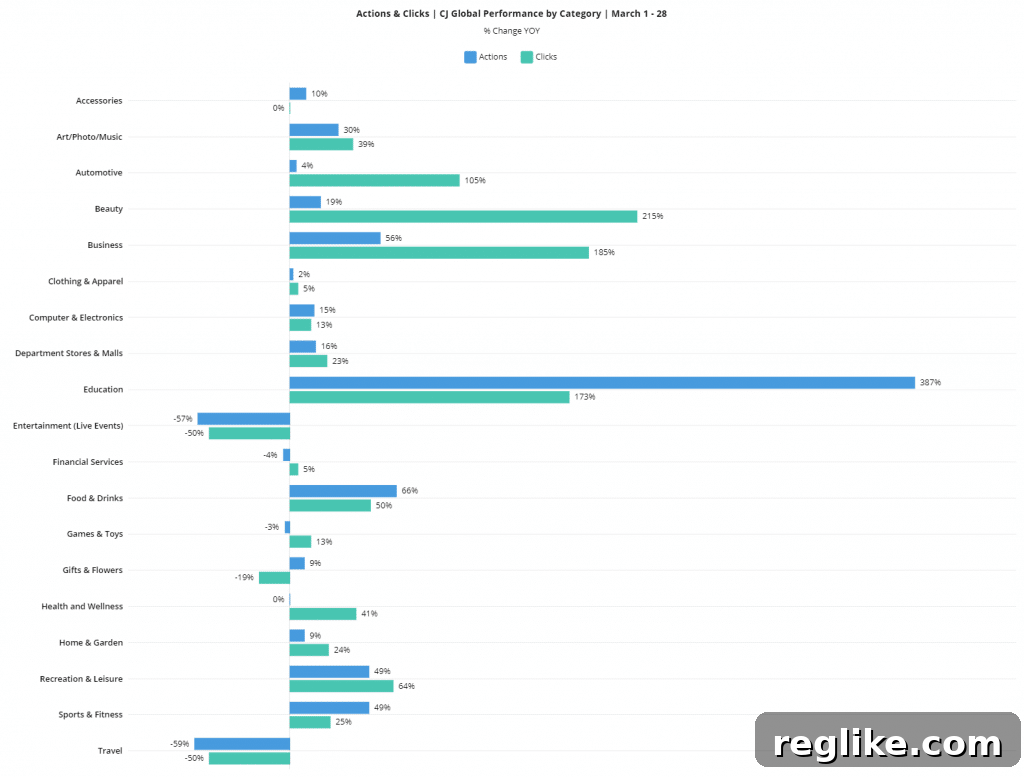
One of the most revealing elements within their comprehensive reports is the year-over-year chart specifically detailing activity from March 1-28. This period coincided with the critical initial rollout of widespread lockdowns and stringent social distancing measures across numerous nations, making the comparison to the previous year particularly striking. The chart starkly illustrates the emerging “winners” and “losers” as the global populace scrambled to adjust to an unprecedented new normal.
The Ascendance of the At-Home Economy: Pandemic Winners Emerge Stronger
The data from CJ vividly illustrates how certain sectors not only demonstrated remarkable resilience but experienced explosive growth, directly reflecting society’s immediate needs and the swift pivot to a predominantly home-centric lifestyle.
- Education: A Digital Learning Renaissance (Actions Up 387%)
The education sector witnessed the most dramatic surge, underscoring a fundamental shift in how knowledge is acquired and disseminated. With schools, colleges, and universities worldwide closing their physical campuses, the transition to online learning became an urgent, universal mandate. This ignited an unprecedented demand for e-learning platforms, online courses, educational software, virtual tutoring services, and language learning applications. From K-12 students engaging in virtual classrooms to adults pursuing new skills, certifications, or professional development during periods of furlough, the digital education market boomed. This isn’t merely a temporary stopgap; it signifies a potential long-term transformation in educational delivery, making online learning more accessible, accepted, and integrated into future academic and professional landscapes. This incredible growth highlights how rapidly society can adapt to digital solutions for essential services. - Food and Drinks: The Unstoppable Rise of Online Grocery and Delivery (Actions Up 66%)
As traditional restaurants faced severe dine-in restrictions and concerns about health risks in crowded grocery stores mounted, online food and beverage transactions surged dramatically. This diverse category encompasses everything from comprehensive online grocery delivery services to specialized meal kit subscriptions (e.g., HelloFresh, Blue Apron) and popular restaurant food delivery apps (e.g., DoorDash, Uber Eats). Consumers prioritized convenience, safety, and reduced contact, overwhelmingly opting to have their meals and groceries delivered directly to their doorsteps. This trend also sparked a renewed interest in home cooking, leading to increased online purchases of specialty ingredients, kitchen gadgets, and recipe subscriptions. The substantial 66% rise underscores a fundamental, and likely lasting, alteration in how individuals procure their daily sustenance, transforming online platforms into indispensable utilities. - Recreation and Leisure: Cultivating Joy and Engagement Indoors (Actions Up 49%)
With outdoor recreational activities curtailed, public venues closed, and social gatherings severely restricted, individuals sought alternative forms of entertainment and leisure that could be enjoyed within the confines of their homes. This broad category experienced significant growth as consumers invested in enhancing their home environments and personal well-being. This included a surge in subscriptions to streaming services (e.g., Netflix, Disney+, Hulu), purchases of video games and consoles, sales of board games and puzzles, arts and crafts supplies, gardening tools, and even materials for various home improvement projects. The collective quest for comfort, distraction, mental stimulation, and new hobbies during prolonged periods of confinement drove this substantial uptick, demonstrating a resilient human capacity to find joy and maintain productivity even under challenging circumstances. - Sports & Fitness: The Home Workout Revolution Takes Center Stage (Actions Up 49%)
The abrupt closure of gyms, fitness studios, and recreational centers, coupled with public health guidelines, rendered traditional fitness routines largely unviable. In response, a massive home workout revolution quickly materialized. Consumers rapidly invested in personal exercise equipment – ranging from foundational items like dumbbells, resistance bands, and yoga mats to more significant purchases such as exercise bikes, elliptical machines, and treadmills. Alongside hardware, demand for online fitness subscriptions, virtual personal training sessions, and health tracking applications soared. People were fiercely determined to maintain their physical health and mental well-being, transforming living rooms and spare bedrooms into makeshift gyms and embracing digital solutions to stay active. This category’s robust growth reflects a proactive and adaptable consumer response to unprecedented health challenges.
These four categories serve as prime examples of how consumer priorities shifted almost instantaneously. The imperative for safety, convenience, personal improvement, and accessible entertainment within the home environment drove immense online spending, highlighting the remarkable adaptability of both consumers and the businesses poised to serve their evolving needs.
Sectors Under Siege: Pandemic Losers Face Significant Headwinds
In stark contrast to the thriving sectors, several industries experienced severe contractions as global mobility ground to a halt and traditional social interactions ceased. These pronounced declines underscore the profound economic disruption inflicted upon sectors heavily reliant on in-person activity, discretionary spending, and unrestricted movement.
- Travel: An Industry Grounded (Actions Down 59%)
Perhaps the most visibly and profoundly affected sector was travel. The confluence of international and domestic travel restrictions, widespread border closures, mass flight and hotel cancellations, and pervasive health concerns led to an unprecedented collapse in bookings across airlines, hotels, cruise lines, and vacation rental platforms. The entire tourism ecosystem, encompassing tour operators, travel agencies, and hospitality services, faced an existential crisis. The staggering 59% drop in affiliate actions is a stark, unambiguous indicator of how swiftly and severely consumer confidence in travel evaporated, leaving a trail of economic devastation and significant uncertainty regarding its recovery timeline. This decline was more than a mere postponement; for many businesses, it represented a fundamental cessation of core operational activities. - Live Events: The Silence of Stages and Stadiums (Actions Down 57%)
The pandemic effectively brought live entertainment, professional sports, and cultural gatherings to a grinding halt worldwide. Concerts, music festivals, major sporting events, theatrical performances, and large-scale conferences were either indefinitely postponed or outright cancelled. This resulted in a catastrophic decline in ticket sales and all associated services. The 57% decrease in actions vividly illustrates the immediate and direct impact of strict social distancing measures on an industry fundamentally built around facilitating large public gatherings. While virtual events quickly emerged as an innovative alternative, they could not fully compensate for the vast economic void created by the absence of in-person experiences, forcing a profound and ongoing re-evaluation of how events will be conceptualized, hosted, and consumed in the future. - Gifts and Flowers: A Shift in Sentiment, Logistics, and Spending (Actions Down 19%)
The decline observed in the Gifts and Flowers category, while less dramatic than the unprecedented drops in travel and live events, is nonetheless significant and attributable to a multifaceted combination of factors. Initially, as the original analysis thoughtfully noted, there were practical concerns: a widespread hesitancy to have delivery drivers show up at someone’s home, particularly if the recipient was in a vulnerable health situation. Beyond these logistical anxieties, pervasive economic uncertainty prompted many consumers to curtail discretionary spending on non-essential items. Furthermore, with fewer social gatherings, parties, and in-person celebrations occurring, the traditional occasions that typically spurred the sending of gifts and flowers diminished considerably. Consumers may have also opted for more practical forms of support or digital gestures of care instead of physical items, reflecting a broader shift in how affection and congratulations were expressed during a period of global crisis.
The sharp contrast between these thriving and struggling categories offers critical lessons for businesses across all sectors. Agility, robust digital readiness, and a deep, empathetic understanding of rapidly evolving consumer needs emerged as the decisive hallmarks of survival and, ultimately, success in the pandemic-era economy.
Broader Implications and The Enduring Future of E-commerce
The initial data captured by CJ Affiliate during the pandemic’s onset was far more than a mere snapshot of a crisis; it served as a powerful harbinger of long-term, structural shifts in consumer behavior and the global digital economy. The accelerated, often forced, adoption of online services in winning categories like education, food delivery, and home fitness suggests that many of these newly formed habits are highly unlikely to fully revert to pre-pandemic norms. Consumers experienced firsthand the unparalleled convenience, efficiency, and safety offered by digital solutions, and for a significant portion, these rapidly became preferred, if not essential, modes of interaction and consumption.
For businesses, this transformation necessitates a sustained and intensified focus on digital transformation. Investing in resilient e-commerce infrastructures, continuously enhancing online customer experiences, and refining nuanced digital marketing strategies are no longer merely competitive advantages but fundamental requirements for sustained operation. The pandemic unequivocally underscored the critical importance of developing diversified business models, ensuring a strong, adaptable online presence capable of weathering severe physical disruptions and meeting dynamic customer demands.
Furthermore, the categories identified as “losers” are not without their own emergent opportunities. The travel and live events industries, for instance, are actively exploring innovative hybrid models, integrating virtual components with meticulously planned physical experiences, and implementing enhanced safety protocols to systematically rebuild and restore consumer confidence. The gift and flower sector might find new avenues in highly personalized digital gifting solutions, subscription-based services, or sustainable, ultra-contactless delivery innovations that address lingering consumer concerns.
In this perpetually dynamic and evolving environment, the real-time insights derived from comprehensive affiliate networks like CJ are more vital than ever. They provide granular detail on what consumers are actively searching for, engaging with, and ultimately purchasing. This invaluable intelligence empowers businesses to pivot their product offerings strategically, tailor their marketing messages with greater precision, and proactively identify emerging niches and growth opportunities within the rapidly changing digital landscape.
Conclusion: Adapting to the New Digital Reality with Data-Driven Strategies
The compelling data from CJ Affiliate offers an insightful and clear narrative of consumer behavior during a period of unprecedented global upheaval. The dramatic year-over-year shifts recorded in March provide a vivid illustration of a world rapidly adapting to challenging new realities: an explosive surge in demand for digital education, essential online food services, and home-based recreation and fitness, contrasted sharply with a precipitous collapse in traditional travel, live events, and certain gifting categories.
These trends transcend mere statistics; they represent fundamental, likely enduring, changes in how people live, work, learn, and entertain themselves. For businesses and marketers navigating this new terrain, the lessons are unequivocal: staying meticulously informed through real-time data, wholeheartedly embracing digital innovation, and profoundly understanding the ever-evolving needs of the modern consumer are not just beneficial, but absolutely paramount for both immediate survival and long-term prosperity in the digital reality irrevocably shaped by the pandemic. The agile and transformative response witnessed across numerous online sectors underscores the remarkable resilience and expansive capacity of the digital economy to serve as a cornerstone of contemporary life.