
Philip Morris Triumphs in Contentious Cybersquatting Dispute Over Critical Domain Names
In a decision that has sparked significant debate among intellectual property and free speech advocates, tobacco giant Philip Morris has once again prevailed in a cybersquatting complaint, securing the transfer of multiple domain names used by a long-standing critic to voice concerns about the company and its products. This latest victory adds to a series of previous successes for Philip Morris against the same individual, raising questions about the application of domain dispute policies, particularly concerning “gripe sites” designed for criticism.
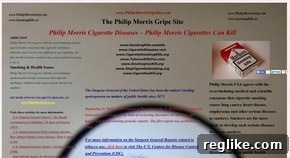
The case saw a single-member panelist appointed by the National Arbitration Forum rule in favor of Philip Morris, compelling David Delman to surrender six domain names. These domains were explicitly registered and utilized by Delman as platforms to criticize the tobacco company and highlight issues related to smoking. The disputed domain names included: philipmorris.website, philipmorrisviolations.website, philipmorriscigarettediseases.org, philipmorriscigaretteskill.com, philipmorriscigarettescankill.com, and philipmorriscigarettediseases.com.
This outcome is not an isolated incident; Philip Morris has previously won seven other cybersquatting complaints against Mr. Delman. However, the reasoning presented by panelist Katalin Szamosi in this specific decision has been criticized by some as lacking a robust and consistent application of established domain dispute principles, irrespective of one’s stance on whether Philip Morris deserved to win.
Understanding the UDRP Framework for Domain Disputes
To fully grasp the complexities of this case, it’s essential to understand the Uniform Domain Name Dispute Resolution Policy (UDRP). The UDRP is an administrative procedure established by the Internet Corporation for Assigned Names and Numbers (ICANN) to resolve disputes over the registration of domain names. It serves as an alternative to traditional litigation, aiming for a quicker and more cost-effective resolution for trademark holders facing cybersquatting.
For a complainant like Philip Morris to succeed under the UDRP, they must prove three cumulative elements:
- The domain name is identical or confusingly similar to a trademark or service mark in which the complainant has rights.
- The respondent (the domain name registrant) has no rights or legitimate interests in respect of the domain name.
- The domain name has been registered and is being used in bad faith.
All three elements must be satisfied for a domain name to be transferred to the complainant. The interpretation and application of these elements, especially in cases involving critical websites or “gripe sites,” often lead to contentious decisions.
The “Confusing Similarity” Dilemma: Policy Paragraph 4(a)(i)
One of the primary contentions in this case revolves around the first element: whether the domain names were “confusingly similar” to Philip Morris’s trademarks. Typically, when evaluating gripe sites, UDRP panels consider whether an ordinary internet user, upon seeing the domain name, would mistakenly believe it is associated with or controlled by the trademark holder. This is a crucial distinction, as the very purpose of a gripe site is to criticize, not to impersonate or mislead.
For example, a site named “PhilipMorrisSucks.com” is inherently unlikely to be confused with an official Philip Morris website because the inclusion of a clearly negative or critical term immediately signals its distinct, oppositional nature. Therefore, such domains often fail the “confusing similarity” test in the context of gripe sites.
However, Panelist Szamosi’s decision took a different approach. In her reasoning, she stated:
In regards to the domains philipmorrisviolations.website, philipmorriscigarettediseases.org, philipmorriscigaretteskill.com, philipmorriscigarettescankill.com, and philipmorriscigarettediseases.com; all include the PHILIP MORRIS mark in its entirety only adding generic terms. This Panel shares the view of previous panels which have found that adding a generic term to a complainant’s mark does not alleviate confusing similarity. See Am. Express Co. v. MustNeed.com, FA 257901 (Nat. Arb. Forum June 7, 2004) (finding the respondent’s amextravel.com domain name confusingly similar to Complainant’s AMEX mark because the “mere addition of a generic or descriptive word to a registered mark does not negate” a finding of confusing similarity under Policy ¶ 4(a)(i)).
While it is generally true that merely adding a generic or descriptive word (like “travel” to “Amex” in the cited example) does not alleviate confusing similarity, this principle is often distinguished from cases where overtly negative or critical terms are added. Terms such as “violations,” “cigarette diseases,” or “cigarettes kill” are far from generic in the context of brand association. They explicitly convey a message of criticism, harm, or opposition, which is typically understood by internet users to signify a non-affiliated, critical platform. The only domain name among the six that could reasonably be considered confusingly similar before viewing its content, based on its neutral modifier, is philipmorris.website.
The panelist’s reasoning appears to conflate generic additions with highly specific, negative, and critical modifiers. This interpretation deviates from a common understanding in UDRP jurisprudence that negative suffixes often serve to clearly differentiate a critical site from the official trademark holder, thus negating confusing similarity.
Questioning “Rights or Legitimate Interests”: Policy Paragraph 4(a)(ii)
The second crucial element a complainant must prove is that the respondent has no rights or legitimate interests in the domain name. This is another area where gripe site cases often present unique challenges. Generally, registering a domain name to genuinely criticize a company, especially when the criticism is non-commercial and protected by free speech principles, has been recognized by many UDRP panels as a legitimate interest.
However, Panelist Szamosi’s decision again presented a restrictive interpretation:
The Panel notes that a Respondent has a right to comment or criticize Complainants’ business practices, however Respondent had no right to do so in this manner, namely registering a domain name which contains the entire PHILIP MORRIS mark.
This statement implies that while criticism is permissible, incorporating the entire trademark into the domain name for such criticism is not. This perspective significantly limits the traditional understanding of legitimate interests in gripe site contexts. Many panels have previously found it acceptable to register domain names incorporating a trademark, especially when combined with negative modifiers, precisely because it allows for direct and identifiable criticism of the trademark holder.
This is particularly relevant when both the complainant and respondent reside in countries, such as the United States, where robust free speech protections are paramount. The ability to use a company’s name in a critical context, without intent to profit or deceive, is often considered a legitimate exercise of free speech. The panelist’s ruling, in this regard, could be seen as setting a precedent that restricts legitimate criticism online.
The Panelist’s Role and Cross-Jurisdictional Concerns
The decision also raises questions about the composition of the panel itself. It’s often debated why the National Arbitration Forum appointed a panelist from Hungary for a dispute between two parties seemingly based in the U.S. While UDRP panelists are expected to apply a consistent global policy, nuances in legal interpretations, particularly regarding free speech, can vary significantly across jurisdictions. The choice of a panelist from a different legal tradition for a case involving U.S. parties and U.S.-centric free speech issues can sometimes lead to outcomes that feel misaligned with local expectations.
While it’s acknowledged that finding against Philip Morris in this instance might have meant deviating from some prior decisions, particularly those where companies successfully shut down criticism sites, a panelist’s role is to apply the policy fairly and thoughtfully to the specific facts presented, not simply to “go with the flow.” The reliance on precedents that may not be directly applicable, such as the “generic term” example when clearly negative terms were present, highlights a potential issue with the reasoning provided.
Panelists are expected to provide well-reasoned decisions, carefully distinguishing between cases and applying policy elements appropriately. Citing irrelevant or partially relevant cases without adequate distinction can weaken the overall credibility and consistency of UDRP jurisprudence.
Broader Implications for Free Speech and Online Criticism
This decision by the National Arbitration Forum panel carries significant implications for the delicate balance between trademark protection and the fundamental right to free speech online. If merely including a trademark in a critical domain name is deemed illegitimate, even with clear negative modifiers, it could potentially have a chilling effect on legitimate online criticism.
Critics, consumer advocates, and even former employees who wish to express genuine grievances against large corporations might find themselves deterred by the risk of losing their domain names and facing legal costs. This could lead to a scenario where powerful corporations, armed with extensive legal resources, could stifle dissenting voices more easily through UDRP proceedings.
The internet has long been a vital platform for public discourse and criticism. Decisions like this one underscore the ongoing challenge of interpreting intellectual property laws in a way that respects both legitimate trademark rights and essential freedoms of expression. The consistency and fairness of UDRP decisions are crucial for maintaining trust in the system and ensuring that it serves its intended purpose without inadvertently suppressing legitimate online speech.
Conclusion
Philip Morris’s latest victory in this cybersquatting complaint against David Delman, while seemingly a straightforward application of trademark protection, highlights a deeper tension in UDRP policy. The panelist’s reasoning regarding “confusing similarity” and “legitimate interests” in the context of gripe sites has sparked debate, particularly concerning the distinction between generic additions and explicit critical modifiers to a trademark.
This outcome not only raises questions about the specific interpretation of UDRP rules but also about the broader implications for online free speech and the ability of individuals to criticize powerful entities. As the digital landscape continues to evolve, ensuring that domain dispute resolution policies strike a fair balance between protecting brand integrity and safeguarding the right to express critical opinions remains a paramount challenge for internet governance bodies.