
Pioneer Bank Domain Dispute: A Deeper Dive into .Bank and .com Risks
The recent UDRP (Uniform Domain Name Dispute Resolution Policy) case involving Pioneer Bank has brought to light some critical issues regarding domain name ownership and brand protection in the digital age. While the UDRP action itself was unsuccessful, the underlying issues reveal a larger problem that many financial institutions face: securing a comprehensive domain name portfolio.
In January, the UDRP filing against Pioneer.Bank caught my attention for a couple of reasons. Firstly, I’m familiar with the domain owner, Pioneer Bank, based in Austin, Texas, my former hometown. Secondly, the very nature of the .bank domain extension sparked my curiosity. The .bank registry employs stringent verification processes to ensure that only legitimate banking institutions can register domains, raising the question of how a UDRP could even be filed, let alone considered valid, against a .bank domain.
The National Arbitration Forum has since published its decision, confirming, as expected, that the complaint was unsuccessful. Pioneer Bank in New Mexico initiated the dispute against Pioneer Bank in Texas, which currently uses the domain name for its primary website.
The crux of the New Mexico bank’s argument stemmed from the Texas bank’s acquisition of the domain name during the sunrise period, a period reserved for trademark holders. The New Mexico bank alleged that the Texas bank lacked a valid trademark eligible for use within the Trademark Clearinghouse, a database used to verify trademark claims during sunrise periods for new domain extensions.
The panel presiding over the UDRP case rightly concluded that the UDRP is not the appropriate mechanism for resolving disputes related to trademark validity or the eligibility of a registrant during a sunrise period. The UDRP is designed to address cases of cybersquatting, where a domain name is registered in bad faith with the intent to profit from a trademark owner’s brand.
While the .bank top-level domain did have a dedicated sunrise dispute policy in its initial launch, the deadline for filing such disputes has long passed. This highlights the importance of proactively addressing potential domain name conflicts during the launch of new domain extensions.
The Bigger Threat: The .com Void
However, the unsuccessful UDRP action overshadows a far more significant risk for both Pioneer Banks: neither owns the PioneerBank.com domain. This seemingly simple oversight poses a substantial threat to their brand reputation and customer trust.
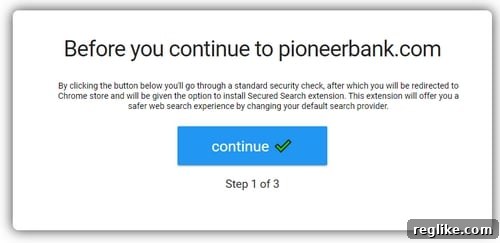
The PioneerBank.com domain currently redirects through a zero-click redirect, meaning that visitors are automatically redirected to another website without any user interaction. Upon visiting the domain recently, I was redirected to a deceptive Chrome extension page, a common tactic used by scammers to distribute malware or collect personal information. This is a significant problem, as unsuspecting customers searching for Pioneer Bank online could easily fall victim to this scam, potentially leading to financial loss and a damaged perception of the bank’s security.
Adding insult to injury, Pioneer Bank in New Mexico utilizes the domain name PioneerBnk.com (notice the missing ‘a’). This misspelling not only appears unprofessional but also increases the likelihood of customers mistyping the domain and landing on a malicious website. The use of such a domain name dilutes the bank’s brand identity and creates confusion among its customer base.
According to the National Arbitration Forum’s website, a UDRP complaint was filed against PioneerBank.com in 2014, but the status is still listed as pending. This raises questions about the effectiveness of the UDRP process and the challenges involved in reclaiming a domain name that is being used for malicious purposes.
The Importance of a Comprehensive Domain Strategy
The Pioneer Bank domain dispute serves as a valuable lesson for all businesses, particularly those in the financial services industry. A comprehensive domain strategy should encompass the following key elements:
- Securing the .com: The .com extension remains the most recognizable and trusted domain extension globally. Owning the .com version of your brand name is crucial for preventing cybersquatting and ensuring that customers can easily find your website.
- Defensive Registrations: Register variations of your brand name, including common misspellings and alternative domain extensions (e.g., .net, .org, .bank), to prevent competitors or malicious actors from exploiting these variations.
- Monitoring and Enforcement: Regularly monitor the internet for infringing domain names and take appropriate action to enforce your trademark rights. This may involve sending cease and desist letters, filing UDRP complaints, or pursuing legal action.
- Brand Protection: Implement robust brand protection measures to safeguard your brand reputation and customer trust. This includes educating customers about potential scams and providing clear instructions on how to identify legitimate websites.
Beyond the .Bank: Protecting Your Brand Online
While the .bank domain extension offers enhanced security and verification, it is not a substitute for a comprehensive domain strategy. Businesses must take a holistic approach to domain name management, recognizing that the .com domain remains a critical component of their online presence.
The Pioneer Bank case highlights the potential consequences of neglecting domain name security. By failing to secure the PioneerBank.com domain, both banks have exposed their customers to potential scams and damaged their brand reputation. This underscores the importance of proactive domain name management and the need for businesses to prioritize brand protection in the digital age.
In conclusion, the Pioneer Bank UDRP dispute is a cautionary tale about the importance of owning your brand online. While the .bank extension provides a level of security, the .com domain remains the cornerstone of a successful online presence. Businesses must invest in a comprehensive domain strategy to protect their brand, safeguard their customers, and maintain a competitive edge in the digital marketplace.
By prioritizing domain name security and brand protection, businesses can mitigate the risks associated with cybersquatting, phishing scams, and other online threats. The cost of neglecting domain name management can far outweigh the investment required to secure and maintain a comprehensive domain portfolio.