
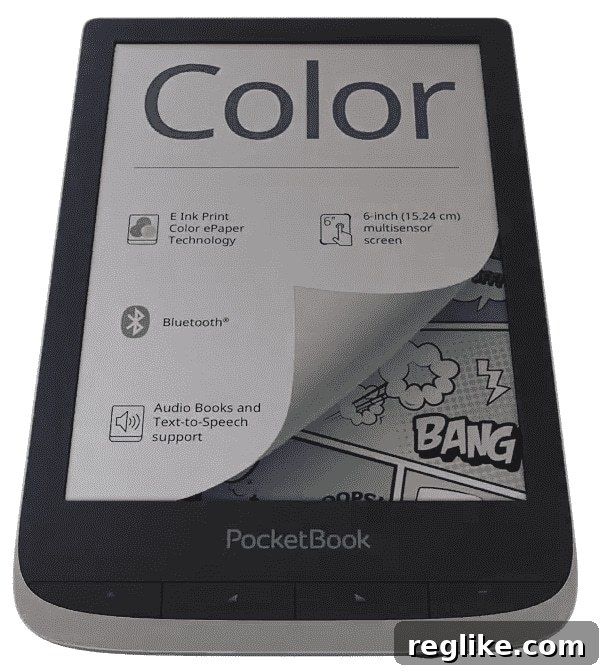
The Cost of a Premium Domain: Pocketbook International’s Long-Fought Victory for Pocketbook.com

In the highly competitive digital landscape, a strong brand identity and a memorable online presence are paramount for business success. For companies like Pocketbook International, a prominent manufacturer of e-readers, securing a domain name that perfectly aligns with their brand is not just a preference, but a strategic imperative. After a protracted legal battle spanning several years, Pocketbook International has finally achieved its long-standing goal: acquiring the coveted domain name pocketbook.com through a confidential legal settlement. While this represents a significant victory for the company in solidifying its brand online, it also brings to light the often-exorbitant costs and complexities involved in pursuing generic or dictionary-word domain names, especially when existing legitimate use is present.
The Genesis of a Dispute: The UDRP Attempt in 2019
The journey for pocketbook.com began in 2019 when Pocketbook International initiated a Uniform Domain Name Dispute Resolution Policy (UDRP) proceeding against the domain. At the time, pocketbook.com was owned by SiteTools, Inc., a company that had a legitimate claim to the domain. UDRP, administered by organizations like the World Intellectual Property Organization (WIPO), is designed as an expedited and cost-effective method for trademark holders to recover domain names registered in bad faith, especially those that cybersquat on their trademarks. However, for a UDRP complaint to succeed, the complainant must demonstrate three key elements: that the domain name is identical or confusingly similar to a trademark in which the complainant has rights; that the registrant has no rights or legitimate interests in respect of the domain name; and that the domain name has been registered and is being used in bad faith.
In this particular case, the UDRP panel ultimately denied Pocketbook International’s complaint. A significant factor in this decision was the dictionary and generic nature of the term “pocketbook” itself. Unlike a purely coined or invented term, “pocketbook” is a common English word with multiple meanings, often referring to a small handbag or, crucially, to financial resources. SiteTools, Inc. had been legitimately using the domain for a financial service, a purpose entirely consistent with one of the widely understood meanings of “pocketbook.” Furthermore, SiteTools also held a trademark registration for the term, bolstering its claim to legitimate interest and precluding any finding of bad faith registration or use. This outcome underscored a critical lesson in domain disputes: owning a trademark for a generic term does not automatically grant rights to a generic domain name if another party has a legitimate, prior use that aligns with the dictionary meaning.
Escalation to Federal Court: The Lawsuit and Counter-Lawsuit of 2020
Undeterred by the UDRP setback, Pocketbook International elevated its pursuit of the domain name to federal court. In 2020, the e-reader company filed a lawsuit against SiteTools, Inc. This move signaled a significant increase in the potential financial and time commitment required to resolve the dispute. Federal litigation, unlike UDRP, involves extensive discovery, court appearances, and often a lengthy trial process, making it considerably more expensive and complex. SiteTools, Inc. responded to the lawsuit by filing a countersuit, further complicating the legal landscape and intensifying the battle for control over pocketbook.com.
The legal proceedings unfolded over several years, marked by various motions, filings, and judicial decisions. Initially, it appeared that SiteTools, Inc. had the upper hand, effectively winning a significant portion of the legal battle. This outcome likely stemmed from the strength of SiteTools’ initial defense, particularly its legitimate use of the generic term and its existing trademark. However, the dynamics of the dispute shifted dramatically when SiteTools went a step further and requested the court to award attorneys’ fees. In many legal systems, the prevailing party can seek reimbursement for their legal expenses, which can amount to substantial sums, especially in prolonged federal litigation. This move put immense pressure on Pocketbook International, prompting the company to appeal the court’s decision. An appeal not only prolongs the legal process but also adds another layer of significant costs, making the prospect of continued litigation even more daunting for both parties.
The Road to Resolution: Settlement Through Negotiation
The prospect of a lengthy and potentially costly appeal, coupled with the escalating legal expenses, ultimately pushed both Pocketbook International and SiteTools, Inc. towards settlement discussions. Settlements are a common resolution in complex legal disputes, allowing parties to avoid the uncertainties and mounting costs of continued litigation. They offer a mechanism for compromise, where both sides can agree to terms outside of a courtroom judgment. In this instance, the strategic decision by SiteTools to seek attorneys’ fees proved to be a critical turning point, compelling Pocketbook International to reassess its position and engage in serious negotiations.
Finally, a breakthrough was achieved. Today, SiteTools informed the court (pdf) that it was withdrawing its request for attorneys’ fees, confirming that the case had been successfully settled. While the specific terms of the settlement remain private, as is common in such agreements, the outcome is clear: Pocketbook International has acquired ownership of pocketbook.com. The domain name now seamlessly forwards to Pocketbook International’s various country-specific websites, providing a unified and professional online presence for the e-reader brand across its global markets. This acquisition simplifies branding, enhances search engine optimization, and eliminates potential confusion for consumers looking for Pocketbook products online.
The Price of Persistence: A Strategic Win, But at What Cost?
Undoubtedly, securing pocketbook.com is a significant strategic victory for Pocketbook International. Owning a domain name that directly matches the brand name, especially one that is a generic dictionary term, offers immense benefits. It enhances brand recognition, improves search engine visibility, fosters consumer trust, and provides a clear, memorable online address. For an e-reader company, “pocketbook” can subtly evoke the idea of a portable library or a personal financial ledger, aligning with the utility of their devices. However, the path to this victory was paved with substantial financial and temporal investments.
Considering the timeline of events—a UDRP in 2019, a federal lawsuit in 2020, a countersuit, an initial legal loss for Pocketbook International, and an appeal leading to a settlement in 2023 (or beyond, depending on when “today” refers to)—it is reasonable to imagine that Pocketbook International incurred significant legal fees. These would have encompassed attorney hours for drafting UDRP complaints, filing federal lawsuits, responding to countersuits, engaging in discovery, attending court hearings, and negotiating the final settlement. Such protracted litigation in federal court can easily run into hundreds of thousands, if not millions, of dollars. Had Pocketbook International initially approached SiteTools, Inc. with a good-faith offer to purchase the domain name before resorting to legal action, the acquisition cost, while possibly still considerable for a premium, generic .com domain, would almost certainly have been substantially less than the cumulative legal expenditures. This case serves as a poignant reminder that while persistence can lead to desired outcomes, the financial burden of prolonged legal battles, especially over generic domains with legitimate prior use, can be extraordinarily high.
Broader Implications for Brand Owners and Domain Name Disputes
The saga of pocketbook.com offers valuable lessons for brand owners navigating the complex world of domain names and intellectual property. Firstly, it highlights the challenges of enforcing trademark rights over generic or dictionary terms, particularly when another party has established legitimate use. Courts and UDRP panels generally prioritize legitimate use and prior rights, making it difficult for a brand owner to “take” a generic domain from an existing, non-infringing user without a significant legal basis. Secondly, the case underscores the different avenues available for domain disputes—UDRP for clear-cut cybersquatting and national litigation for more complex intellectual property issues—and the escalating costs associated with moving from one to the other. Finally, it reinforces the strategic importance of early and amicable negotiation for desired domain assets. While litigation offers a mechanism for resolution, it is often the most expensive and time-consuming route.
In the digital age, a company’s online identity is often its first point of contact with consumers. Securing the perfect domain name can be a critical investment in branding and market presence. For Pocketbook International, the acquisition of pocketbook.com represents the culmination of a determined, multi-year effort to fortify its digital footprint. While the exact financial figures remain undisclosed, the journey from an unsuccessful UDRP to a hard-won legal settlement illustrates the formidable challenges and potential costs involved in asserting brand rights over highly contested, generic domain names. It stands as a powerful testament to the value companies place on their online identity, even if the price of obtaining it proves to be exceptionally high.