
The Unmasking of Online Casino Origins: A Deep Dive into the PokerHost.com UDRP Dispute

In the dynamic and often contentious world of online gaming, domain names are not just digital addresses; they are critical assets, brand identifiers, and often, battlegrounds. The Universal Domain Name Dispute Resolution Policy (UDRP) stands as the primary mechanism for resolving disputes over domain name registrations, particularly when trademark rights are involved. This legal framework, overseen by bodies like the World Intellectual Property Organization (WIPO), aims to provide a streamlined process for trademark holders to reclaim domain names registered in bad faith.
One such intriguing case recently caught the attention of industry observers: PokerHost.com initiated a UDRP complaint with WIPO, seeking to acquire the domain name PokerHost.NET. While seemingly a straightforward attempt to consolidate its brand presence, a closer examination of the complaint and the respondent’s defense reveals a complex narrative, exposing crucial discrepancies regarding the complainant’s historical operations and the very foundation of its claims. This case not only highlights the strategic use of domain names within the online poker industry but also underscores the critical importance of verifiable facts in legal proceedings.
Understanding the Strategic Value of .NET Domains in Online Gaming
For those unfamiliar with the intricate advertising landscape of the online poker and casino industry, the desire to acquire a .net version of a brand’s primary .com domain is a common and highly strategic move. Many real-money gambling sites face significant restrictions when it comes to advertising on mainstream media platforms like television, radio, or even certain digital channels. These restrictions are often due to regulatory hurdles or advertising network policies that prohibit the promotion of real-money gambling.
This is where the .net domain strategy comes into play. Online gaming operators frequently use the .net version of their brand name for sites that do not facilitate real-money wagering. These .net sites typically host free-play versions of poker or casino games, offer tutorials, provide news and information, or serve as educational platforms. Because these sites do not involve actual gambling, they often bypass the stringent advertising regulations, allowing companies to promote their brands on a much wider scale. The short-term goal is to build brand recognition and drive traffic to the .net site. The long-term, and indeed the ultimate, objective is to convert these free-play users into paying customers on their real-money .com platform. This strategic advertising loophole makes a relevant .net domain an incredibly valuable asset for any major online gaming operator.
The Core of the PokerHost.com vs. PokerHost.net Dispute
The UDRP complaint filed by PokerHost.com against the registrant of PokerHost.net, Russ “Dutch” Boyd, hinges on the standard three elements required for a successful complaint: that the domain name is identical or confusingly similar to a trademark in which the complainant has rights; that the registrant has no rights or legitimate interests in respect of the domain name; and that the domain name has been registered and is being used in bad faith.
PokerHost.com asserted its claim to the POKERHOST.COM mark, stating in its complaint:
Complainant first began use of its domain name and the POKERHOST.COM mark in February 2002. Printouts of the front page of Complainant’s website and the corresponding WhoIs information are attached as Exhibit 5.
This claim of an early 2002 commencement of use forms the cornerstone of PokerHost.com’s argument for prior rights and a legitimate trademark. However, as the defense mounted by Russ Boyd would eloquently demonstrate, this assertion appears to be, at best, a significant misrepresentation of historical facts.
Introducing the Respondent: Russ “Dutch” Boyd and the Generic Nature of “Poker Host”
The respondent in this case is none other than Russ “Dutch” Boyd, a highly respected and well-known figure in the professional poker community. Boyd is a distinguished World Series of Poker (WSOP) bracelet holder, a title reserved for winners of the most prestigious poker tournament series globally. His connection to poker is undeniable and deeply ingrained in his professional identity. Boyd registered the PokerHost.net domain name on July 14, 2004.
Boyd’s defense centered on two crucial points. First, he argued that “poker host” is a generic or descriptive term. The phrase inherently describes an individual or entity that organizes, facilitates, or presides over poker games. Given its descriptive nature, Boyd pointed to ample evidence of its common use within the poker world, suggesting that it should not be exclusively appropriated as a trademark by a single entity without significant secondary meaning. He explicitly stated that he registered the domain name in 2004 while he was in Florida to host a TV pilot called “Holdem or Foldem,” clearly illustrating a legitimate and direct connection to the generic meaning of the term “poker host” in a professional capacity.
Second, and perhaps most damning for the complainant’s case, Boyd vehemently argued that he registered the domain name before PokerHost.com could have possibly established itself as an online casino or a recognized trademark. This assertion directly challenged the complainant’s claim of continuous use since February 2002.
The Crucial Role of Historical Web Data: Debunking the Timeline
The strength of Boyd’s defense lay in his meticulous use of historical web data, a powerful tool in domain name disputes. While PokerHost.com presented a “printout” from 2008 as evidence of its 2002 use, Boyd turned to Archive.org, commonly known as the Wayback Machine, to verify the actual historical existence and content of PokerHost.com.
Archive.org is an invaluable digital library that captures snapshots of websites over time, providing an unbiased and independently verifiable record of their content. Boyd’s research on Archive.org painted a starkly different picture than the one presented by PokerHost.com:
- The domain PokerHost.com was indeed registered in 2002. However, WhoIs data merely confirms registration, not active use for a specific business purpose.
- Boyd registered PokerHost.net in July 2004.
- Crucially, the first “real use” of PokerHost.com for an actual online casino was found by Boyd on October 24, 2004. At that time, the website displayed a message indicating that the casino would be opening in December.
- Further verification through Archive.org confirmed that the PokerHost.com online casino did not actually launch until January 2005.
This timeline unequivocally demonstrates that for a significant period between its registration in 2002 and its eventual launch, PokerHost.com’s domain was largely dormant or hosted placeholder content. Boyd’s evidence from Archive.org clearly showed various holding pages, including standard error pages, prior to late 2004:
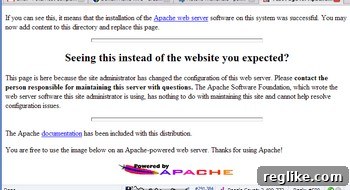
Therefore, the assertion by PokerHost.com that it “began use of its domain name and the POKERHOST.COM mark in February 2002” for its casino operations is demonstrably false. The reality, as uncovered by Boyd and corroborated by independent web archives, is that the company did not commence using the domain name for its online casino until well after Russ Boyd had legitimately registered PokerHost.net.
Ethical Implications and the Integrity of UDRP Proceedings
The PokerHost.com case brings to light a troubling practice observed in some UDRP complaints: the presentation of inaccurate or misleading information, particularly concerning dates of first use. It is profoundly frustrating to witness companies, and by extension their legal representatives, submitting claims that are not fully supported by verifiable evidence, effectively “fudging dates” in an attempt to bolster their position.
This practice places an undue burden on respondents, who are then forced to expend time, effort, and resources to uncover these falsehoods through diligent research, often relying on public resources like the Wayback Machine. The integrity of the UDRP process depends heavily on the honesty and accuracy of the information presented by both parties. When a complainant knowingly or negligently provides misleading dates, it not only undermines the fairness of the dispute resolution but also risks diminishing trust in the system itself.
Panelists in UDRP cases rely on the evidence presented to make their decisions. If that evidence is compromised by factual inaccuracies, the entire process becomes skewed. This case serves as a stark reminder that robust due diligence and verifiable proof are paramount. Complainants should be held to a high standard of factual accuracy, and mechanisms for scrutinizing claims of prior use are essential to ensure equitable outcomes.
Lessons Learned from the PokerHost.com UDRP
The dispute over PokerHost.net offers several critical takeaways for both trademark holders and domain registrants:
- The Importance of Verifiable History: Domain registration dates do not equate to dates of active use, especially for trademark purposes. Actual, demonstrable use of a mark in commerce is what establishes rights. Resources like Archive.org are indispensable for establishing accurate historical timelines.
- Scrutiny of Claims: Respondents in UDRP cases should always critically examine the complainant’s assertions, particularly regarding dates of first use, and be prepared to present contradictory evidence.
- Generic Terms vs. Trademarks: The debate over whether a term like “poker host” is generic or has acquired secondary meaning is often central to UDRP disputes. Legitimate registration of a descriptive term for its plain meaning before it gains trademark significance can be a strong defense.
- Ethical Responsibility: Legal professionals and their clients have an ethical obligation to present accurate and truthful information in all legal proceedings, including UDRP complaints. Misrepresenting facts can have severe consequences for credibility and the outcome of the case.
- Strategic Domain Use: The case highlights the clever but often contentious strategy of using .net domains for marketing purposes in industries with advertising restrictions, making the acquisition of such domains a high priority for brand owners.
Conclusion: The Enduring Pursuit of Truth in Digital Disputes
The PokerHost.com UDRP case, pitting a major online casino operator against a renowned professional poker player, encapsulates the complexities and ethical challenges within digital asset disputes. While the online casino sought to protect what it perceived as its brand identity by acquiring PokerHost.net, its efforts were complicated by its own inaccurate historical claims regarding the launch of its operations.
Russ Boyd’s successful defense, rooted in the generic nature of the term “poker host” and meticulously supported by historical web evidence from Archive.org, serves as a powerful testament to the necessity of factual integrity in UDRP proceedings. It underscores that mere assertion is not enough; verifiable proof, especially concerning critical timelines, is the bedrock upon which fair and just decisions are made.
Ultimately, this case reinforces the fundamental principle that domain disputes, like all legal matters, hinge on the truth. The digital archives available to us are not just repositories of old websites; they are crucial tools for justice, ensuring that claims are grounded in reality and that the UDRP system remains a credible mechanism for resolving conflicts in the ever-expanding online landscape.