
Proofpoint’s Groundbreaking Patent Application: Revolutionizing Enterprise Domain Discovery for Enhanced Cybersecurity
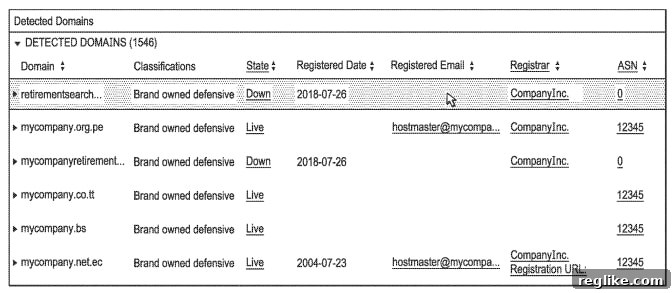
In an increasingly complex digital landscape, where cyber threats constantly evolve, understanding and securing an organization’s digital footprint is paramount. Cybersecurity giant Proofpoint (NASDAQ: PFPT) has taken a significant step forward in this area, filing a comprehensive patent application (pdf) for an advanced reverse Whois system. This innovative system aims to equip enterprises with a more robust mechanism for discovering and managing all domains associated with their operations, thereby fortifying their defenses against a myriad of cyber risks, including phishing, brand impersonation, and intellectual property theft.
The Essence of Reverse Whois and Its Cybersecurity Implications
To fully grasp the significance of Proofpoint’s patent, it’s essential to understand the concept of reverse Whois. Traditionally, a standard Whois lookup allows users to query information about a specific domain name, revealing details such as the registrant’s name, email address, registration date, and nameservers, provided privacy protections are not in place. Reverse Whois, however, operates differently. Instead of starting with a domain, it begins with a known piece of information—such as an email address, a registrant’s name, or even an IP address—and then identifies all domain names linked to that particular data point. This capability is invaluable for uncovering hidden connections and mapping out digital ecosystems.
For cybersecurity professionals, reverse Whois is a powerful intelligence tool. It enables organizations to monitor for potentially malicious domains registered by threat actors attempting to mimic legitimate brands. By identifying these lookalike domains, companies can proactively take steps to neutralize threats before they inflict damage. Moreover, it assists in discovering forgotten or unknown domains within a company’s own portfolio, preventing them from becoming unmanaged security vulnerabilities. The ability to systematically uncover these associations is critical for comprehensive digital asset management and proactive threat intelligence.
Proofpoint’s Advanced Domain Discovery Methodology
Proofpoint’s patent application describes a sophisticated system designed to go beyond conventional reverse Whois methods. The core of their approach begins with a “seed” domain name, typically a primary domain owned and operated by the target company. From this initial point of reference, the system embarks on an exhaustive data collection and analysis process. It leverages both traditional Whois data and a deep dive into the underlying infrastructure surrounding the seed domain, systematically working to identify all other domain names that are likely owned by the same entity.
Leveraging Multi-Faceted Data Points for Accurate Attribution
The ingenuity of Proofpoint’s system lies in its ability to synthesize diverse data points. Initially, it performs standard reverse Whois checks using available registrant information, such as the contact email or the registrant organization’s name. However, recognizing the limitations of direct Whois data—especially with the widespread adoption of Whois privacy services—the system intelligently pivots to analyzing infrastructure data. This includes scrutinizing elements like:
- Name Servers: Domains often share common name servers if they belong to the same entity or are hosted by the same provider. Proofpoint’s system can identify these shared name server configurations to infer ownership links.
- IP Addresses and Subnets: Domains hosted on the same IP address or within contiguous IP address blocks (subnets) are frequently linked to the same owner. The system can map these network infrastructures to uncover associated domains.
- MX Records: Mail exchange (MX) records specify the mail servers responsible for accepting email messages on behalf of a domain. Shared MX records can indicate common email infrastructure and, by extension, common ownership.
- ASN (Autonomous System Number): Analyzing the Autonomous System Number can reveal if multiple domains reside within the same network provider’s infrastructure, further aiding in identifying related assets.
- Registrar and Registration Patterns: While not definitive, patterns in registrar choice, registration dates, and other historical data can provide additional clues.
By intelligently combining and correlating these various types of data, Proofpoint’s system can construct a much more comprehensive and accurate picture of an organization’s entire domain portfolio, including those domains that might otherwise remain hidden.
Navigating the Challenge of Whois Privacy
One of the most significant obstacles in domain intelligence and cybersecurity investigations is Whois privacy. Many domain registrants opt for privacy services that mask their personal or organizational details in public Whois records, replacing them with generic proxy information. While beneficial for individual privacy, this practice makes it challenging for legitimate organizations to identify fraudulent domains or conduct thorough due diligence.
Proofpoint’s patented system directly addresses this challenge. When faced with Whois privacy, it doesn’t simply give up. Instead, it places a greater emphasis on the infrastructure data. For instance, even if the registrant name is private, the underlying name servers, IP addresses, or MX records might still point to a common infrastructure shared with known company domains. Imagine a scenario where a phishing domain uses a privacy service, but its name servers are identical to a known brand’s legitimate but lesser-known property. Proofpoint’s system is designed to detect such subtle, yet critical, connections, allowing security teams to uncover malicious activity despite privacy masking.
Proactive Domain Discovery: A Cornerstone of Modern Cybersecurity
The ability to proactively discover and manage all associated domains is no longer a luxury but a fundamental requirement for robust cybersecurity. Proofpoint’s system is tailored to serve multiple critical functions within an enterprise’s security strategy:
- Brand Protection and Anti-Phishing: One primary objective is to detect and mitigate brand abuse. This includes identifying typosquatting (domains with slight misspellings of a brand name), cybersquatting (registering well-known brand names in bad faith), and phishing domains designed to trick users into revealing sensitive information. Early detection allows for swift action, such as domain takedowns, reducing the window of opportunity for attackers.
- Threat Intelligence and Actor Profiling: By mapping out domains associated with known threat actors or campaigns, organizations can develop better threat intelligence. This helps in understanding adversaries’ infrastructure, their preferred hosting environments, and their operational patterns, leading to more effective defenses.
- Supply Chain Risk Management: Enterprises increasingly rely on third-party vendors and partners. Identifying all domains associated with these partners can help assess potential risks within the broader supply chain. A compromised partner domain could inadvertently expose the primary organization.
- Mergers and Acquisitions Due Diligence: During M&A activities, a thorough understanding of the acquired company’s digital assets, including its entire domain portfolio, is crucial. Proofpoint’s system can provide a comprehensive inventory, uncovering forgotten or poorly managed domains that could pose security or compliance risks.
- Internal Asset Management and Governance: Large organizations often accumulate a vast number of domains over time, some of which may become dormant or unmanaged. This system helps maintain an accurate inventory, ensuring all digital assets are accounted for, properly secured, and compliant with internal policies.
The Broader Landscape and Proofpoint’s Strategic Positioning
While Proofpoint’s system shares some functional similarities with existing domain intelligence tools offered by companies like DomainTools, its integration within a comprehensive cybersecurity platform like Proofpoint’s could provide a distinct advantage. Rather than a standalone tool, this reverse Whois capability would likely feed directly into Proofpoint’s broader suite of email, cloud, and data security solutions, offering a more unified and actionable threat intelligence pipeline. This integration allows for a seamless flow of information from domain discovery to incident response and protective measures.
The filing of a patent, particularly a continuation patent application (Ser. No. 17/129804, filed in December 2020, following the original Ser. No. 16/244,955 in January 2019), underscores Proofpoint’s commitment to innovation and its strategic intent to protect its intellectual property in the realm of advanced cybersecurity techniques. As the U.S. Patent and Trademark Office published this continuation application, it signals Proofpoint’s continued efforts to refine and legally secure its unique contributions to domain intelligence.
Conclusion: Strengthening the Digital Perimeter
In conclusion, Proofpoint’s patent application for an advanced reverse Whois system represents a significant step forward in enterprise cybersecurity. By offering a sophisticated method for uncovering all domains associated with a company, even those obscured by privacy services or hidden within complex infrastructure, Proofpoint empowers organizations with unprecedented visibility into their digital footprint. This proactive domain discovery capability is indispensable for fortifying brand protection, enhancing threat intelligence, managing digital assets, and ultimately, building a more resilient defense against the ever-present and evolving threats in the cyber realm. As organizations continue to expand their digital presence, tools like Proofpoint’s will be crucial in safeguarding their integrity and operations.