
In an era defined by relentless technological advancement and shifting consumer demands, the greatest error a business can make is to solely focus on protecting its existing model while neglecting the immense opportunities presented by innovation. This myopic approach, often driven by fear of change and the comfort of the status quo, invariably leads to stagnation and, ultimately, obsolescence. True long-term success hinges on understanding and actively capitalizing on emerging trends, rather than attempting to barricade against them.
It is a fascinating, albeit often concerning, phenomenon to observe how established companies and entire industries frequently resort to protectionist measures when confronted with legitimate competitive threats. This instinctual defense mechanism, while understandable in its immediate intent, often blinds them to the inevitable tide of progress, hindering their ability to adapt and thrive in a dynamic marketplace. Instead of fostering an environment of innovation and competitive excellence, such actions often stifle progress, penalize consumers, and delay the inevitable rather than preparing for it.
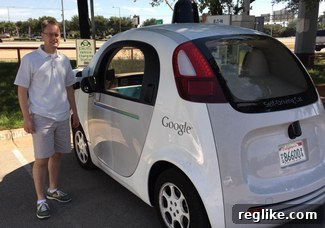
My recent reflections have frequently turned to the automotive transportation business, an industry currently on the precipice of a monumental transformation set to unfold over the next two decades. This sector, traditionally dominated by large legacy manufacturers with well-established supply chains and distribution networks, is now a hotbed of innovation and intense competition, driven by several converging forces that promise to redefine mobility as we know it.
The Electrification of Automotive Transportation: A Paradigm Shift
Two primary forces are currently exerting immense pressure and initiating a profound redefinition of the transportation business landscape. The first, and arguably most impactful, is the accelerating global shift towards electric and plug-in hybrid vehicles. This transition is far more than an incremental improvement in fuel efficiency; it represents a fundamental change with far-reaching ramifications across the entire automotive ecosystem, affecting every stakeholder from manufacturers and dealerships to the ubiquitous gas station infrastructure and even urban planning.
Challenges for Traditional Auto Manufacturers
Legacy car manufacturers are now facing unprecedented competition from agile new entrants like Tesla, which have not only demonstrated the viability and desirability of electric vehicles (EVs) but have also set new benchmarks for innovation and direct-to-consumer sales. The technological architecture of electric cars, with their significantly fewer moving parts compared to internal combustion engine (ICE) vehicles, drastically lowers the barrier to entry for new players. This inherent simplicity in design and manufacturing reduces the complexity associated with traditional powertrains, allowing innovative companies to design, build, and bring new vehicles to market with greater speed and efficiency. Established automakers, burdened by massive investments in ICE technology, complex global supply chains, and deeply ingrained organizational structures, must now rapidly retool and reimagine their entire production processes, research and development focus, and even their corporate culture to remain competitive in this evolving landscape.
The Evolving Role of Auto Dealerships
For auto dealerships, the future presents a radically different revenue model that challenges their traditional profit centers. A significant portion of their current income is derived from vehicle maintenance and repair services. However, electric vehicles, due to their simpler mechanical design, require substantially less maintenance. Pure battery-electric vehicles, for instance, completely eliminate the need for oil changes, spark plug replacements, complex exhaust system repairs, and many of the routine and costly services critical for ICE cars. This profound shift will have a devastating impact on dealerships that heavily rely on their service departments for profitability. To adapt, they will need to innovate their business models, perhaps by focusing more on charging infrastructure installation and maintenance, software updates and subscriptions, battery diagnostics and recycling, or by developing new value-added services that align with the EV ownership experience. The very existence of traditional quick-lube businesses and independent repair shops faces an existential threat in a world increasingly dominated by EVs.
The Uncertain Future of Gas Stations
And what about gas stations? Their traditional business model, centered almost exclusively around petroleum sales, faces an increasingly uncertain future within the next couple of decades. As an illustrative example, my wife recently ordered an electric vehicle, and our household’s dependency on gas stations will dramatically decrease, limiting visits to perhaps only for snacks or drinks. This trend, multiplied across millions of households globally as EV adoption accelerates, paints a stark picture for an industry built upon fossil fuel consumption.
One might speculate on potential adaptations: perhaps rapid battery-swapping technologies or ultra-fast charging stations could emerge as viable alternatives, allowing existing gas station sites to pivot their services. However, with the growing convenience and cost-effectiveness of home charging – essentially everyone owning a personal “fueling station” in their garage or driveway – the long-term viability and business model for standalone gas stations remain profoundly questionable without radical and comprehensive transformation of their core offerings and infrastructure. They may evolve into multi-service hubs, but their primary function will be fundamentally altered.
Protectionism vs. Progress: The Texas Tesla Saga
So, how are these threatened industries responding to such profound disruptions? Often, the initial reaction is not to innovate and embrace the change, but rather to protect the status quo through aggressive lobbying and restrictive legislation. As a Texan, I’ve had direct experience with this phenomenon. Despite Tesla’s rapidly growing popularity and demand for its innovative vehicles, I cannot walk into a traditional Tesla “dealer” in the state and purchase a car directly, as one might with a Ford or Toyota. Texas, influenced by decades of aggressive lobbying from traditional auto dealers and their powerful associations, maintains highly inflexible dealership laws that mandate a third-party franchise model for vehicle sales.
Essentially, Tesla is legally prohibited from selling directly to consumers through its own company-owned dealerships within the state. While they can operate “stores” where consumers can explore vehicles, experience the technology, and even take a test drive, the actual purchase transaction – placing the order and finalizing the sale – must occur online or over the phone. This creates an absurd and disjointed customer experience, akin to visiting a sleek Apple Store, admiring the latest iPad, receiving a full demonstration, and then being told by a sales associate that you must go home and complete your purchase online. Such antiquated laws also create unnecessary legal complexities for vehicle titling, registration, and leasing for consumers, solely serving as a barrier to competition and innovation rather than fostering a healthy, open, and consumer-friendly market.
This situation perfectly encapsulates protectionism taking precedence over consumer choice, market innovation, and free enterprise. It’s a classic example of entrenched incumbents leveraging their political influence to shield themselves from disruptive forces, rather than adapting their own business practices, improving their offerings, and competing effectively on merit and value.
The Ride-Sharing Revolution and Its Next Evolution
Many readers can also relate to another sector within the transportation business that has undergone a massive upheaval: the taxi industry. On a recent trip to Chicago for a conference, I personally experienced the stark contrast between the old and the new. I took a traditional cab from the airport to my hotel, primarily because local government regulations, often influenced by powerful taxi lobbies and designed to protect existing monopolies, frequently restrict ride-sharing services like Uber from picking up directly at airports. This regulatory hurdle itself is another clear instance of protectionism, limiting consumer choice and market efficiency.
The two rides couldn’t have been more different. My taxi driver maintained complete silence throughout the journey, responding to my destination simply with a curt nod. His personal hygiene was questionable, to say the least, and he spent the majority of the drive engrossed in a personal phone conversation, paying little attention to the road or his passenger. The entire experience was utilitarian, impersonal, and certainly not focused on customer satisfaction. It reflected an industry largely devoid of competitive pressure.
In stark contrast, my UberX ride back to the airport was exemplary. The car was impeccably clean, and the driver was engaging, polite, and genuinely committed to ensuring my satisfaction, knowing that his compensation and future opportunities depended heavily on positive ratings. Crucially, the fare was also significantly cheaper. The traditional taxi business, having operated under government-issued monopolies for decades, had grown complacent and resistant to change. This monopolistic structure fostered an environment where innovation stagnated, customer service became an afterthought, and the consumer experience suffered – all clear consequences of a severe lack of competitive pressure and a focus on protection rather than progress.
Uber’s Forward-Thinking Approach: Investing in Self-Driving Technology
While taxi companies grapple with the initial disruption of ride-sharing, even Uber’s groundbreaking model faces its own existential threat within the next decade or two. The advent of widespread self-driving cars will fundamentally eliminate the need for human drivers, thus rendering Uber’s massive network of independent drivers largely obsolete. The process of creating and operating a car hire service will become significantly simpler and more cost-effective when companies no longer need to recruit, vet, train, manage, and compensate a vast supply side of independent drivers. Instead, the focus will shift purely to supplying, maintaining, and optimizing fleets of autonomous vehicles. This paradigm shift will make it incredibly easy for tech giants like Google, with their immense resources, AI expertise, and mapping capabilities, to enter and potentially dominate the autonomous ride-sharing market, posing a formidable challenge to Uber’s current business model.
Crucially, Uber’s response to this impending disruption is not one of protectionism, but rather aggressive and proactive innovation. Instead of attempting to lobby against the development of self-driving technology or clinging desperately to its current driver-centric model, Uber is actively investing billions in building its own self-driving car division and forming strategic partnerships. This strategic move demonstrates a clear understanding that the future of transportation lies beyond human-driven services, and the company is positioning itself to lead that transformation rather than be swept away by it. It exemplifies a willingness to cannibalize its existing model in anticipation of a superior future state.
The Declining Value of Car Ownership
Looking further into the future, perhaps in a couple of decades, the proliferation of readily available, inexpensive, and highly convenient autonomous ride services will profoundly impact car ownership itself, even for companies currently driving disruption like Tesla. As the cost of hiring a ride drops precipitously, facilitated by driverless technology, the traditional benefits and perceived necessity of owning a personal vehicle will significantly diminish. More and more people, especially in urban and increasingly in suburban areas, will opt for the sheer convenience and cost-effectiveness of summoning an autonomous vehicle to their doorstep as needed, rather than bearing the substantial expenses and hassles of car payments, insurance, fuel, maintenance, parking, and depreciation.
This trend is already subtly observable in many dense urban centers, where individuals frequently choose flexible mobility options like Car2Go, bike-sharing, or Uber over traditional car ownership. As driverless technology matures, becomes safer, and its associated costs continue to fall, this fundamental shift away from personal car ownership will accelerate and spread globally, fundamentally redefining urban mobility, personal finance, and the very concept of transportation. Car companies, including those leading the EV revolution, will need to pivot from selling vehicles to consumers towards providing mobility services.
Lessons for the Domain Name Industry
So, what relevance do these compelling and rapidly unfolding examples from the automotive and transportation sectors hold for an entirely different industry, such as the domain name business?
Upon closer examination, we can observe strikingly similar patterns of disruption and protectionist stances within the domain industry itself. Consider, for instance, the historical conflicts surrounding the ability of domain registries to also own and operate registrars. This issue sparked intense debate and was often framed as a significant conflict of interest, with some arguing it granted undue competitive advantage to integrated players and stifled innovation among independent registrars. The push to maintain a clear separation between registry and registrar functions was, in part, a protectionist measure designed to safeguard existing business models, ensure fair competition, and prevent market consolidation that could harm smaller players.
Similarly, the protracted delays encountered during the rollout of new Top-Level Domain Names (gTLDs) were not solely due to legitimate technical or policy complexities. A significant portion of these delays stemmed from strong lobbying efforts by established interests and large brand owners that directly benefited from the status quo of a limited domain name space. These groups actively resisted the expansion of the domain name space, fearing increased competition, the dilution of existing brand value associated with legacy TLDs, or a fundamental shift in the established hierarchy and perceived value within the internet’s naming infrastructure. Their actions were a clear attempt to slow down or halt innovation that challenged their entrenched positions and existing revenue streams.
And what about the prospect of the next round of new Top-Level Domain Names? Now that a number of registries have successfully launched and built significant portfolios of new names, there have already been “rumblings” and discussions among some stakeholders about pushing off or significantly delaying future rounds of expansion. This sentiment, again, echoes the protectionist impulse – a desire to consolidate current gains, avoid new competitive pressures, and prevent further market disruption that could arise from even more new domain opportunities. It reflects a cautious, rather than visionary, approach to the internet’s ongoing evolution.
Balancing Protection and Innovation: A Path to Sustainable Growth
To be clear, some degree of protectionism can indeed be warranted in certain contexts. When a business faces an immediate existential threat or needs time to strategically pivot, it is a natural and often necessary response to implement measures that buy time, allowing for careful adaptation and planning. However, the critical mistake lies in making this protection the sole or primary focus of organizational effort. Exclusively concentrating on fending off innovation that challenges your current business model, without simultaneously charting a course for the future, is a recipe for long-term decline and eventual irrelevance.
The truly successful enterprises of the future will be those that embrace a dual strategy: judiciously protecting their core assets and existing customer base where necessary, while simultaneously investing heavily in understanding, developing, and actively capitalizing on the very innovations that threaten them. This requires a proactive mindset, a willingness to strategically cannibalize existing revenue streams for future growth, and an organizational culture that champions continuous experimentation, learning, and adaptability. The future belongs not to those who merely survive disruption by defending the past, but to those visionary leaders and companies who actively shape it by embracing innovation and leading the charge into uncharted territories.