
The Evolution of Domain Search: Navigating the New TLD Landscape
The digital landscape is undergoing a profound transformation, and at its core, the way businesses and individuals discover and register domain names is rapidly evolving. For over a decade, the familiar drop-down box for selecting top-level domains (TLDs) like .com has been a staple of domain registrar websites. However, this seemingly minor interface element is poised to disappear from major players like GoDaddy.com this year, signaling a monumental shift in the entire domain search and discovery process. This change is not merely cosmetic; it’s a direct response to the introduction of hundreds of new generic top-level domains (gTLDs), necessitating a smarter, more intuitive approach to help users navigate an increasingly vast digital nomenclature.
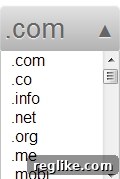 The advent of new TLDs, initiated by ICANN’s aggressive expansion program, has opened up a universe of descriptive and niche domain extensions, from .app and .store to .blog and .city. While this offers unprecedented opportunities for online branding and identity, it also presents a significant challenge for domain registrars. They must devise innovative strategies to present the most relevant and valuable domain choices to their customers from a pool of hundreds, if not thousands, of options. The days of simply typing a keyword and checking availability across a handful of popular extensions are quickly becoming a relic of the past.
Rethinking the Domain Search Experience: Beyond the Drop-Down Box
For long-time domain investors and webmasters, the absence of the traditional TLD drop-down box might initially seem unsettling. However, GoDaddy is far from the first registrar to abandon this increasingly outdated search feature. Progressive registrars have already begun to experiment with more dynamic and user-friendly interfaces, recognizing that the sheer volume of new TLDs renders the old system impractical and inefficient for a modern user experience.
Consider Hover, the retail arm of reseller registrar Tucows. They proactively removed their TLD drop-down box over a year ago. Today, visitors to Hover are greeted with a minimalist search box that invites them to “Search for a domain or enter a few keywords.” This simple yet powerful prompt subtly encourages users to think beyond specific extensions and instead focus on their brand, business, or idea. While customers retain the option to explicitly type “.com” or any other desired extension, it is no longer the default expectation. This shift fundamentally alters the user’s initial interaction, moving from an extension-first mindset to a concept-first approach.
Furthermore, Hover’s results page is a masterclass in modern domain discovery. It’s far more sophisticated than merely listing the search term followed by every available TLD. Instead, Hover intelligently mixes various extensions, seamlessly integrates aftermarket domains (domains already registered but available for sale), and even suggests variations of the original search terms. This holistic approach significantly enhances the chances of a user finding a suitable and relevant domain, even if their initial desired .com is unavailable.
Hover is not an isolated case. MelbourneIT, a prominent top-10 domain registrar, also embraces a streamlined approach. They only display TLD options if a user actively clicks a button labeled “see our domain extensions,” effectively de-emphasizing the extension selection until later in the process. MelbourneIT has gone even further with its recently redesigned homepage, which features a single, clear path: search for a domain and proceed directly through the purchase funnel. This reduction of friction and focus on direct action underscores the industry’s move towards simplicity and efficiency.
The impending change at GoDaddy, a dominant force in the domain registration industry, is expected to catalyze a widespread transformation. Once GoDaddy, with its massive user base, implements this new search paradigm, it is highly probable that countless smaller registrars will swiftly follow suit, emulating the leader and further accelerating the shift towards a more intelligent domain search experience across the entire ecosystem.
The Engine Behind Smarter Search: Data, Algorithms, and Conversion
While eliminating the TLD selector drop-down box is a relatively straightforward user interface adjustment, the real challenge and the core innovation lie beneath the surface: how to intelligently deliver the most relevant and conversion-driving domain results to customers. This requires moving beyond simple keyword matching and delving into sophisticated data analysis and algorithmic decision-making.
Back in 2011, GoDaddy secured a patent for an Adwords-style bidding system designed for registries. This innovative concept envisioned a system where registries could bid to have their domains appear higher in search results, much like advertisers bid for ad placement on search engines. The patent specifically took into consideration factors such as how frequently a particular TLD leads to a successful conversion and the revenue it generates, effectively creating a Cost-Per-Mille (CPM) or Cost-Per-Click (CPC) like system for TLD search result placement. While many registrars currently employ rudimentary versions of this, where TLDs with higher conversion rates or those for which registries offer marketing incentives are prioritized, these systems are poised for a significant upgrade in sophistication.
Optimizing for Conversion and Long-Term Value
At its heart, the ultimate goal of any domain search system is conversion. A registrar’s success is directly tied to its ability to transform a search query into a completed domain registration. This means presenting relevant, available, and desirable domain options that resonate with the user’s intent. However, not all conversions are equal. Registrars are increasingly looking beyond the initial sale to understand the true profitability and lifetime value of each TLD registration.
This deeper analysis involves assessing the customer lifetime value (CLV) associated with different types of domains or specific TLDs. For instance, a customer registering a .com domain might historically show a higher propensity to purchase additional services like web hosting, email, and SSL certificates over time, compared to someone registering a less common or niche TLD. Conversely, a customer choosing a .store domain might be more likely to opt for e-commerce platform integrations, while a .app domain registrant might require development tools. By understanding these long-term behavioral patterns, registrars can strategically prioritize TLDs that not only generate immediate revenue but also contribute significantly to sustained profitability.
Furthermore, registrars will heavily weigh the likelihood of customers purchasing supplementary services alongside a particular TLD. A notable example is the historical demotion of .us domains in some search results. This is often because registrars are unable to sell lucrative WHOIS privacy services with .us domains due to specific regulatory requirements, thereby reducing the overall profitability associated with that particular TLD. Such nuanced considerations will become even more critical in an environment saturated with new and diverse TLD offerings, pushing registrars to analyze their entire product ecosystem when determining search result prominence.
New Dimensions in Domain Relevancy: Geolocation and Context
The era of new TLDs introduces at least two critical parameters that will dramatically reshape how search results are presented: geolocation and the contextual relevance of the top-level domain itself.
First, geolocation will play an increasingly vital role. It is inherently logical for registrars to display .nyc domains prominently to a user physically located in New York City, while the same domain might appear much lower on the list, or not at all, for someone searching from Austin, Texas. Registrars already apply this logic, to some extent, for country code top-level domains (ccTLDs) like .uk or .de. However, the introduction of highly localized “city TLDs” such as .nyc, .london, .berlin, and .paris elevates this concept to an unprecedented level of granularity. Leveraging IP address detection and other location-based data will allow registrars to tailor search results specifically to a user’s geographical context, providing more pertinent options for local businesses, community groups, and individuals.
Second, the contextual relevance of the top-level domain itself will become a paramount factor. Currently, the relevance of the TLD is seldom a primary consideration in how registrars display results. Generic extensions like .com, .co, or .info typically dominate the top of the list, regardless of the search query’s specific nature. But does this still make sense when a user searches for “Johns Pizza Shop”?
In such a scenario, an intelligent search system might prioritize and display `johns.pizza`, `johns.restaurant`, `johnspizza.restaurant`, or even `johnspizza.food` as highly relevant options for the customer. These descriptive TLDs directly align with the search intent. Conversely, showing these highly specific top-level domains to a user searching for generic terms like “my business” might be less effective. The challenge for registrars lies in discerning when it is appropriate to elevate a new, descriptive TLD above the ubiquitous .com in the search results.
Crucially, the availability of the domain is a non-negotiable factor. For “Johns Pizza Shop,” showing `JohnsPizzaShop.com` makes no sense if it is already registered, unless that domain is actively for sale on the aftermarket. If the registrar cannot facilitate a direct registration for a desired domain, presenting it as an option is futile. Consequently, search results may still include other related .com domains if they are available or if premium aftermarket options exist. Ultimately, registrars will need to meticulously analyze their vast datasets—including search patterns, conversion rates, and user behavior—to determine precisely which domains and TLDs to promote for each individual search query, moving towards a truly personalized and effective discovery experience.
The Transformative Journey from ‘Dumb’ to ‘Smart’ Search
This year truly marks the end of an era in the domain industry. However, framing it merely as the elimination of a drop-down box, a fixture of domain search for over a decade, misses the larger, more profound point. The grander narrative is the industry’s inevitable and critical transition from what can be described as “dumb search” to highly sophisticated “smart search.” For years, most registrars operated with basic search systems: a user inputs a query, and the system responds with direct matches or simple suggestions. This rudimentary approach, however, is simply untenable in the burgeoning universe of hundreds of new TLDs.
Developing a truly “smart” domain search system is an immensely complex problem, requiring expertise in data science, artificial intelligence, and user experience design. Recognizing this challenge, industry leaders like GoDaddy are actively recruiting top-tier search and data experts to engineer solutions capable of navigating the much broader and more intricate TLD landscape. These experts are tasked with building algorithms that can understand user intent, weigh various profitability metrics, factor in geographical context, and provide truly relevant domain recommendations in real-time.
Registrars who successfully solve this intricate puzzle of intelligent domain discovery will gain a formidable competitive advantage. They will not only enhance the user experience by making domain finding effortless and intuitive but also significantly boost their conversion rates and overall profitability. Conversely, those registrars who have yet to embark on developing such sophisticated solutions are rapidly running out of time. The market is evolving at an accelerated pace, and remaining tethered to outdated search methodologies will inevitably lead to a decline in relevance and market share. The future of domain registration is intelligent, personalized, and seamless, driven by algorithms that anticipate needs rather than simply reacting to queries.