
Salesforce Confirmed: Work.com Domain Acquisition Signals Major Strategic Play
The digital landscape is constantly evolving, and for tech giants like Salesforce, strategic domain acquisitions are often key indicators of future market expansion. What began as strong speculation in March has now been definitively confirmed: Salesforce.com has officially acquired the premium domain name, Work.com. This move solidifies earlier clues and ignites significant anticipation regarding the company’s next big strategic initiative.
In early spring, a series of compelling observations led many to believe that Salesforce.com was indeed the mysterious buyer behind Work.com. The initial signs were compelling, rooted in the intricate world of domain registration and brand protection. Specifically, the WHOIS record for Work.com, which details domain ownership, pointed to the same brand protection company utilized by Salesforce for its recent acquisition of Site.com. This shared pattern immediately raised eyebrows, suggesting a consistent approach to securing valuable digital assets.
Furthermore, Work.com had been previously listed in an exclusive Moniker auction, a well-known platform for high-value domain transactions. Salesforce has a documented history of leveraging Moniker to secure crucial domain names, most notably the significant acquisition of Data.com. This established pattern of engaging with the same auction house further reinforced the connection to Salesforce, painting a clear picture of their strategic intent even before official confirmation.
Today, any lingering doubts have been unequivocally dispelled. The nameservers on the Work.com domain have been officially updated, now pointing directly to Salesforce.com. This technical change is the ultimate confirmation, signaling the complete transfer of ownership and control to Salesforce. This public record change makes the acquisition an undeniable fact, paving the way for Salesforce to leverage this powerful domain for its future endeavors.
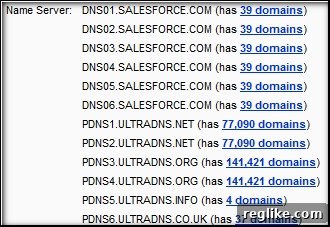
The acquisition of Work.com isn’t an isolated event; rather, it appears to be part of a broader, well-orchestrated strategy. Just recently, it was observed that Salesforce also acquired GovernmentCloud.com, employing the same brand protection service that initially hinted at the Work.com deal. This consistent approach across multiple high-profile domain acquisitions underscores Salesforce’s systematic and forward-thinking strategy in building its digital real estate portfolio, ensuring brand alignment and future product positioning.
Salesforce’s Strategic Domain Playbook: Building a Digital Empire
For a global leader in enterprise cloud computing, domain names are far more than just web addresses; they are strategic assets that define market presence, product identity, and future direction. Salesforce has long understood this, consistently investing in premium, category-defining domains that resonate with their vision. The acquisitions of Site.com, Data.com, and now Work.com, are prime examples of this sophisticated playbook in action.
Site.com, for instance, became a cornerstone for Salesforce’s web experience management platform, enabling businesses to build dynamic, data-driven websites quickly and efficiently. Data.com emerged as a powerful solution for B2B data intelligence, helping sales and marketing teams enrich their CRM data and improve targeting. These domains weren’t just catchy names; they directly mirrored the core functionality and ambition of the products they represented, allowing Salesforce to establish immediate authority and recognition in their respective markets.
The pattern is clear: Salesforce seeks out domains that are short, memorable, and intrinsically linked to broad, critical business functions. Work.com fits this mold perfectly. “Work” is a foundational concept in every enterprise, spanning a vast array of activities from collaboration to human resources to project management. Owning such a powerful and versatile domain provides Salesforce with an incredible foundation for a new product line or a significant expansion of existing services, promising to deliver solutions that redefine how organizations operate.
The Future of Work.com: A Deep Dive into HR Potential
The most compelling speculation surrounding the Work.com acquisition centers on Salesforce’s potential foray into the human resources (HR) technology market. This move would represent a significant expansion for the CRM giant, pushing its “Customer 360” vision to encompass the “Employee 360” experience. Given Salesforce’s track record and the evolving nature of work, an HR push seems not only plausible but also strategically brilliant.
The Rationale for an HR Push
The traditional HR function has undergone a dramatic transformation, shifting from a purely administrative role to a strategic imperative. Modern organizations recognize that employee experience, talent management, and workforce development are critical drivers of business success and competitive advantage. Companies are increasingly seeking integrated solutions that can manage the entire employee lifecycle, from recruitment and onboarding to performance management, learning, and offboarding.
Salesforce’s existing platform, with its robust capabilities in customer relationship management, data analytics, automation, and a powerful underlying cloud infrastructure, is remarkably well-suited to address many of the challenges in HR. The principles of managing customer relationships—understanding needs, tracking interactions, personalizing experiences—are directly transferable to managing employee relationships. By leveraging its core strengths, Salesforce can offer a unified platform that transforms the employee journey, making it as seamless and data-driven as the customer journey.
What Salesforce Could Offer in the HR Space
If Work.com becomes the banner for Salesforce’s HR initiative, the possibilities are extensive. We could see offerings that span various critical HR functions, including but not limited to:
- Employee Engagement: Tools for surveys, feedback loops, recognition programs, and internal social networks to foster a positive and connected workplace culture.
- Talent Management: Solutions for recruitment, applicant tracking, onboarding, skills development, career pathing, and succession planning.
- Performance Management: Systems for goal setting, continuous feedback, performance reviews, and calibration to drive individual and team effectiveness.
- Learning & Development: Platforms for delivering training, certifications, and continuous professional growth opportunities.
- HR Service Delivery: Self-service portals for employees to access HR information, benefits, payroll details, and submit requests, reducing administrative burden.
- Workforce Analytics: Advanced reporting and AI-driven insights into employee data, helping organizations make data-informed decisions about their workforce.
These potential offerings would seamlessly integrate with Salesforce’s existing ecosystem, providing a holistic view of the organization. Imagine a world where sales performance data is directly linked to performance reviews, or customer feedback informs training modules for service agents. This convergence under the “Employee 360” umbrella would unlock unprecedented synergies, allowing companies to truly connect their internal operations with their external customer experience strategy.
Competing in a Crowded Market
Entering the HR technology market means facing established and formidable competitors such as Workday, SAP SuccessFactors, and Oracle HCM Cloud. These players have spent years building comprehensive suites and developing deep expertise. However, Salesforce brings unique advantages to the table:
- Platform Extensibility: The Salesforce platform is renowned for its flexibility and an extensive AppExchange ecosystem, allowing businesses to customize and extend functionality to meet specific needs. This could offer a more adaptable and agile HR solution.
- AI Integration (Einstein): Salesforce’s AI capabilities, Einstein, could power intelligent recommendations for talent acquisition, personalized learning paths, or predictive analytics for employee retention, offering a competitive edge.
- Focus on Experience: Leveraging its expertise in CRM, Salesforce could differentiate itself by prioritizing the employee experience, designing user-friendly interfaces and intuitive workflows that mirror the best consumer applications.
- Unified Data: The promise of a truly unified data model across sales, service, marketing, and HR could be a game-changer, breaking down traditional data silos that hinder strategic decision-making.
Salesforce’s potential entry, backed by the powerful Work.com domain, could disrupt the HR tech landscape, forcing existing players to innovate further and offering enterprises a compelling new choice for managing their most valuable asset: their people.
Beyond HR: Broader Implications of “Work.com”
While the HR market seems like the most immediate and logical application for Work.com, it’s also worth considering broader possibilities. The term “work” itself is incredibly expansive, encompassing many facets of modern business operations. Salesforce could leverage this domain for initiatives beyond traditional human resources:
- Collaboration and Productivity: Work.com could become the home for a suite of collaboration tools, project management solutions, or a digital workspace platform designed to enhance team efficiency and cross-functional cooperation.
- Freelance/Gig Economy Platform: Given the rise of the gig economy, Work.com could potentially serve as a platform connecting businesses with freelance talent, managing projects, and facilitating payments, an area where Salesforce’s platform capabilities could shine.
- Future of Work Initiatives: It could also be a hub for thought leadership, research, and solutions related to the “future of work,” addressing trends like remote work, automation, and hybrid models.
Indeed, the power of a domain like Work.com lies in its versatility. It provides a strong, central brand identity that can evolve and adapt as Salesforce identifies new market opportunities or chooses to consolidate existing products under a more impactful banner. The convergence of CRM, ERP, and HR systems into a more integrated enterprise platform is an ongoing trend, and Work.com could serve as a powerful anchor for Salesforce’s efforts in this broader integration.
The Significance of Domain Names in the Digital Age
The story of Work.com and Salesforce is a testament to the enduring value of premium domain names in the digital economy. In an increasingly competitive online world, a short, memorable, and category-defining domain name is more than just an address; it’s a critical branding asset. Such domains convey instant authority, build trust, and establish market leadership without requiring extensive explanation.
For a company like Salesforce, which operates on a global scale and constantly innovates, securing a domain like Work.com is an investment in its future. It provides a clear, concise identity for potentially groundbreaking new products or services, ensuring high recall and strong search engine visibility. It simplifies marketing efforts and immediately signals to customers and competitors alike that Salesforce is serious about expanding its influence in fundamental business processes.
The acquisition strategy demonstrates a keen understanding of brand power and market positioning, laying the groundwork for Salesforce to continue its trajectory of growth and innovation.
The confirmation of Salesforce.com’s acquisition of Work.com marks a pivotal moment in the enterprise software landscape. While the exact strategic direction remains under wraps, all signs point to a significant expansion into the broader “work” ecosystem, most likely spearheaded by a bold move into the human resources technology market. Backed by its robust platform, proven acquisition strategy, and a powerful new domain, Salesforce is poised to once again redefine how businesses operate. The industry will be watching closely as Salesforce unveils its plans for Work.com, anticipating innovations that could transform the future of work for organizations worldwide.