
Unlocking Agile SEO: Google Search Console Now Delivers Fresh Data in Less Than 24 Hours
In the fast-evolving world of search engine optimization (SEO) and digital marketing, timely data isn’t just a luxury; it’s a critical necessity. For years, webmasters and SEO professionals have grappled with data delays in Google’s official reporting tools, often having to wait days, or even a week, to gain insights into their website’s performance in organic search. This lag, while understandable from a processing standpoint, significantly hampered the ability to make rapid, data-driven decisions. However, a significant improvement has recently been rolled out, marking a new era for website analytics: Google Search Console (GSC) now provides performance data that is less than a day old. This pivotal update promises to revolutionize how businesses monitor, analyze, and react to their organic search presence, enabling unprecedented agility in SEO strategies.
The Evolution of Search Data: From Real-Time to Aggregate, and Now Fresh
Many long-time SEO practitioners fondly recall the “good old days” when direct access to search query data was commonplace. Back then, web analytics platforms often displayed the exact keywords people typed into search engines to find a website, offering a granular view of user intent. This real-time, unfiltered insight was incredibly valuable for content creation, keyword targeting, and understanding audience behavior. However, privacy concerns led Google to encrypt search queries, eventually leading to the notorious “(not provided)” data in analytics and the eventual transition to Google Webmaster Central, later rebranded as Google Search Console.
While GSC became an indispensable tool, offering aggregate data on queries, pages, countries, and devices, it never quite replicated the immediacy of the past. Its strength lay in providing a holistic, high-level overview of a site’s performance in Google Search, helping identify broad trends, technical issues, and areas for improvement. Despite its power, a consistent frustration remained: the data delay. Waiting days for search performance metrics meant that by the time insights were available, market trends might have shifted, competitors might have reacted, or critical issues might have lingered unnoticed for too long. This made truly agile content adjustments or immediate issue resolution a considerable challenge, often leading to reactive rather than proactive SEO strategies.
Understanding Google Search Console: Your Gateway to Organic Performance
Before diving deeper into the impact of fresh data, it’s essential to appreciate the comprehensive suite of tools Google Search Console offers. GSC acts as Google’s direct communication channel with website owners, providing invaluable information about how Google crawls, indexes, and ranks a site. Its primary features include:
- Performance Reports: Showing how your site performs in Google Search results, tracking clicks, impressions, click-through rates (CTR), and average position for queries, pages, countries, devices, and search appearance types.
- Index Coverage: Identifying which pages are indexed by Google, and reporting any indexing errors or warnings.
- Sitemaps: Submitting sitemaps to help Google discover your content more efficiently.
- Removals: Temporarily blocking pages from appearing in Google Search results.
- Core Web Vitals: Providing crucial data on user experience metrics like loading speed, interactivity, and visual stability.
- Manual Actions: Alerting you to any penalties Google has applied to your site.
Among these, the Performance report is arguably the most frequently used, offering a window into how users interact with your site in search. By analyzing queries, impressions, and clicks, webmasters can identify new content opportunities, optimize existing pages, and troubleshoot sudden drops in traffic. The ability to filter data by date range has always been a core function, but the underlying data freshness has historically been a limiting factor. Until now, the most recent data often lagged by several days, making it difficult to capitalize on emerging trends or quickly address performance issues.
The Game-Changer: Data Freshness in Under 24 Hours
The recent announcement by Google—and confirmed through direct observation in many GSC accounts, including my own—that search performance data is now available in less than a day, marks a significant leap forward. This means you can wake up in the morning and review your website’s search performance for the entirety of the previous day. This dramatic reduction in data latency transforms GSC from a powerful analytical tool into an immediate strategic asset. As per Google’s official announcement, webmasters can now see a far more current view of their site’s organic search traffic and query data.
The implications of this enhanced data freshness are profound and far-reaching across various aspects of SEO and digital strategy:
- Rapid Trend Identification: News publishers, e-commerce sites, and content creators can now identify trending topics or products almost as they emerge in search. This allows for quicker content creation or product promotion, capitalizing on fleeting interest spikes.
- Agile Content Optimization: See yesterday’s top-performing queries or pages and make immediate adjustments to titles, meta descriptions, or content to improve CTR and relevance. Similarly, quickly identify underperforming content and determine if it’s due to visibility or user engagement issues.
- Faster Issue Detection and Resolution: A sudden drop in impressions or clicks could indicate a technical issue, a penalty, or a change in search intent. With fresh data, these anomalies can be spotted and investigated within hours, rather than days, minimizing potential damage to traffic and revenue.
- Improved Campaign Performance Tracking: For ongoing marketing campaigns, fresh GSC data provides immediate feedback on how organic search is contributing. This allows for in-flight adjustments to paid campaigns or social media promotions to align with organic performance.
- Competitive Responsiveness: By understanding what’s driving traffic to your site (and by inference, what might be driving traffic to competitors) almost instantly, you gain a competitive edge in adapting your strategies.
- A/B Testing and Experimentation: When testing different page titles or meta descriptions, the impact on CTR can now be observed much faster, allowing for quicker iteration and optimization cycles.
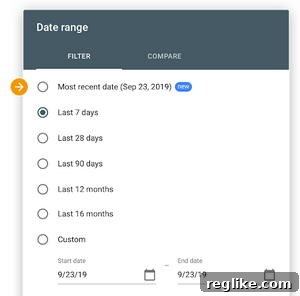
To verify this improved data freshness, users simply need to log into their Google Search Console account, navigate to the Performance report, and select the date range. You will typically see an option for “most recent date” or be able to select yesterday’s full data, providing a tangible example of this significant enhancement.
The Google Discover Anomaly: A Future Frontier
While the improvements in fresh data for traditional Google Search are a massive win, it’s important to note one specific area where this freshness has yet to arrive: Google Discover. Google Discover is a personalized content feed that appears on Android devices, in the Google app, and on the Google.com mobile homepage. For many websites, it has grown into a substantial, even dominant, source of traffic. In my own experience, Discover currently provides more than half of my Google-generated traffic, highlighting its immense importance for content distribution and audience engagement.
The current limitation is that Google Discover traffic data within GSC still experiences a significant delay, often several days behind. This creates a disconnect: while webmasters can react quickly to search query trends, they are still somewhat blind to the immediate performance of their content in Discover feeds. The ability to quickly identify which articles are gaining traction in Discover or which content types resonate most with its audience remains a challenge due to this lag. It’s a logical expectation that as Google continues to refine its data processing, fresh data for Discover will eventually become available, further empowering content creators to optimize for this powerful platform. Until then, optimizing for Discover remains a more long-term, trend-based strategy rather than an agile daily endeavor.
Leveraging Fresh Data for Proactive SEO Strategies
With fresh data now readily available, SEO professionals and website owners have an unprecedented opportunity to shift from reactive to proactive strategies. Here’s how to make the most of this powerful update:
- Daily Check-ins: Integrate a quick review of your GSC Performance report into your daily routine. Look for unusual spikes or drops in impressions and clicks, as well as emerging queries.
- Content Gap Analysis: Identify new search queries that are bringing impressions but few clicks. This might indicate an opportunity to create new content or optimize existing pages to better address user intent.
- CTR Optimization: For pages with high impressions but low CTR, experiment with optimizing titles and meta descriptions, then monitor the impact on CTR the very next day.
- Technical SEO Monitoring: A sudden drop in overall impressions could signal an indexing issue or a crawl problem. Fresh data allows for immediate investigation, potentially preventing long-term traffic loss.
- Competitor Analysis (Indirect): While GSC doesn’t show competitor data, knowing what’s working for your site quickly can give you clues about broader market trends, which can then inform your competitive analysis.
The Future is Agile: Embrace the Power of Timely Insights
Google’s commitment to providing more timely and actionable data underscores the evolving landscape of digital marketing. In an era where information spreads rapidly and user expectations are constantly rising, the ability to make swift, informed decisions is paramount. The availability of less-than-a-day-old data in Google Search Console is not just a technical update; it’s a strategic enabler, empowering businesses to be more responsive, efficient, and ultimately, more successful in their online endeavors. While we still await similar improvements for Google Discover, this significant step forward cements GSC’s position as an indispensable tool for any webmaster or marketer serious about optimizing their presence in Google Search. Embrace this newfound agility and harness the power of fresh data to propel your website’s performance to new heights.