
Strategic Domain Marketing: Learning from Sedo’s Targeted Approach
In the dynamic and ever-expanding digital landscape, a domain name transcends its basic function as an internet address; it serves as a critical component of digital identity, a cornerstone of brand presence, and frequently, a valuable asset representing a significant investment. Consequently, the effectiveness of strategies employed to market and sell these indispensable digital properties profoundly impacts their adoption, perceived value, and ultimate success. While the domain industry has witnessed numerous marketing initiatives, particularly coinciding with the rollout of new generic Top-Level Domains (gTLDs), there is a compelling case to be made for the implementation of more refined, highly targeted marketing methodologies. A recent, exemplary campaign orchestrated by Sedo, a prominent global domain marketplace, offers an insightful blueprint for this strategic evolution, demonstrating a path that forward-thinking domain name registrars would do well to consider and adapt. This comprehensive article aims to dissect the efficacy of such targeted marketing, critically assess the prevailing approaches to registrar outreach, propose actionable frameworks for its practical application, and delineate the extensive reciprocal benefits that accrue to registrars, registries, and domain owners alike.
The Sedo Blueprint: A Masterclass in Relevant Outreach
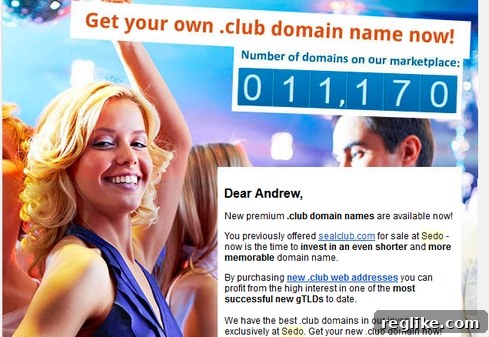
Sedo’s recent marketing endeavor stood out due to its remarkable precision and strategic foresight. Deviating from the common practice of broad, indiscriminate email campaigns, the company meticulously identified and segmented a specific cohort within its extensive user base: individuals who had previously listed or expressed interest in domain names containing the distinct keyword “club.” To this carefully curated audience, Sedo deployed a highly personalized email, featuring a subject line crafted to immediately capture attention and resonate deeply with their established interests: “Did you try selling [something]club.com? Invest in THESE names now.” This intelligent opening then seamlessly transitioned into a compelling and relevant pitch advocating for investment in .club domains.
This approach is far more than merely clever; it embodies profound strategic insight. It expertly leverages historical user behavior and demonstrated interest as a powerful predictive indicator of future engagement and propensity to convert. By directly addressing a known affinity for “club”-related domains, Sedo dramatically elevated the relevance of its message, transforming what could have been perceived as a generic advertisement into a highly pertinent, value-driven opportunity for an already engaged audience. The psychological impact of such granular personalization is immense, effectively elevating a potential spam message into a genuine, thought-provoking proposition tailored to individual needs. This level of meticulous insight and sophisticated execution sets an exceptionally high standard for effective domain marketing within the industry.
The Current Landscape: Missed Opportunities in Mass Marketing
What remains notably surprising, particularly given the clear and demonstrable success potential exemplified by Sedo’s targeted campaign, is the relative infrequency of similar precision-based initiatives among the majority of major domain name registrars. Presently, the prevailing marketing paradigm for promoting new gTLDs largely revolves around broad-brush campaigns. In this model, registrars typically disseminate undifferentiated marketing emails to their entire customer ecosystem. While these efforts undeniably contribute to a certain level of awareness and generate some sales, their inherent efficiency and conversion rates are fundamentally constrained by their lack of specificity.
Consider the scenario: a customer whose entire domain portfolio is comprised of photography-related names receives an email aggressively promoting “.tech” domains, or another whose primary digital interest lies in personal blogging is consistently pitched “.shop” extensions. Such untargeted, generic communications frequently meet an unfortunate fate – relegated to the junk folder or swiftly deleted upon receipt. This pervasive practice contributes significantly to email fatigue among customers and consequently diminishes the overall efficacy and impact of future marketing endeavors. This scattergun methodology, while superficially appearing less labor-intensive in terms of initial segmentation and personalization, ultimately results in the wasteful allocation of invaluable marketing resources and a critical forfeiture of opportunities to forge deeper, more meaningful connections with customers based on genuine relevance. It is akin to attempting to sell highly specialized scuba diving equipment in the heart of a vast desert – a few individuals might harbor a passing curiosity, but a genuinely compelling need will be exceptionally rare.
Why Aren’t Registrars Embracing Targeted Outreach More Widely?
This observation naturally leads to a pivotal question: why have domain registrars not more widely adopted these demonstrably effective, highly targeted marketing strategies? A confluence of factors likely contributes to this significant oversight:
1. Perceived Effort and Technical Hurdles: The implementation of sophisticated targeted campaigns necessitates a multi-faceted approach involving meticulous data analysis, granular customer segmentation, real-time availability checks for specific domain names, and advanced mail merging capabilities. This intricate process can often be perceived as a daunting and resource-intensive undertaking, especially when juxtaposed against the comparative simplicity of executing a single, mass email blast. Registrars may view the inherent technical complexity and the required allocation of both human and technological resources as potentially prohibitive obstacles.
2. Fear of “Bombarding” Clients: A legitimate concern among registrars is the apprehension of overwhelming their existing client base with an excessive volume of marketing messages. There exists a delicate and critical balance between proactively informing customers about valuable opportunities and risking elevated unsubscribe rates or fostering negative brand perceptions. However, it is crucial to recognize that targeted communication, by its very nature, is inherently less likely to be perceived as intrusive or unsolicited “spam” precisely because it delivers relevant, value-added information directly aligned with the recipient’s known interests.
3. Lack of Strategic Vision or Internal Silos: Some registrars may not have fully explored or comprehensively understood the immense potential inherent in leveraging granular customer data and personalized marketing within the unique context of the domain industry. Their marketing departments might be entrenched in traditional, broad-stroke approaches, inadvertently overlooking the transformative power of highly niche and individualized appeals. Furthermore, internal data silos can impede the holistic view of customer behavior necessary for effective targeting.
4. Legacy Systems and Data Fragmentation: The presence of outdated or inflexible IT infrastructures, coupled with fragmented customer data dispersed across disparate systems, can present significant operational challenges. These technical limitations make it exceedingly difficult to efficiently extract, synthesize, and analyze the requisite information needed for precise customer segmentation and the subsequent execution of highly effective targeted campaigns.
The Undeniable Benefits of Precision Marketing for Registrars and Registries
Notwithstanding these identified challenges, the strategic advantages associated with embracing and implementing a targeted marketing strategy overwhelmingly eclipse the perceived difficulties. This approach fundamentally fosters a mutually beneficial ecosystem, creating distinct win-win scenarios for registrars, registries, and the domain owners they serve.
1. Dramatically Higher Conversion Rates: When a marketing message is meticulously aligned with a recipient’s known interests, prior purchasing behaviors, or expressed preferences, the probability of conversion experiences a substantial surge. The act of recommending a “.club” domain to an individual who already possesses “sportsclub.com” is inherently far more efficacious than a generic, untargeted promotional effort. This heightened relevancy significantly diminishes friction throughout the sales funnel, leading to more direct and successful transactions.
2. Enhanced Customer Relationships and Trust: Personalized communication serves as a powerful testament that registrars possess a genuine understanding of their customers’ specific needs and are actively endeavoring to offer substantive value, rather than merely pushing products indiscriminately. This deliberate approach cultivates a deeper sense of trust and significantly fortifies customer loyalty, progressively transforming what might otherwise be a purely transactional relationship into a more consultative and enduring partnership.
3. Increased Revenue for Registrars: The direct outcome of achieving higher conversion rates is a tangible increase in sales volume and, consequently, a boost in revenue. Even when engaging with a smaller, more precisely targeted audience, the enhanced efficiency of each outreach can generate substantially more profit compared to widespread campaigns characterized by low conversion rates. This positive financial impact also extends to domain renewals, as highly relevant domains are considerably more likely to be retained by satisfied customers.
4. Boost for New gTLD Adoption: Targeted marketing emerges as an exceptionally potent instrument for accelerating the widespread adoption of new gTLDs. By strategically connecting specific new extensions with their most logical and demonstrably interested audience segments, registrars can significantly fast-track the growth and ensure the long-term viability of these emerging domain spaces, thereby benefiting not only individual registrars but also registries and the broader domain ecosystem.
5. Competitive Advantage: Registrars who proactively master the art and science of targeted marketing will secure a distinct and significant competitive edge over rivals who persist in relying on outdated, generalized marketing methodologies. In an increasingly saturated and competitive market, the ability to deliver superior, highly personalized service and relevant offers can indeed serve as the ultimate differentiator, attracting and retaining a valuable customer base.
6. Reduced Marketing Waste: By strategically concentrating marketing efforts on pre-qualified leads – individuals who have demonstrated a clear predisposition towards specific domain types – registrars can optimize their marketing expenditures with greater precision. This ensures that valuable resources are allocated to campaigns that offer the highest potential return on investment, thereby minimizing financial outlay on irrelevant impressions or marketing emails that are destined to remain unread.
Implementing a Targeted Marketing Strategy: Practical Steps
Given the compelling arguments for adoption, how can registrars effectively implement such a sophisticated marketing strategy without inadvertently “bombarding” their clients or becoming entangled in insurmountable technical complexities? A systematic approach is key:
1. Robust Data Analysis and Segmentation:
- Keyword Identification: Begin by meticulously analyzing existing customer domain portfolios. Scrutinize registered names for recurring keywords, industry-specific terminology, geographic identifiers, or even discernible numerical patterns. For example, identify owners of domains containing “tech” or “software,” “art” or “design,” specific city names, or particular business types (e.g., “bakery,” “consulting”).
- Behavioral Data: Go beyond static data by tracking active customer behaviors. This includes comprehensive purchase history, records of domain searches (even those that didn’t result in a purchase), and engagement metrics from previous marketing email campaigns (e.g., open rates, click-through rates).
- Geographic and Demographic Data: Where available and ethically permissible, leverage geographic and demographic data to further refine targeting. This is particularly effective for promoting geoTLDs (e.g., “.london”, “.nyc”) or hyper-local niche markets.
2. Availability Scrubbing and Real-time Checks:
- Before dispatching any marketing pitch, it is absolutely paramount to verify the real-time availability of the suggested domain name(s). There is arguably nothing more frustrating for a prospective customer than being pitched a highly desirable domain only to discover it is already taken. This necessitates an efficient, scalable system capable of querying domain availability en masse or performing real-time checks dynamically during campaign execution.
- To enhance the customer experience and increase conversion chances, consider offering a curated selection of several relevant, *currently available* names rather than limiting the choice to just one.
3. Intelligent Mail Merging and Personalization:
- Utilize sophisticated email marketing platforms that natively support dynamic content insertion. This functionality enables the automated population of email templates with personalized details such as the customer’s name, references to their existing domain, and the precisely suggested new domain.
- Craft compelling and highly relevant subject lines that immediately communicate value and personalization, mirroring the effectiveness seen in Sedo’s example. A well-crafted subject line is the gateway to engagement.
4. Smart, Limited Outreach:
- Instead of a constant deluge of domain promotions, registrars should implement a “smart trigger” system. For instance, an email could be triggered when a newly launched gTLD is unequivocally relevant to a customer’s existing portfolio, or when a specific, highly coveted domain name that aligns with their profile unexpectedly becomes available.
- Crucially, limit the overall frequency of these highly targeted emails to preserve their impact and prevent customer fatigue. A strategy might involve sending one or two exceptionally personalized pitches per customer annually, carefully calibrated based on their individual profile and historical engagement.
- Implement robust A/B testing protocols across subject lines, call-to-actions, and email body content to continuously optimize campaign performance and refine targeting strategies over time.
5. Focus on Value Proposition:
- Every targeted email must clearly and concisely articulate the direct *benefit* to the customer. Is the suggested domain crucial for securing their brand online? Will it facilitate the expansion of their digital footprint? Does it offer essential protection against potential competitors? Emphasize the unique, tangible value that the suggested domain provides.
- Ensure that calls to action are unambiguous and that the subsequent purchase process is as streamlined and frictionless as possible, minimizing any potential barriers to conversion.
Beyond “.club”: Expanding the Horizon of Targeted Domain Marketing
The Sedo example, centered around “.club” domains, represents merely one specific illustration of a far broader and more versatile strategic principle. Imagine the expansive possibilities for customization and relevance:
- For owners of domains containing “photography” or “photo” related keywords: A targeted outreach could pitch currently available “.photo”, “.pics”, or “.photography” domains, offering them a highly relevant extension for their visual content.
- Businesses whose existing domains incorporate “tech” or “software”: These entities could receive tailored offers for premium “.tech”, “.io”, or “.dev” domains, aligning with their industry and technological focus.
- Individuals or businesses with geo-specific domains (e.g., “londoncafe.com”): They could be presented with the opportunity to acquire corresponding geoTLDs such as “.london”, assuming availability and direct relevance to their current operational location or target market.
- Owners of highly descriptive .com domains (e.g., “bestwebdesign.com”): These customers could be introduced to complementary extensions like “.design” or “.website” to diversify and strengthen their online presence, offering a more specific digital home for particular services or content.
The inherent potential for significantly enhancing both the relevance and the perceived value of domain name offerings through sophisticated targeted marketing is truly immense. This approach transforms the often-overwhelming array of new gTLDs into a highly curated selection of meaningful, personalized suggestions for each individual customer, fostering a more intuitive and valuable discovery process.
Conclusion: The Future is Personalized
The contemporary digital landscape is unmistakably trending towards pervasive personalization, a paradigm shift that the domain name industry cannot afford to ignore. Sedo’s astute and highly effective marketing campaign for “.club” domains serves as a compelling and practical blueprint, illuminating precisely how domain registrars can unlock substantial new revenue streams, significantly bolster customer loyalty, and actively drive the broader adoption of new gTLDs. While there are undeniable initial investments required in terms of advanced data analysis capabilities and seamless system integration, the long-term returns – manifested in superior conversion rates, elevated customer satisfaction, and overall market expansion – are indisputably robust and transformative.
The time has arrived for registrars to transcend the inherent limitations and inefficiencies of blanket marketing strategies and, instead, fully embrace the transformative power of precision. By judiciously leveraging the rich trove of customer data they already possess, investing strategically in intelligent segmentation tools, and maintaining an unwavering focus on delivering highly relevant and personalized value, registrars can fundamentally reimagine their marketing efforts. What was once a hopeful, broad broadcast can evolve into a highly effective, deeply personalized conversation with each customer. The future of domain sales is not merely about presenting an ever-expanding multitude of choices; it is about expertly offering the *right* choices to the *right* people at the *right* time. This critical paradigm shift towards intelligent, targeted outreach is not just a tactical upgrade to existing marketing practices; it represents a fundamental re-envisioning of how domains are presented, perceived, and ultimately acquired, yielding profound benefits for the entire domain ecosystem.