
Sedo’s 2008 Secondary Domain Market Study: A Deep Dive into Shifting Trends
The year 2008 marked a fascinating period for the secondary domain market, characterized by notable growth in sales volume alongside a significant recalibration of domain valuations. Sedo, a global leader in domain name brokerage and monetization, released its comprehensive 2008 Secondary Domain Market Study, providing invaluable insights into the intricacies of this dynamic landscape. This report, initially available as a PDF document, serves as a crucial historical benchmark, revealing the market’s resilience and its susceptibility to broader economic forces.
Overall Market Performance: Sales Volume Climbs Amidst Global Economic Headwinds
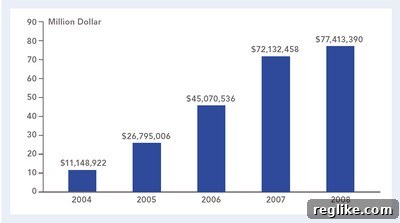
Despite the looming shadows of a global financial crisis, the secondary domain market demonstrated remarkable strength in 2008. Sedo reported a total sales revenue exceeding $77 million, representing a healthy 8% increase compared to 2007. This upward trajectory in sales volume underscores the growing recognition of domain names as vital digital assets, irrespective of macroeconomic uncertainties. The consistent demand for premium web addresses, even during challenging economic times, highlights their intrinsic value for businesses and individuals seeking an online presence.
Sedo’s position as a prominent marketplace facilitates a high volume of transactions, making its annual studies a reliable barometer for the industry. The 8% growth in sales revenue, translating to millions of dollars, indicates a maturing market where domain liquidity remained robust. This performance is particularly noteworthy given that many traditional asset classes experienced significant downturns during the same period, suggesting that digital real estate held a unique appeal for investors and end-users alike.
Quarterly Trends: A Peak Followed by a Q4 Retreat
While the overall annual figures painted a picture of growth, a deeper look into the quarterly performance of 2008 revealed underlying fluctuations and emerging challenges. The second quarter (Q2) of 2008 represented the zenith for domain sales volume, with Sedo successfully brokering the transfer of 9,727 domain names. This peak activity likely reflected strong buyer confidence and active market participation during the mid-year period, potentially driven by businesses expanding their online footprints or investors capitalizing on perceived opportunities.
However, the latter part of the year saw a discernible cooling of the market. The fourth quarter (Q4) experienced a decline in sales volume, with only 8,754 domain names changing hands. This downturn of nearly 1,000 fewer sales compared to Q2 is significant and strongly correlates with the escalation of the global financial crisis towards the end of 2008. As economic uncertainty deepened, both businesses and individual investors likely adopted a more cautious approach, leading to a reduction in discretionary spending on digital assets. This trend exemplifies how the domain market, despite its unique characteristics, is not entirely immune to broader economic sentiments and shifts in investor confidence.
The Q4 slowdown serves as a powerful reminder of the interconnectedness of various markets. When capital becomes tighter and future prospects appear less certain, even seemingly essential investments like domain names can see reduced activity. This period tested the resilience of the secondary domain market, forcing participants to re-evaluate their strategies and focus on fundamental value.
The Paradox of Price: Average Values See a Steep Decline
Perhaps the most striking revelation from Sedo’s 2008 study was the significant decrease in average selling prices for domain names. This trend presented a paradox: sales volume was up, but the price per domain was falling. The average selling price for all top-level domains (TLDs) collectively dropped by a substantial 21%, settling at $2,098. Even more dramatically, the average price for .com domains, long considered the gold standard of digital real estate, plummeted by nearly half, falling from an average of $5,016 in 2007 to $2,512 in 2008.
Understanding the “Average” vs. “Median” Discrepancy
While these average figures undoubtedly indicate a broader market adjustment, it’s crucial to approach them with a critical eye. As the study itself implicitly suggests, averages can be highly misleading, particularly in a market as diverse as domain names, where values can range from a few dollars to several million. A single, exceptionally high-value sale or, conversely, a reduction in the number of such premium sales, can significantly skew the average.
For most domain investors, the median sales price offers a much more accurate representation of typical market activity. The median price—the middle value when all sales are arranged in ascending order—is far less susceptible to the extreme influence of outliers. If there were fewer multi-million dollar domain sales in 2008 compared to 2007, this reduction in high-end transactions alone could drag the overall average down, even if the bulk of mid-range and lower-end sales remained stable or even increased slightly in price. Therefore, while the average decline signals a shift, it doesn’t necessarily mean that every domain investor experienced a halving of their portfolio’s value. It points more towards a potential flight from ultra-premium investments or a recalibration of what constitutes a “premium” price in a tougher economic climate.
This decline in average prices could also be attributed to an influx of a greater number of lower-value domains entering the market, or increased selling pressure from investors needing to liquidate assets. It reflects a market where buyers became more price-sensitive and perhaps more discerning, focusing on value rather than speculative growth, especially as the economic outlook darkened.
TLD Market Share: .Com Dominance Endures, ccTLDs Show Strength
The distribution of domain sales across different Top-Level Domains provides a clear picture of user preference and market maturity. In 2008, the unwavering dominance of .com remained evident, accounting for a commanding 47% of all domains transferred via Sedo. This figure solidifies .com’s position as the most coveted and trusted extension globally, a testament to its universal recognition and perceived authority for businesses and brands.
Following .com, Germany’s country-code Top-Level Domain (ccTLD), .de, secured a strong second place, representing 17% of all sales. This robust performance by .de highlights the significant economic activity and digital adoption within Germany, as well as the strong regional preference for localized online identities. The sustained demand for .de domains underscores the importance of ccTLDs in specific geographical markets, where local businesses and consumers often prioritize country-specific web addresses.
The “Middle Tier” TLDs: .Net, .Info, .Uk, .Org, and .Eu
A cluster of other prominent TLDs each accounted for 4% of total sales, forming a vital “middle tier” in the market. These included .net, .info, .uk, .org, and .eu. Each of these extensions serves distinct purposes and user bases:
- .Net: Often seen as an alternative to .com, particularly for technology-related businesses or networks, its consistent performance at 4% suggests its enduring utility and appeal.
- .Info: Positioned as the TLD for informational websites, its presence indicates a steady demand for sites dedicated to conveying information, perhaps benefiting from the rise of content-driven online strategies.
- .Uk: The ccTLD for the United Kingdom, its 4% share reflects the significant online market and digital economy within the UK, mirroring the strength seen with .de.
- .Org: Traditionally associated with non-profit organizations, its consistent sales volume points to the continued growth and online presence of a wide array of charitable, educational, and community-focused entities.
- .Eu: The ccTLD for the European Union, its inclusion on this list was noted as surprising by some at the time, given that its sales volume might have been perceived as weaker than other established TLDs. However, its 4% share indicates a respectable level of adoption and growing interest within the European context, perhaps driven by multinational companies or pan-European initiatives seeking a unified online identity. This suggests a gradual maturation of the .eu market, despite initial skepticism.
The consistent performance of these diverse TLDs underscores the multifaceted nature of the domain market, catering to a wide range of needs beyond just commercial .com interests. It highlights the strategic importance of choosing the right TLD for a specific purpose or target audience.
Implications for Domain Investors and Businesses in a Changing Market
The 2008 Sedo study offers profound implications for both seasoned domain investors and businesses looking to establish or enhance their online presence. The increase in sales volume, coupled with a decrease in average prices, suggests a market undergoing a significant re-evaluation of value. For investors, this period might have presented opportunities to acquire quality domains at more favorable prices, especially if they focused on understanding median values rather than being solely swayed by headline average figures.
Businesses, on the other hand, could interpret these trends as a chance to secure highly relevant domains that might have been out of reach in previous years. The continued dominance of .com reinforces its status as a foundational asset for global brands, while the strong performance of ccTLDs like .de and .uk emphasizes the importance of localized digital strategies. The diverse demand for TLDs like .net, .info, and .org also highlights the need for a nuanced approach to domain portfolio management, considering specific objectives beyond just commercial branding.
In a market where average prices are declining, the emphasis shifts from speculative buying to strategic acquisitions. Quality, relevance, and strong keywords become even more critical. Investors who understood market cycles and possessed capital were likely positioned to make strategic long-term investments during this recalibration phase. Similarly, end-users could potentially find better value for essential brand protection or market expansion efforts.
Conclusion: A Market in Transition
Sedo’s 2008 Secondary Domain Market Study paints a vivid picture of a market in transition. While the overall volume of domain transactions continued its upward climb, signaling robust demand for digital assets, the average price decline underscored a significant shift in valuation paradigms. The resilience of .com and key ccTLDs like .de confirmed established preferences, while the consistent performance of a broader range of TLDs pointed to a diversifying and maturing ecosystem.
The distinct drop in average prices, especially for .com, necessitates a deeper understanding beyond simple statistics, drawing attention to the often-overlooked difference between average and median values. This study serves as a critical reminder that market intelligence, informed by comprehensive data and insightful analysis, is paramount for anyone navigating the complexities of the secondary domain market. For investors, businesses, and policymakers alike, the lessons from 2008 emphasized adaptability, strategic thinking, and a clear understanding of fundamental value in the ever-evolving world of domain names.