
When the Lights Go Out on a Cybersquatting Claim: A Deep Dive into the LightsOut.com Dispute
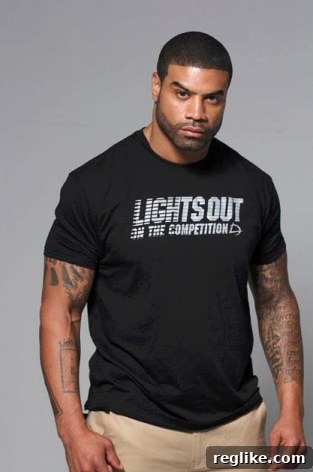
Shawne Merriman wears a “Lights Out” shirt.
In the complex and often contentious world of domain name disputes, a recent Uniform Domain Name Dispute Resolution Policy (UDRP) case involving the highly coveted LightsOut.com domain name provides significant insights. The complaint, filed by Lights Out Holdings, LLC, the company behind former NFL star Shawne Merriman’s apparel brand, was ultimately denied by a National Arbitration Forum panelist, highlighting the challenges of claiming generic domain names and proving “bad faith” in cybersquatting allegations.
This case serves as a powerful reminder of the stringent requirements for proving cybersquatting under the UDRP and the inherent difficulties in asserting trademark rights over commonly used, generic phrases. It underscores the importance of a robust legal strategy and clear evidence, especially when dealing with domain names that lack a strong, distinctive brand association from their inception.
Shawne Merriman’s “Lights Out” Brand: A Tale of a Nickname and a Business Venture
Shawne Merriman, an acclaimed former NFL Pro-Bowler, earned the formidable nickname “Lights Out” during his illustrious football career, a moniker reflecting his fierce and impactful playing style. Capitalizing on his personal brand and recognition, Merriman ventured into the business world, establishing a clothing company operating under the name “Lights Out.” This enterprise, formally known as “Lights Out Brand,” successfully carved out its niche in the apparel market, utilizing the domain name LightsOutBrand.com for its online presence and operations.
The strategic move to leverage his well-known nickname into a commercial brand seemed a natural progression. The “Lights Out” brand resonated with his fan base and the wider sports community, building a foundation for a successful apparel line. However, the desirability of a simpler, more direct domain like LightsOut.com eventually led to the dispute that would test the boundaries of trademark protection and domain name ownership.
The Pursuit of LightsOut.com: A Cybersquatting Allegation
Seeking to enhance its digital footprint and secure a more premium domain, Lights Out Holdings, LLC — the holding company overseeing Merriman’s brand — initiated a cybersquatting complaint in July. The target of this complaint was the long-standing owner of LightsOut.com. The core of their argument rested on the assertion that the domain name was registered and used in bad faith, a critical element required to win a UDRP dispute.
In their formal complaint, Lights Out Holdings painted a clear picture of their perception of the current domain owner, stating:
…He is and always has been a blatant squatter, whose intent has become more obvious with each passing year of squatting. While the website is a more elaborate place-holder than usual (because of the circumstances), the website content has become exceedingly stale.
This strong language conveyed their belief that the respondent had no legitimate interest in the domain and was merely holding it to profit from its potential value to entities like Lights Out Holdings. They aimed to demonstrate that the domain’s registration and subsequent passive use constituted an intentional act of cybersquatting, infringing upon their developing trademark rights.
The UDRP Framework: Understanding the Legal Battleground
To fully grasp the outcome of this case, it’s essential to understand the Uniform Domain Name Dispute Resolution Policy (UDRP). Adopted by ICANN (Internet Corporation for Assigned Names and Numbers), the UDRP provides an administrative, out-of-court process for resolving disputes concerning abusive registration of domain names. For a complainant to succeed under the UDRP, they must prove three cumulative elements:
- The domain name is identical or confusingly similar to a trademark or service mark in which the complainant has rights.
- The domain name holder (registrant) has no rights or legitimate interests in respect of the domain name.
- The domain name has been registered and is being used in bad faith.
The LightsOut.com case primarily hinged on the third element: demonstrating bad faith registration and use. This element often proves to be the most challenging to satisfy, especially when dealing with generic terms or where the respondent’s activities do not directly compete with or specifically target the complainant’s brand.
The Panel’s Verdict: No Evidence of Bad Faith
National Arbitration Forum panelist Debrett G. Lyons meticulously reviewed the arguments and evidence presented by both parties. Ultimately, Lyons found that Lights Out Holdings, LLC failed to prove that the LightsOut.com domain was registered and subsequently used in bad faith. This finding was the pivotal reason for the denial of the cybersquatting complaint, effectively calling “offsides” on Lights Out Holdings’ attempt to acquire the domain.
The panelist’s decision highlighted several critical issues that undermined the complainant’s case, primarily revolving around the generic nature of the term “Lights Out” and the absence of clear evidence linking the respondent’s actions to malicious intent directed at Merriman’s brand.
The Intractable Challenge of “Generic” Domain Names and Trademark Rights
Proving bad faith in this instance was an uphill battle for Lights Out Holdings, largely due to the inherently generic and widely used nature of the phrase “Lights Out.” The term itself is common in various contexts beyond sports and apparel, including general colloquialisms, emergency scenarios, and even other forms of entertainment. This pervasive usage significantly weakens any claim of exclusive trademark rights, making it exceptionally difficult to argue that someone registering such a generic term automatically intended to target a specific brand.
Key Factors Undermining the Bad Faith Claim:
- Generic Nature of the Term: “Lights Out” is not a coined or fanciful term. It is a dictionary phrase with multiple meanings. This makes it inherently challenging to establish that a domain registrant had the complainant’s specific brand in mind when registering it, especially if the registration predates the complainant’s widespread use or trademark registration.
- Lack of Specific Targeting: The domain LightsOut.com was not being used to promote clothing, sports-related merchandise, or anything directly related to Shawne Merriman’s brand. Panelists typically look for evidence of direct competition, misdirection of traffic, or overt attempts to capitalize on a complainant’s goodwill. Without this, claims of bad faith weaken considerably.
- Difficulty in Discovery: As noted in the original article, finding the “Lights Out” clothing company via a simple Google search for “Lights Out” is not straightforward. This demonstrates the generic term’s broader use and the lack of immediate association with Merriman’s brand for the general public, further complicating the claim of malicious intent from the domain owner.
- Disputed Registration Date: While there was a dispute regarding the exact registration date of LightsOut.com, even if one were to set this aside, the other factors (generic nature, lack of specific use) still presented formidable obstacles for Lights Out Holdings. The UDRP requires *both* registration *and* use in bad faith, meaning even an earlier registration date by the respondent doesn’t automatically imply bad faith if the use criteria aren’t met.
The UDRP policy is not designed to help brand owners acquire generic domain names simply because they wish to upgrade their digital presence. It specifically targets abusive registrations that intentionally capitalize on another’s trademark. When a term is as ubiquitous as “Lights Out,” the bar for proving bad faith rises considerably.
Reverse Domain Name Hijacking (RDNH): A Close Call
An interesting aspect of the panel’s decision was its consideration, and ultimate rejection, of a finding of Reverse Domain Name Hijacking (RDNH). RDNH occurs when a complainant attempts to use the UDRP process in bad faith to improperly obtain a domain name, essentially trying to “hijack” it from a legitimate owner. While the complaint failed, Panelist Lyons stopped short of an RDNH finding, stating:
The Panel does not find bad faith. Whilst the Complaint failed because there was no evidence of registration in bad faith in the circumstances of the case, the Panel finds that Complainant might have had a legitimate, albeit misconceived, belief that it had superior trademark rights and that its claim was sustainable.
This nuance is important. It acknowledges that while Lights Out Holdings’ case lacked the necessary evidence for a win, their actions weren’t necessarily malicious or an outright abuse of the UDRP process. They might have genuinely believed they had stronger trademark rights, even if that belief was ultimately misguided by the legal standards of the UDRP regarding generic terms. This distinction prevents a harsher penalty for the complainant while still upholding the integrity of the UDRP process.
The Broader Struggle to Defend “Lights Out” as a Trademark
The difficulty faced by Shawne Merriman and Lights Out Holdings, LLC in securing LightsOut.com is emblematic of a larger struggle: the inherent challenge in exclusively defending a widely used, generic phrase like “Lights Out.” The term has a strong presence in sports, entertainment, and everyday language, making it hard to claim as a unique identifier for a specific brand, particularly in apparel.
A previously linked press release concerning legal action against Under Armour, for example, illustrates this point. In the accompanying photo (as depicted in the figure above), one might notice the absence of a trademark symbol next to “Lights Out,” and often the phrase is part of a longer expression. This common usage undermines the distinctiveness required for robust trademark protection. The more generic a term, the harder it is to prove secondary meaning (i.e., that the public associates the term *exclusively* with your brand, even if it’s generic). This is a hurdle many businesses face when trying to brand with common words or phrases.
Lessons Learned for Brand Owners and Domain Registrants
This case offers valuable lessons for both brand owners seeking to protect their intellectual property and domain registrants who might find themselves on the receiving end of a UDRP complaint:
- Choose Distinctive Trademarks: Brands should strive for strong, distinctive trademarks that are less prone to generic interpretation. Coined words or suggestive marks offer better protection than descriptive or generic terms.
- Conduct Thorough Due Diligence: Before filing a UDRP complaint, complainants must rigorously assess their chances of success, especially regarding the bad faith element and the generic nature of the domain name. Understanding the respondent’s legitimate interests, or lack thereof, is crucial.
- Early Domain Registration: For businesses, securing relevant domain names, including generic or descriptive ones, early in their brand development is paramount. Waiting too long can lead to disputes like this one, which are often costly and unsuccessful.
- UDRP is for Abusive Registration, Not Domain Acquisition: The UDRP is a tool to combat cybersquatting, not a mechanism to acquire desirable generic domain names that happen to align with a brand. Complainants must demonstrate clear evidence of a respondent’s malicious intent towards *their specific trademark*.
- Proof of Bad Faith is Key: Simply having a trademark that is identical or similar to a domain name is not enough. The complainant must definitively prove that the domain was registered and used in bad faith, specifically targeting their brand or aiming to disrupt their business.
Conclusion: A Win for Generic Domain Holders and UDRP Integrity
The denial of Lights Out Holdings, LLC’s cybersquatting complaint regarding LightsOut.com reinforces the principles of the UDRP and the protection afforded to owners of generic domain names. It highlights that owning a trademark that happens to be a common phrase does not automatically grant the right to seize a generic domain name, particularly when direct evidence of bad faith registration and use is lacking.
This decision serves as a significant precedent, reminding brand owners that the UDRP is not a shortcut to acquiring highly desirable, generic domain names. Instead, it is a mechanism designed to counteract clear instances of abusive cybersquatting. For Shawne Merriman’s “Lights Out” brand, the pursuit of LightsOut.com proved to be a challenging endeavor, ultimately ending in a panel’s firm “no,” solidifying the current domain holder’s rights and underscoring the complexities inherent in the intersection of trademarks, generic terms, and domain name disputes.
The legal representation for this case involved Ben Wagner of Mintz, Levin, Cohn, Ferris, Glovsky and Popeo, P.C., acting on behalf of Lights Out Holdings. The respondent was skillfully represented by Marc E. Hankin of Hankin Patent Law, APC.