
Unlocking Hidden Value: Why Major Domain Aftermarkets Need Advanced Search Features
In the fiercely competitive landscape of domain investing and acquisition, efficiency and precision in discovery are no longer luxuries but absolute necessities. However, a paradox exists within the digital asset sphere: many of the most prominent domain aftermarket platforms, despite their immense transaction volumes and vast inventories, offer surprisingly primitive search capabilities. This isn’t merely a minor inconvenience for users; it represents a significant impediment to market efficiency, causing both buyers and sellers to miss out on lucrative opportunities – effectively “leaving money on the table.” The unanimous sentiment among experienced domain investors is clear: the current state of search functionality on these platforms severely hampers the identification of truly valuable digital assets and stifles potential market expansion.
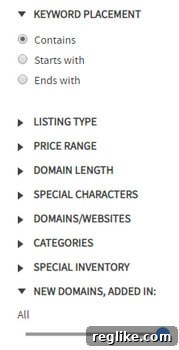
This critical observation gained recent traction through an insightful tweet from veteran domain industry commentator Jamie Zoch, who articulated a core deficiency within the aftermarket ecosystem:
It really surprises me that large domain name aftermarket services mainly rely on 3rd party services to provide tools for finding domain names for their platforms. Most main services have very lack luster domain name search tools. Really basic, little data. #domains #aftermarket
— Jamie Zoch (@DotWeekly) February 25, 2019
Zoch’s statement resonates deeply with anyone who regularly navigates the complex world of domain acquisition. While exceptional third-party resources, such as ExpiredDomains.net, brilliantly cater to the niche of expired domain discovery—offering comprehensive filtering options and an abundance of data points—it begs a fundamental question: why do the leading primary aftermarket platforms not integrate similar, or even superior, native functionalities for their vast and varied domain inventories?
The Critical Shortcomings of Current Domain Marketplace Search Tools
Major players like Sedo and Afternic stand as formidable pillars in the domain aftermarket, facilitating innumerable transactions annually and housing colossal inventories spanning premium, dropped, and standard domains. Yet, the internal search mechanisms on these platforms often feel disappointingly antiquated. Users are routinely confronted with overly simplistic search interfaces that conspicuously lack the granular control essential for efficiently sifting through millions of listings. This forces dedicated domain investors into time-consuming manual browsing or, more often, leads to exasperated abandonment of searches altogether.
To draw an analogy, imagine attempting to locate a specific model of vehicle within an enormous car dealership where your only search parameters are “color” and “manufacturer.” You would be unable to filter by year, specific model, mileage, fuel efficiency, or any unique features. This scenario precisely mirrors the frustrating experience many users encounter on prominent domain aftermarket websites. Without robust and intelligent filters for crucial domain attributes, truly valuable domains—those often referred to as “hidden gems”—remain perpetually buried deep within the inventory, inaccessible to the very buyers who possess the capital and desire to invest in them.
Why Indigenous Advanced Search Functionality is Imperative
While specialized third-party tools like ExpiredDomains.net perform exceptionally within their defined scope, furnishing a wealth of historical data, backlink profiles, and traffic estimations for domains that have expired or are slated to drop, their reach is inherently limited. They typically do not possess real-time access to the entire, active inventory of domains listed for immediate sale on platforms such as Sedo and Afternic that are not in the process of expiring. This creates a significant and critical void in the market.
The argument for major domain aftermarket platforms to develop and integrate their own sophisticated advanced search tools is not merely strong; it is multi-faceted and compelling:
- Comprehensive Inventory Access: Only the primary platforms maintain direct, real-time control over every single domain actively listed for sale within their respective marketplaces. This proprietary and constantly updated data is an invaluable asset.
- Enhanced Competitive Edge: By delivering a demonstrably superior search experience, these platforms can distinctively position themselves, attracting a greater volume of serious buyers and high-quality sellers.
- Elevated User Experience (UX): A streamlined, intuitively designed search and discovery process dramatically improves user satisfaction, significantly reducing friction throughout the domain acquisition journey.
- Accelerated Sales Velocity: When buyers can swiftly and accurately locate the exact domains they are searching for, transaction rates will naturally increase, benefiting all parties involved.
- Data-Driven Market Insights: Robust internal search mechanisms can generate invaluable data on buyer preferences, popular search terms, and domain trends, informing future platform development and marketing strategies.
Envisioning the Ultimate Domain Search Experience
What would a truly effective, SEO-optimized, and user-centric search interface entail on a leading domain aftermarket platform? It would transcend mere keyword matching to offer a highly sophisticated suite of filtering, sorting, and analytical options, empowering domain investors to precisely pinpoint “hidden gems” with unparalleled accuracy and efficiency.
Essential Features for a State-of-the-Art Search Interface:
An exemplary search tool would grant users the ability to specify a broad spectrum of criteria, transforming an often daunting chore into an efficient and rewarding discovery process. Consider the following capabilities:
- Granular Length Specifications: Filters for minimum and maximum character length, with options to include or exclude the TLD from the count.
- Character Composition Analysis: Ability to search for domains that are all-numeric, all-alphabetic, include specific numbers of hyphens, or explicitly exclude certain characters.
- Flexible TLD Management: Tools to select multiple TLDs for inclusion (e.g., .com, .net, .org, new gTLDs) or to create exclusion lists for unwanted TLDs.
- Advanced Keyword Positioning: Search functions that can identify domains starting with, ending with, or containing specific keywords at any designated position within the domain name.
- Word Count Filtering: Categorize and filter by the number of discernible words in the domain name (e.g., one-word, two-word brandables, three-word phrases).
- Precise Domain Age: Specify a registration date range or exact minimum/maximum age, a critical factor for SEO-valuable aged domains with established histories.
- Diverse Listing Type Options: Clearly distinguish and filter by “Buy Now,” “Auction,” “Make Offer,” or “Lease-to-Own” listings.
- Dynamic Price Range: An indispensable feature for budget management, allowing users to define exact minimum and maximum price points.
- Integrated Traffic & Backlink Data: The incorporation of basic traffic estimates, visitor statistics, or indicators of backlink strength (even simplified metrics) would be a transformative addition for numerous investors.
- Premium Attribute Filters: Options to filter by characteristics commonly associated with premium domains, such as common English dictionary words, brandability scores (if available), numerical patterns (e.g., repeating digits), or pronunciation ease.
- Registrar-Specific Searches: While a niche requirement, the ability to filter by the current registrar could be highly valuable for specific transfer processes or portfolio management strategies.
Beyond Basic Filtering: Intelligent Discovery & Management Tools
True innovation in domain search should not cease at mere filtering. Truly advanced platforms would integrate intelligent, proactive features designed to enhance every aspect of domain discovery:
- Customizable Real-time Alerts: Imagine receiving an immediate notification when a new domain matching your precise, pre-defined criteria (e.g., a short, two-word .com containing a specific keyword within a set price range) is listed on the marketplace. This proactive approach saves countless hours and ensures investors never miss fleeting opportunities.
- Persistent Saved Searches: The ability to store and easily retrieve complex search queries for repeated use, significantly streamlining recurrent research and monitoring efforts.
- Personalized Quality Metric Sorting: Instead of being limited to sorting by price or expiration date, users could define and sort listings based on their own “quality score,” derived from a customizable combination of chosen attributes (e.g., a blended score of length, keyword relevance, brandability, and age).
- Trending Domains & Market Insights: Integration of tools that highlight currently popular keywords, trending TLDs, or emerging domain types, providing invaluable insights into current market dynamics and future potential.
- Portfolio Management Integration: The ability to cross-reference search results with an existing domain portfolio to identify gaps or synergistic acquisition targets.
The Economic Cost of Inaction: The Lost Revenue Potential
The idiom “leaving money on the table” perfectly encapsulates the current, suboptimal situation. Domain investors are not passive observers; they are active participants rigorously seeking valuable assets, many of whom possess substantial capital ready for deployment. However, if the tools provided by the major platforms make the discovery process unduly arduous and inefficient, that capital will either remain unspent or be redirected towards alternative, more accessible investment avenues. This represents a tangible loss for the entire domain ecosystem.
For sellers, the consequence is that their potentially high-value domains languish longer on the market, or worse, are sold for significantly less than their true worth simply because the ideal buyer could not effectively locate them. This systemic inefficiency harms every stakeholder. Platforms like Sedo and Afternic operate on commission models; consequently, more efficient transactions directly translate to increased revenue and stronger market positions for them. Thus, improving search functionality is far more than a mere user convenience; it is a direct and impactful pathway to enhanced profitability, increased market share, and sustained competitive advantage.
Overcoming Challenges and Charting the Path Forward
Developing and implementing sophisticated advanced search tools is, without a doubt, a complex technological undertaking, demanding substantial investment in development and infrastructure. Potential challenges include:
- Modernizing Legacy Systems: Many long-established platforms may operate on older architectural frameworks that are not inherently designed to easily accommodate dynamic, modern search capabilities and real-time data processing.
- Managing Data Volume and Performance: Handling millions of domain records and executing real-time, intricate queries efficiently necessitates robust database management systems and scalable server infrastructure.
- Balancing Transparency with Competitive Strategy: Platforms might have valid competitive reasons for limiting the extent to which their full inventory data is exposed to external services. However, this very argument strongly reinforces the imperative to provide powerful internal search capabilities that leverage this proprietary data exclusively for their own users, enhancing the value proposition of the platform itself.
Despite these considerable hurdles, the long-term strategic benefits overwhelmingly outweigh the initial investment costs. The domain aftermarket is a mature, highly competitive global marketplace. Platforms that prioritize an exceptional user experience and empower their client base with superior, intelligent tools will invariably attract and retain more users, facilitate a greater volume of transactions, and solidify their standing as undisputed industry leaders. It is time for major domain aftermarket services to recognize that advanced search functionality is no longer a luxury feature, but a fundamental, indispensable necessity for a thriving and dynamic digital asset marketplace.
This opportunity is undeniably “low-hanging fruit”—an improvement with a clear, measurable, and highly significant return on investment. By proactively embracing a modern, data-driven approach to domain discovery, platforms can unlock vast untapped potential, generating substantial benefits for buyers, sellers, and ultimately, their own financial bottom lines. The future growth and efficiency of domain investing depend on this critical evolution.