
Sony Online Entertainment’s Costly Domain Lapse: Unpacking the SOE.com Outage and Vital Lessons for Digital Resilience
In a compelling incident that captivated the online gaming community and served as a stark, public reminder for businesses worldwide, Sony Online Entertainment (SOE) experienced a significant network outage in mid-2014. The cause of this disruption wasn’t a sophisticated cyberattack, nor a catastrophic hardware failure, but rather a surprisingly fundamental oversight: the expiration of a critical domain name. This article delves into the specifics of the SOE.com downtime, the administrative misstep that triggered it, the immediate fallout for players, and the invaluable lessons it offers regarding diligent domain management in our increasingly interconnected digital landscape.
The Unexpected Downtime: When a Gaming Giant’s Network Collapsed
Imagine attempting to log into your favorite online game, eager to join friends in a virtual adventure, only to be met with frustrating error messages. This was the reality for countless players trying to access Sony Online Entertainment’s network in July 2014. The popular gaming platform, known for iconic titles such as EverQuest, PlanetSide 2, and DC Universe Online, suddenly became inaccessible. For a company of Sony’s global stature, boasting vast technological infrastructure and dedicated IT teams, such a widespread and unexpected outage was perplexing, leading to immediate speculation about its root cause among users and tech observers alike.
The impact of this disruption was both immediate and far-reaching. Gamers found themselves disconnected from their virtual worlds, unable to log in, play, or even access essential account management services and support forums. For an entertainment company heavily reliant on continuous online presence, player engagement, and subscription revenues, even a temporary disruption can translate into significant financial losses, damage to brand reputation, and a palpable erosion of customer trust. News of the incident quickly spread across social media platforms and technology news outlets, fueling discussions and highlighting the critical importance of uninterrupted online service.
The Root Cause: A Critical Domain Name’s Unforeseen Expiration
While initial theories ranged from complex technical glitches to widespread distributed denial-of-service (DDoS) attacks, the truth, as eventually revealed by a thorough investigation, proved to be far simpler yet infinitely more avoidable. The real culprit behind the widespread inaccessibility of SOE’s network was the expiration of the domain name SonyOnline.net. This particular domain, though not the primary user-facing address (which was SOE.com), played an absolutely crucial role in the underlying architectural backbone of Sony Online Entertainment’s digital presence.
The technical chain of events was starkly clear: SOE.com itself had not expired. However, its nameservers—the internet’s equivalent of a phone book, translating human-readable domain names into machine-readable IP addresses—were explicitly configured to point to SonyOnline.net. When SonyOnline.net expired on May 26, 2014, and was subsequently suspended by its registrar, Network Solutions, in mid-July, this crucial link in the domain resolution chain was irrevocably broken. Without access to the nameservers hosted on SonyOnline.net, SOE.com effectively became an unresolvable address, leaving millions of players stranded and the entire network offline.
This incident vividly underscored a critical, often overlooked, dependency between primary web addresses and their foundational DNS (Domain Name System) infrastructure. It served as a potent demonstration that a seemingly auxiliary or secondary domain can, in fact, hold the essential keys to an entire online operation, and its lapse can trigger a devastating cascade of failures impacting core services and user access.
Initial Confusion vs. Factual Clarity: The Role of Whois Records
As the Sony Online Entertainment outage unfolded, various media outlets raced to report on the evolving situation. In the initial hours and days, The Register, a prominent and respected technology news site, initially surmised that the outage was likely attributable to a simple DNS configuration issue rather than a full-blown domain expiration. Such assumptions are not uncommon in the fast-paced realm of tech reporting, where immediate explanations are often sought amidst rapidly developing events.
However, the indisputable data contained within public Whois records soon painted a different, definitive picture. Whois is a public, query-based protocol that provides comprehensive information about registered domain names, including vital details such as registration dates, expiration dates, and registrant contact information. A swift and precise check of SonyOnline.net’s Whois records unequivocally confirmed that the domain had indeed lapsed, with an expiration date of May 26, 2014. This concrete, verifiable evidence allowed reporters and industry analysts to swiftly correct earlier speculations, confirming beyond any doubt that the domain registration lapse was the direct and singular cause of the network’s collapse. The Register itself later adjusted its reporting to accurately reflect this verified information, highlighting the crucial importance of forensic digital investigation and factual verification over initial conjecture in crisis situations.
John Smedley’s Apology and the “Wrong Email” Explanation
In the direct aftermath of the widespread outage, transparent communication and accountability became paramount for Sony Online Entertainment. John Smedley, who served as the President of Sony Online Entertainment at the time, proactively took to Twitter to address the unfolding crisis. His apology was notably swift and candid, openly acknowledging the “goof” that had led to the service disruption. This direct engagement via social media was a crucial strategic step in managing the burgeoning player frustration and demonstrating the company’s commitment to swiftly resolving the issue.
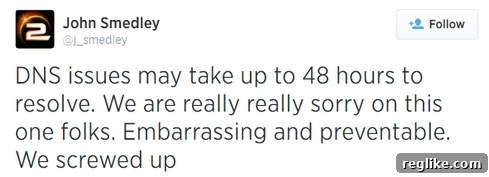
When pressed by the public and media about how such a critical administrative oversight could occur within a global technology enterprise like Sony, Smedley’s explanation was equally direct and revealing: “Notices sent to wrong email.” He further elaborated that the publicly listed Whois email contact for the problematic SonyOnline.net domain was specified as [email protected]. This critical revelation immediately brought to light a common, yet profoundly dangerous, vulnerability in organizational domain management practices: outdated, incorrect, or unmonitored contact information.
It’s standard practice for domain registrars to send a series of automated renewal reminders to the email address meticulously listed in the domain’s Whois records well in advance of the expiration date. If this crucial email address is no longer active, if it directs to an unmonitored inbox, or if it belongs to an individual who has since departed the company, these vital notifications can be entirely missed, leading directly to a lapse. In Sony’s high-profile case, it appears the established system designed to prevent such lapses ultimately failed due to a fundamental administrative oversight concerning the accuracy and monitoring of these critical contact details.
Beyond Sony: The Broader Implications of Domain Management Neglect
While Sony Online Entertainment’s outage served as a high-profile cautionary tale, it is far from an isolated incident. Businesses of all sizes, from fledgling startups to multinational corporations, confront similar and equally severe risks if their domain management practices are lax or inconsistent. The ramifications of a critical domain name expiration extend far beyond mere inconvenience, posing significant threats to business continuity and reputation:
- Profound Financial Losses: Downtime directly translates to lost revenue, particularly for e-commerce sites, online service providers, software-as-a-service (SaaS) platforms, and, as seen with Sony, online gaming networks. The longer the outage persists, the steeper the financial hit.
- Severe Reputational Damage: A website outage, especially one triggered by a preventable administrative error, can severely tarnish a company’s brand image, erode customer trust, and lead to widespread negative media coverage, which can be difficult and costly to reverse.
- Significant SEO Impact: Search engines are designed to penalize websites that are frequently down or inaccessible. Prolonged downtime can cause a site to drop significantly in search engine rankings, leading to a long-term reduction in organic traffic and visibility.
- Critical Security Risks: An expired domain becomes vulnerable to opportunistic acquisition by malicious actors, a practice known as domain hijacking or cybersquatting. This can result in phishing scams, malware distribution through a seemingly legitimate URL, or severe reputation hijacking, where the new registrant impersonates the original owner for nefarious purposes.
- Loss of Core Brand Identity: In the most extreme cases, if a critical domain is allowed to expire and is subsequently registered by another party, the original owner might face protracted and costly legal battles or even be forced into a complete rebranding effort—a massively disruptive and expensive endeavor.
- Crippling Operational Disruption: Many integral business functions, ranging from email communications (e.g., using @yourcompany.com) to internal web applications and VPN access, frequently rely on correctly configured domain names and DNS settings. An expired core domain can effectively cripple an entire organization’s digital operations.
Preventing Catastrophe: Essential Best Practices for Robust Domain Management
The Sony Online Entertainment incident stands as an invaluable case study, offering profound insights into how organizations can proactively safeguard their invaluable online presence. Implementing robust domain management strategies is not merely a technical checklist item; it is a critical, foundational aspect of comprehensive business continuity and effective risk management. Here are key best practices that all businesses should adopt:
1. Enable Auto-Renewal and Opt for Long-Term Registration
The simplest yet most profoundly effective preventative measure is to enable auto-renewal for all critical domain names with your registrar. Most reputable registrars offer this feature, ensuring that domains are automatically renewed well in advance of their expiration date, thus minimizing the risk of accidental lapses. Furthermore, considering registration for multiple years (e.g., 5 or 10 years) significantly reduces the frequency of renewal cycles and the overall chances of an oversight.
2. Maintain Impeccably Accurate and Actively Monitored Contact Information
As starkly highlighted by Sony’s predicament, outdated or incorrect contact information is a primary catalyst for missed renewal notices. Organizations must:
- Utilize a generic, role-based, and highly monitored email address (e.g., [email protected] or [email protected]) that is actively checked by multiple individuals or a dedicated team.
- Ensure that all listed phone numbers are current, active, and reach relevant personnel who understand their responsibility.
- Regularly review and diligently update Whois contact details, particularly after any significant personnel changes or organizational restructuring.
3. Implement Multiple Notification Channels for Redundancy
Never rely solely on email as your only notification method. Many registrars offer supplementary options such as SMS notifications or dashboard alerts within their control panels. Configure these additional channels for enhanced redundancy. Consider establishing internal calendar reminders, integrating with project management tools, or using dedicated spreadsheet trackers to monitor expiration dates for every domain in your portfolio.
4. Conduct Thorough and Regular Domain Audits
Periodically (e.g., quarterly, semi-annually, or annually) conduct a comprehensive audit of all registered domains. This critical process should include verifying current ownership, confirming expiration dates, checking the accuracy of contact information, and ensuring that all domains are still necessary, properly configured, and actively used. Regular audits help in identifying dormant, forgotten, or potentially critical domains that might otherwise be overlooked.
5. Centralize Domain Management for Efficiency
For organizations managing a significant number of domains, centralizing their management under a single, reputable registrar or a dedicated domain management platform can dramatically streamline the process. This approach reduces complexity, minimizes the risk of individual domains being overlooked across disparate accounts, and provides a unified overview of your entire domain portfolio.
6. Understand and Document DNS Dependencies
It is crucial to thoroughly map out and document all dependencies between your primary domains, subdomains, and nameservers. Develop a clear understanding of which domains are critically essential for the uninterrupted functioning of others, a lesson Sony learned the hard way with the interdependency of SonyOnline.net and SOE.com.
7. Leverage Professional Domain Monitoring Services
Various third-party services specialize in continuously monitoring domain expiration dates, tracking Whois changes, and assessing DNS health. Subscribing to such professional services can provide an invaluable additional layer of protection and deliver early warning alerts if any potential problems arise, giving you time to react.
8. Establish Clear Internal Responsibilities and Protocols
Designate specific individuals or a dedicated team clearly responsible for the entire domain portfolio management. Explicitly define their roles, responsibilities, and establish clear escalation procedures for renewal processes, incident response, and regular maintenance tasks. Ambiguity in responsibility is a significant risk factor.
Lessons Learned from the SOE Incident: A Blueprint for Digital Vigilance
The Sony Online Entertainment domain expiration stands as a remarkably powerful cautionary tale for the entire digital age. Its key takeaways resonate across virtually all industries and organizations:
- No One is Immune to Basic Errors: Even the largest, most technologically advanced, and well-resourced companies are demonstrably susceptible to fundamental administrative errors. Operating under the assumption that “it won’t happen to us” is a profoundly dangerous fallacy.
- The Criticality of Seemingly Minor Details: A single, seemingly obscure, or secondary domain name can, in fact, be the lynchpin for an entire online operation. Overlooking such seemingly minor details can precipitate catastrophic consequences for core services.
- The Paramount Importance of Proactive Management: Relying on last-minute, automated reminders is an inherently risky strategy. Proactive, multi-layered, and meticulously planned domain management strategies are absolutely essential for ensuring uninterrupted business continuity.
- Transparency in Crisis Management: John Smedley’s prompt, honest, and direct communication on Twitter played a crucial role in mitigating some of the negative sentiment and provided a clear path to understanding and addressing the problem.
- The Foundational Need for Accurate Contact Data: The “wrong email” explanation undeniably underscores the foundational and absolute need for up-to-date, accurate, and actively monitored contact information across all digital assets and domain registrations.
Conclusion: Vigilance is the Key to Uninterrupted Digital Presence
The Sony Online Entertainment outage, triggered by an expired domain name, delivered a stark and public lesson in the pervasive vulnerabilities inherent even in the most robust online infrastructures. It highlighted with painful clarity that neglecting fundamental aspects of digital asset management, such as timely domain renewal and accurate contact information, can lead directly to significant downtime, substantial financial losses, and profound reputational damage. For businesses navigating the ever-increasing complexities of the internet and digital economy, the SOE incident serves as an enduring reminder: unwavering vigilance, meticulous attention to detail, and comprehensive, multi-faceted domain management strategies are not merely advisable best practices—they are indispensable pillars of digital resilience, operational stability, and an uninterrupted online presence. Ensuring that your digital storefront remains open, accessible, and secure begins with the foundational and non-negotiable step of never letting your domain registration lapse.