
Take-Two Interactive Loses BioShock.com Domain Name Arbitration
In a significant development within the realm of intellectual property and digital asset management, video game publishing giant Take-Two Interactive Software has lost an arbitration case concerning the highly sought-after domain name, BioShock.com. The company, renowned for its blockbuster franchises like Grand Theft Auto and the critically acclaimed BioShock series, failed in its bid to acquire the domain from Name Administration, an entity associated with prominent domain investor Frank Schilling. This outcome underscores the complexities of domain name disputes, particularly when established trademarks clash with pre-existing domain registrations for generic terms.
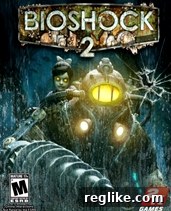
The Genesis of a Domain Dispute: BioShock’s Rise and Early Registrations
The saga of BioShock.com traces back to a pivotal period in the mid-2000s, a time when both the BioShock video game was in its developmental stages and the domain name market was rapidly evolving. Take-Two Interactive, recognizing the potential of their upcoming title, took the initial step of filing for a trademark on “BioShock” with the United States Patent and Trademark Office (USPTO) in 2005. This was an “intent-to-use” application, a common legal maneuver that signals a company’s intention to use a mark in commerce, which Take-Two officially did in 2007 with the game’s highly successful launch. The BioShock game went on to become a cultural phenomenon, lauded for its unique art style, narrative depth, and immersive gameplay, cementing the “BioShock” brand as a household name among gamers.
However, the digital landscape moves swiftly, and parallel to Take-Two’s trademark efforts, the domain name BioShock.com was acquired by Name Administration, a company linked to Frank Schilling, also in 2005. Schilling is widely regarded as one of the pioneers of domain investing, known for building vast portfolios of generic, keyword-rich domain names. His business model often involved registering terms that held inherent dictionary value or broad applicability, long before specific brands might emerge to claim them. The timing of this acquisition — precisely when Take-Two’s trademark was still an “intent-to-use” application and the game was yet to hit shelves — became a central element in the subsequent UDRP complaint.
Take-Two’s primary argument centered on the claim that there was already discernible “online chatter” and public anticipation surrounding their upcoming BioShock game prior to Schilling’s 2005 domain acquisition. They asserted that this pre-release buzz should have reasonably indicated to the respondent that “BioShock” was an emerging brand in the gaming sector, thereby implying that the domain was registered with a specific intent to capitalize on Take-Two’s future trademark – a key component in proving “bad faith” registration under UDRP rules.
Understanding Bad Faith and the Generic Nature of “BioShock”
Domain name disputes under the Uniform Domain Name Dispute Resolution Policy (UDRP) require the complainant to establish three critical elements: (1) the domain name is identical or confusingly similar to a trademark in which the complainant has rights; (2) the respondent has no rights or legitimate interests in respect of the domain name; and (3) the domain name has been registered and is being used in bad faith. While the first element regarding similarity to Take-Two’s trademark was largely undisputed, the core of the BioShock.com case hinged on proving the second and third elements, particularly the contention of “bad faith” registration and use.
Name Administration, expertly represented by renowned domain name attorney John Berryhill, mounted a robust defense emphasizing the generic nature of the term “BioShock.” They argued that the word “BioShock” is not a coined or fanciful term but rather a combination of two common English components: the prefix “bio-,” which universally signifies life, biology, or biological processes, and the word “shock,” denoting a sudden and often disturbing impact, an electric discharge, or a physiological reaction. Given this etymology, the term inherently possesses a broad, descriptive meaning that extends far beyond the specific context of a video game. This argument is crucial because a registrant of a generic or descriptive domain name often has a legitimate interest in it for its inherent meaning, rather than solely to exploit a third-party’s trademark.
The Johnson & Johnson Factor: Underscoring Genericity
A particularly compelling piece of evidence that bolstered Name Administration’s defense was the independent interest shown by consumer goods giant Johnson & Johnson in the “BioShock” term. It was revealed that prior to Take-Two’s complaint, Johnson & Johnson had contacted Schilling regarding the BioShock.com domain. Moreover, J&J had even filed a trademark application for “BioShock” themselves, though for entirely different product categories such as cleaning products or nutritional items, which ultimately they abandoned. This unrelated interest from a major global corporation provided irrefutable proof that the term “BioShock” held significant perceived value and generic applicability across diverse industries, long before it became solely synonymous with Take-Two’s video game franchise.
This scenario effectively dismantled Take-Two’s argument that “BioShock” was uniquely and exclusively tied to their brand at the time of domain registration. The fact that two entirely distinct major companies — one in entertainment, the other in consumer health — saw the potential for a “BioShock” trademark, albeit for different purposes, strongly supported the conclusion that the term possessed a generic quality. This demonstrated that Name Administration’s acquisition of the domain was likely based on its broad dictionary value rather than an intentional act to exploit a specific, emerging video game brand.
The WIPO Panel’s Verdict: No Bad Faith Registration
The three-person panel appointed by the World Intellectual Property Organization (WIPO) to hear Case D2010-0845 meticulously reviewed all submissions, arguments, and evidence presented by both Take-Two Interactive and Name Administration. Their ultimate ruling sided with the respondent, determining that the BioShock.com domain name had not been registered in bad faith. The panel’s detailed decision highlighted several critical points that led to this conclusion, effectively dismissing Take-Two’s claims.
The panel’s reasoning, as articulated in their findings, focused heavily on the timing and intent:
In light of the timing of the Complainant’s trademark registrations, the announcements described above [about the game on various web sites], and the content published on the web page linked to the Domain Name, where links related to scientific content are published, the Panel is not persuaded that the Respondent had in mind the Complainant’s trademark BIOSHOCK at the time of its registration of the Domain Name.
Moreover, the Panel finds that the mark BIOSHOCK, which is constituted by joining the prefix “bio” with the word “shock”, is not exclusive to the Complainant, since, as highlighted by the Respondent, it has been selected and used by other companies, including Johnson & Johnson, prior to the Complainant, to identify products different from videogames (e.g., cleaning products, nutritional products, etc.).
Foremost, the panel emphasized the chronology of events. Name Administration secured BioShock.com in 2005, a period when Take-Two’s trademark was merely an “intent-to-use” application and the game was still two years away from its commercial debut. While Take-Two pointed to early online chatter, the panel found this insufficient to prove that Name Administration specifically targeted an established or even clearly identifiable “BioShock” video game brand at the moment of registration. Without a clear and undisputed trademark at the time of registration, proving bad faith becomes significantly more challenging.
Secondly, the panel examined the content previously hosted on BioShock.com. Critically, the domain featured links and content related to scientific topics, not video games. This usage directly supported Name Administration’s assertion that the domain was acquired and utilized for its generic meaning (“biological shock” or related scientific concepts) rather than to exploit or confuse consumers regarding Take-Two’s gaming franchise. Such generic usage is often strong evidence of a legitimate interest in a domain name, thereby undermining claims of bad faith.
Finally, and perhaps most compellingly, the panel agreed with the respondent’s argument regarding the non-exclusivity of the “BIOSHOCK” mark. By dissecting the term into its “bio” and “shock” components, the panel concluded that it possessed a generic or highly descriptive quality. The prior and independent interest from Johnson & Johnson for unrelated product lines served as definitive proof that “BioShock” was not inherently distinctive to the video game industry at the time of the domain’s registration. This lack of exclusivity made it extremely difficult for Take-Two to demonstrate that Name Administration specifically registered the domain to take advantage of their particular brand.
The successful defense mounted by John Berryhill on behalf of Frank Schilling highlights the importance of expert legal counsel in UDRP disputes. Berryhill’s deep understanding of domain name law, combined with a strategic presentation focusing on the generic nature of the term and the absence of clear bad faith intent, was instrumental in securing this significant victory for his client.
Broader Implications and Key Takeaways for Digital Brand Management
The WIPO ruling on BioShock.com reverberates beyond the immediate parties, offering crucial lessons for businesses, brand managers, and domain investors operating in the intricate digital ecosystem.
For Trademark Holders: The Imperative of Proactive Domain Strategy
This case serves as a powerful cautionary tale for companies launching new products or services. Relying solely on a strong trademark, even one that achieves global recognition, is not always sufficient to secure an identical domain name. The BioShock.com decision underscores the critical need for a proactive and comprehensive domain name strategy that runs parallel to, or ideally precedes, trademark applications and significant brand development. Registering key domain names and their common variations at the earliest possible stage – perhaps even before public announcements – can mitigate the risk of encountering situations where a domain is already legitimately held by another party.
Furthermore, businesses should carefully consider the distinctiveness of their chosen brand names. While descriptive or suggestive names can be appealing from a marketing perspective, they are inherently more challenging to protect in domain disputes. A generic term, even if it later becomes famous in a specific niche, can be difficult to wrestle away from a prior registrant who can demonstrate a legitimate interest based on the term’s common meaning. Invented or arbitrary terms, while requiring more marketing effort to establish, often provide stronger legal footing in such conflicts.
For Domain Investors: Affirmation of Legitimate Interests
For domain investors like Frank Schilling, the BioShock.com decision represents an important affirmation of their legitimate business model. It reinforces the principle that acquiring generic or descriptive domain names, especially those not yet tied to famous trademarks, does not automatically constitute bad faith. This case highlights that if a domain is acquired for its inherent dictionary value and used in a manner consistent with that generic meaning (or simply held for future development consistent with its generic nature), it provides a strong defense against UDRP complaints. The ruling underscores that the burden of proof for “bad faith” remains firmly on the complainant, requiring clear evidence of intent to exploit a specific trademark rather than merely owning a valuable generic asset.
However, this does not grant carte blanche. Domain investors must continue to exercise due diligence, avoiding names that are clearly established, distinctive trademarks, or where there is a clear pattern of cybersquatting. The nuances between generic, descriptive, suggestive, and arbitrary marks are crucial, and an investor’s actions, including the content hosted on the domain, can significantly impact the outcome of any potential dispute.
The Evolving Landscape of Intellectual Property in the Digital Age
The BioShock.com dispute vividly illustrates the ongoing tension between traditional intellectual property law, which grants exclusive rights based on brand usage and distinctiveness, and the mechanics of domain name registration, which largely operates on a first-come, first-served basis. It serves as a reminder that the digital space introduces unique challenges and requires a specialized understanding of how brand rights translate into online ownership.
The case reinforces the UDRP’s core principle: simply wanting a domain name that matches a famous trademark is not enough. The complainant must definitively prove that the respondent registered and used the domain in bad faith, targeting their specific brand. Without such concrete evidence, particularly when the domain name itself possesses a generic meaning and was registered before the trademark achieved widespread recognition, panels are inclined to rule in favor of the existing registrant.
For those interested in delving deeper into the specifics of this landmark decision, the full WIPO panel ruling (Case D2010-0845) is publicly accessible and provides comprehensive insights into the legal arguments and the panel’s detailed rationale. You can review the complete document here.
Conclusion: A Defining Case in Digital Brand Ownership
The outcome of the BioShock.com domain name arbitration, where Take-Two Interactive Software failed to secure the domain, stands as a defining moment in the interplay of intellectual property law and digital real estate. It unequivocally highlights that the mere existence of a globally recognized trademark does not automatically confer rights to a matching domain name, especially when that name comprises generic or descriptive terms. The WIPO panel’s decision was a meticulous examination of intent, timing, and the inherent nature of the “BioShock” term, ultimately concluding that Name Administration’s registration was legitimate and devoid of bad faith intent toward Take-Two’s specific gaming brand.
This case delivers a clear message: domain investors with legitimate reasons for acquiring generic terms, particularly those acquired before a specific brand’s widespread recognition, possess strong grounds to defend their ownership. For corporations and brand strategists, the BioShock.com ruling serves as an urgent reminder of the imperative for comprehensive, forward-thinking domain name acquisition strategies. In the fast-paced digital world, securing your brand’s online identity is not an afterthought but a critical, foundational element of long-term success, demanding vigilance and proactive measures from the earliest stages of brand development.