
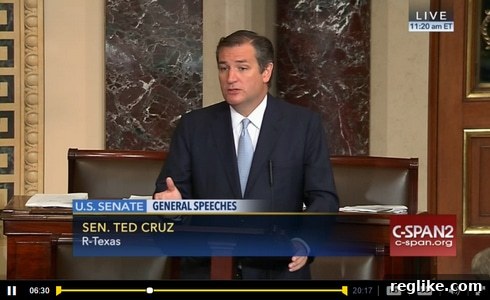
Senator Ted Cruz Urges Congress to Halt IANA Transition: Examining the Internet Governance Debate
In a recent address to the Senate, Senator Ted Cruz made a significant plea to Congress, advocating for the inclusion of an appropriations rider in the forthcoming continuing resolution. His explicit objective was to prevent the long-anticipated transition of the Internet Assigned Numbers Authority (IANA) functions from its historical U.S. government oversight to a global multi-stakeholder model. This pivotal speech has reignited a critical debate surrounding internet freedom, potential censorship, and the future stewardship of the internet’s core technical operations. Cruz’s intervention underscored persistent concerns among some policymakers regarding the implications of this transition for national security and the open nature of the internet.
The Heart of the Controversy: Senator Cruz’s Arguments Against the IANA Transition
During his address, Senator Cruz reiterated several claims he has consistently made regarding the IANA transition, presenting a vision of a potentially compromised internet under international control. These arguments largely center on the perceived risks of shifting oversight away from the U.S. government, particularly concerning issues of online censorship and the security of critical domain names. His stance reflects a broader apprehension among certain political factions about the relinquishment of U.S. authority over what is considered a vital global resource.
Cruz specifically contended that the Internet Corporation for Assigned Names and Numbers (ICANN), the non-profit organization poised to assume the stewardship role, functions as an “international body akin to the United Nations.” He warned that the transition would empower nations such as China, Russia, and Iran to exert undue influence over the internet, potentially leading to widespread censorship. To illustrate this dire prospect, he painted a vivid scenario: “Imagine searching the internet…and seeing a disclaimer that the information you’re looking for is censored,” he stated. “It [the content] is not consistent with the standards of this new international body. It does not meet their approval.” This rhetoric aimed to evoke strong concerns about potential restrictions on free speech and access to information online.
Deconstructing the Claims: What is ICANN and its Role in Internet Governance?
The characterization of ICANN as a new “international body” that controls content is a central point of contention in Senator Cruz’s arguments, and one that is widely disputed by internet governance experts and ICANN itself. It is crucial to clarify ICANN’s actual structure, mission, and operational scope. ICANN is a California-based non-profit public-benefit corporation, established in 1998, primarily to manage the technical coordination of the global Domain Name System (DNS), IP addressing, and protocol parameters. Its mandate is strictly technical, focusing on ensuring the stable and secure operation of the internet’s unique identifier systems.
Unlike intergovernmental organizations such as the United Nations, ICANN operates on a multi-stakeholder model. This governance framework actively involves a diverse global community, including representatives from governments (through its Governmental Advisory Committee, or GAC), businesses, academic institutions, and civil society groups. This structure is designed to distribute influence and prevent any single entity, government, or corporation from dominating internet governance decisions. Therefore, to equate ICANN with a sovereign body like the UN, capable of dictating content policies, misrepresents its foundational purpose and operational reality.
Furthermore, ICANN’s role explicitly does not extend to controlling or censoring internet content. Its function is often compared to managing the internet’s “phone book,” ensuring that domain names reliably translate into IP addresses so users can reach their intended online destinations. Decisions regarding content censorship, filtering, or restrictions on information access are typically made at the national level by individual governments, legal systems, or by private entities in compliance with local laws. The IANA transition aims to enhance the multi-stakeholder model, further decentralizing oversight and making it more resilient to unilateral control, rather than creating a new mechanism for global censorship.
The Nuance of Internet Censorship: Existing Realities and Future Safeguards
In a noteworthy observation during his speech, Senator Cruz acknowledged that some major internet corporations already comply with censorship requests from certain countries. While he presented this as evidence of a broader intent to control the internet, this point ironically highlights an important distinction often overlooked in the debate: the power to impose censorship primarily resides with national governments and is often implemented through domestic laws and agreements with private service providers. This reality exists independently of the IANA transition.
The IANA transition was, in fact, conceived to mitigate the risk of any single government, including the U.S., exerting disproportionate influence over the internet’s core functions. By transitioning the stewardship role from the National Telecommunications and Information Administration (NTIA) – an arm of the U.S. Department of Commerce – to the global multi-stakeholder community represented by ICANN, the aim was to strengthen the internet’s resistance to unilateral state control, including potential attempts at widespread censorship. Proponents argue that a truly global, multi-stakeholder governance model offers greater protection against a single nation dictating terms for the entire internet. The concern that the transition hands control to specific adversarial nations, enabling them to censor the internet, fundamentally misinterprets the distributed and technical nature of IANA functions and ICANN’s governance framework.
Safeguarding Critical Domains: Debunking Concerns Over .gov and .mil TLDs
A significant aspect of Senator Cruz’s opposition revolved around the fate of highly sensitive U.S. government-administered top-level domains (TLDs), specifically .gov and .mil. He expressed apprehension that the U.S. government’s only assurance regarding these domains remaining under its control was a mere notification from ICANN if it planned to re-delegate them. To underscore the potential danger, Cruz posited a hypothetical scenario of foreign cyber-scams: “So if someone is going to the IRS, or what you think is the IRS, and you’re comforted that it’s on a .gov website so that you know if must be safe, you may instead find yourself victims of a foreign scam,” he claimed.
Cruz cited a specific sentence from a letter penned by ICANN’s CEO, Goran Marby, to the NTIA to support his assertion. The sentence in question states: “ICANN confirms ICANN’s obligation to notify the National Telecommunications and Information Administration (NTIA) of any redelegation requests associated with the U.S. Government administered .mil, .gov, .edu, and .us TLDs.” While this statement is accurate, it provides an incomplete representation of the comprehensive safeguards established for these critical domains.
Crucially, Senator Cruz apparently omitted – or overlooked – the very next sentence in the same letter, which provides a far more robust assurance: “Further, ICANN confirms that it or its contractor will not take any action to re-delegate these U.S. Government administered domains without first obtaining express written approval from NTIA.” This follow-up clause clarifies that ICANN’s obligation extends beyond mere notification; it explicitly requires the express written consent of the NTIA before any re-delegation of these sensitive domains can take place. This mechanism establishes a powerful layer of protection, ensuring that U.S. government domains remain firmly and unequivocally under U.S. government control, despite the broader IANA transition.
The meticulous planning behind the IANA transition included specific provisions to safeguard national interests, particularly concerning critical governmental and defense infrastructure. The U.S. government retains a privileged and protected status regarding its specific TLDs, a fact that is fundamental to understanding the security architecture of the post-transition internet. This detail highlights that the transition was designed to be secure and accountable, not to undermine national control over vital digital assets.
Rhetoric and Reality: The Panama Canal Analogy and Geopolitical Control
To further dramatize his concerns about relinquishing control, Senator Cruz employed a powerful historical analogy, comparing the IANA transition to “giving up the Panama Canal.” This comparison evokes a significant moment in U.S. foreign policy history, symbolizing the relinquishment of a strategic asset and implying a similar loss of national power or security with the IANA transfer. He then posed a rhetorical question intended to highlight the perceived absurdity of the transition: “Who in their right mind looks at the internet and says, ‘You know what we need, we need Russia to have more control of this’?”
While such analogies and rhetorical questions serve as potent political tools to amplify a message, they often simplify complex technical and governance issues to the point of distortion. The IANA transition is fundamentally about shifting technical coordination from a single government entity to a globally distributed multi-stakeholder community, not about ceding control to specific geopolitical rivals. The architecture of ICANN’s governance, with its checks and balances, and the involvement of various stakeholder groups, is specifically designed to prevent any single nation or bloc from dominating internet governance decisions. The transition was motivated by a global consensus to foster a more resilient, stable, and globally representative framework for the internet’s core functions, aligning with the internet’s inherently global nature.
The notion that the transition would grant Russia, China, or Iran “more control” over the internet is contrary to the stated objectives and the operational design of the multi-stakeholder model. Instead, it aims to distribute influence more broadly, making it harder for any single state to exert unilateral control, thereby strengthening the internet’s global, open character.
Conclusion: Navigating the Complexities of Global Internet Governance
Senator Ted Cruz’s recent speech regarding the IANA transition reflects a persistent and legitimate concern among certain policymakers about potential threats to internet freedom and U.S. national interests. However, a detailed examination of the facts surrounding the transition reveals a more nuanced and secure reality. The IANA transition is not a surrender of control but rather a deliberate and strategic evolution towards a more globally inclusive, resilient, and accountable model of internet governance. ICANN’s clear technical mandate, its robust multi-stakeholder structure, and the explicit safeguards implemented for critical U.S. domains directly contradict the alarmist claims of impending censorship or foreign dominance.
As the internet continues its indispensable role as a global public resource, understanding the intricate details of its governance is paramount. Debates surrounding significant transitions like the IANA functions highlight the ongoing challenge of balancing national security interests with the fundamental principles of an open, free, and globally accessible internet. Accurate information, transparent communication, and a clear understanding of the roles and responsibilities of organizations like ICANN are essential for constructively navigating these complex discussions and ensuring the internet remains a powerful force for global connection, innovation, and freedom.