
The Hidden Phishing Risk: How Branded URL Shorteners Undermine Online Security
In the rapidly evolving digital landscape, businesses are constantly seeking innovative strategies to enhance brand visibility and streamline communication. Among these tools, branded URL shorteners have gained significant traction, enabling companies to share concise, aesthetically pleasing links that incorporate their brand identity. While seemingly a harmless and even beneficial marketing tactic, this widespread practice harbors a significant and often overlooked cybersecurity vulnerability. It inadvertently trains customers to click links that don’t align with a company’s primary domain name, thereby rendering them more susceptible to sophisticated phishing attacks. This insidious desensitization to non-standard domains poses a critical threat to online safety, progressively eroding the very foundation of trust that brands meticulously strive to build with their clientele.
The Double-Edged Sword: Convenience Versus Cybersecurity Risks
The allure of branded URL shorteners for companies is undeniable. These tools offer a suite of perceived advantages that resonate strongly with marketing and communications departments:
- Enhanced Brand Recognition: Embedding a brand name within a shortened link reinforces corporate identity and fosters a sense of professionalism, making links instantly recognizable as originating from a specific brand.
- Improved Aesthetics and Readability: Shorter, cleaner links are inherently more appealing and less cumbersome, particularly in environments with character limits such as social media posts, or in print materials where conciseness is key.
- Comprehensive Click Tracking and Analytics: Many URL shortening services provide invaluable data on link performance, offering insights into user engagement, geographic distribution of clicks, and overall campaign effectiveness, which can inform future marketing strategies.
However, beneath this attractive surface of convenience and marketing prowess lies a fundamental flaw with profound implications for digital security. When companies consistently utilize domain structures distinct from their main website for official communications, they inadvertently establish a behavioral precedent. Customers, encountering these diverse yet seemingly legitimate branded links from trusted sources, begin to associate varied domain structures with authenticity. This repeated exposure normalizes the act of clicking on non-primary domains, slowly but surely eroding their natural caution against unfamiliar URLs – a critical, instinctive defense mechanism against the pervasive threat of online fraud and cyberattacks.
The Phishing Paradox: How Familiarity Breeds Vulnerability
The core of the problem doesn’t lie in the URL shortener technology itself, but rather in the subtle yet powerful behavioral conditioning it imparts on users. Over time, consumers are systematically trained to accept and click on links that diverge from a company’s main, established website (e.g., Chase.com for Chase Bank). This progressive desensitization is precisely the psychological leverage that sophisticated cybercriminals exploit. Phishing attacks, by their very nature, thrive on deception. They are meticulously crafted to mimic legitimate communications, tricking unsuspecting individuals into divulging sensitive personal or financial information, or inadvertently downloading malicious software.
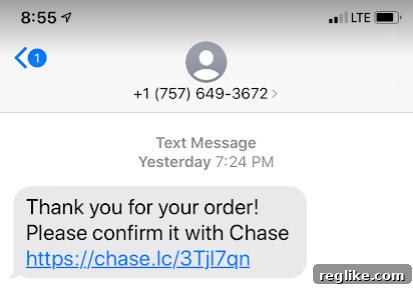
Consider the illustrative example of the scam text message displayed above, which artfully employs the domain chase(.)lc. For an individual with a heightened sense of digital awareness, several glaring red flags would immediately signal a fraudulent attempt: the message originates from an anonymous, often random phone number; the recipient has no recent order corresponding to the message’s claim; and, perhaps most critically, a legitimate merchant would rarely, if ever, request a customer to “confirm something” directly with a bank like Chase in such an informal and unsecure manner. These contextual clues are indispensable for discerning genuine communications from deceptive ones.
Yet, for a significant segment of the population, the domain name itself, chase(.)lc, might not register as an immediate threat. In a digital environment where legitimate, reputable brands routinely employ branded shorteners like brand.ly or brand.to, a user might subconsciously rationalize that chase(.)lc could be an official, albeit somewhat unusual, shortened link from Chase Bank. This normalization of varied and often obscure domain structures diminishes the impact of what should be one of the most fundamental principles of online security: always meticulously verify the primary, official domain name before clicking on any link, interacting with its content, or providing any personal and sensitive information.
Understanding Domain Names: Your Fundamental Line of Defense
At its core, a domain name serves as a unique and identifiable address on the vast expanse of the internet, directing users to a specific website. The primary domain (e.g., example.com) represents the singular, verifiable online identity of an organization. Consequently, when a legitimate company communicates with you and provides a link, it should ideally direct you to its main, official domain or to a clearly identifiable and directly associated subdomain (e.g., secure.example.com or support.example.com).
The inherent danger associated with country code top-level domains (ccTLDs) such as .lc (representing Saint Lucia), .ly (Libya), or .to (Tonga), lies in their potential for nefarious exploitation. While numerous legitimate companies utilize these ccTLDs for creative branding purposes, their often exotic or less common nature can inadvertently make it more challenging for the average internet user to confidently distinguish between a genuine branded shortener and a cleverly crafted, malicious lookalike. In the specific instance of chase(.)lc, further investigation revealed that the domain had only been registered very recently at EPAG, and the links were completely non-functional at the time of discovery – these are classic, tell-tale indicators of a freshly established, ephemeral scam infrastructure. The very act of mimicking a globally recognized financial brand like Chase with a relatively obscure ccTLD is a calculated maneuver by cybercriminals, designed to leverage both the power of brand recognition and the user’s inherent unfamiliarity with less common domain extensions.
The Specific Challenge for Financial Institutions and Other High-Trust Brands
For industries that are entrusted with handling highly sensitive personal, financial, and proprietary data – such as banking, insurance, healthcare providers, and government agencies – the stakes associated with digital security are astronomically higher. Financial companies, in particular, shoulder a profound and critical responsibility to meticulously educate their customer base on robust, secure digital practices. Their paramount objective should unequivocally be to train customers to instantly recognize and exclusively trust one, consistent, and irrefutably verifiable domain for all official online interactions and communications.
The widespread adoption of various branded shorteners across diverse entities, sometimes even within the financial sector itself, introduces a significant obstacle to this fundamental security strategy. It fosters a perplexing and convoluted digital landscape where the crucial demarcation between legitimate and fraudulent communications becomes dangerously blurred. When customers become accustomed to encountering a multitude of different URLs from their bank or financial service provider, they are exponentially more likely to fall victim to sophisticated phishing campaigns that skillfully employ cleverly disguised or slightly altered domains. A successful phishing attack targeting a customer of a financial institution can lead to catastrophic consequences, including widespread identity theft, devastating financial losses, and a severe, long-lasting erosion of customer trust. Furthermore, such breaches can result in substantial reputational damage for the brand and potentially severe regulatory penalties and legal ramifications.
Reclaiming Digital Trust: Best Practices for Companies
To effectively counteract this escalating threat, companies – especially those operating in high-trust, data-sensitive sectors – must conduct a comprehensive re-evaluation of their digital communication strategies with an unwavering focus on cybersecurity. Prioritizing customer safety and maintaining the integrity of digital interactions means potentially needing to forgo some of the perceived aesthetic advantages or detailed tracking benefits of diverse URL shorteners in favor of unequivocal, crystal-clear security signaling.
1. Prioritize Primary Domain Use for All Official Communications
Whenever technically and practically feasible, consistently direct your customers to your main, official, and easily recognizable domain. Utilize full, transparent URLs that are simple for users to verify. If a specific URL is excessively long, consider embedding it behind clear, descriptive anchor text directly on your official website or within securely authenticated emails, rather than relying on external, third-party shorteners that can obfuscate the true destination.
2. Implement Robust and Continuous Customer Education Campaigns
Launch proactive, engaging, and ongoing awareness campaigns to thoroughly educate your customer base. Vigorously emphasize the critical importance of scrutinizing the full URL and exclusively trusting links that unambiguously lead directly to your primary domain. Provide easily understandable examples of what legitimate and suspicious links look like. Leverage all available communication channels – including prominent website banners, official email newsletters, social media platforms, and even traditional physical mail – to consistently reinforce this vital security message.
3. Conduct Thorough Internal Policy Review and Employee Training
Ensure that all employees, particularly those engaged in marketing, public relations, customer communications, and customer service roles, possess a comprehensive understanding of the inherent security implications associated with URL shorteners. Establish clear, stringent internal policies for link sharing, unequivocally advocating for the exclusive use of the primary domain for all official, customer-facing communications.
4. Explore Secure Alternatives (If URL Shortening Is Truly Essential)
If URL shortening is deemed absolutely indispensable for specific operational use cases (e.g., adhering to strict character limits on platforms like X/Twitter), consider implementing highly secure, internally managed shorteners that exclusively utilize a subdomain of your main, official domain (e.g., link.yourbrand.com). Even in such scenarios, the overarching security message conveyed to customers must steadfastly remain: “always verify that the link leads to our main domain.” Alternatively, investigate other secure methods such as digitally signed QR codes that point directly to your verified, secure domain, or explore other innovative methods that avoid masking the ultimate destination of a link.
Staying Safe Online: Best Practices for Consumers
While companies bear a substantial responsibility in establishing a secure digital environment, individual vigilance remains the single most potent defense against the ceaseless barrage of phishing attacks and online scams. Empowering yourself with robust knowledge and consistently adopting safe browsing habits can dramatically reduce your personal risk exposure and significantly bolster your digital security.
1. Always Verify the Full URL Before Clicking
Prior to clicking any link, particularly those embedded in unsolicited emails, suspicious text messages, or unfamiliar social media posts, perform a critical check. On a desktop computer, hover your mouse cursor over the link to reveal its full URL preview. On mobile devices, long-press the link to display the complete URL. If the revealed URL does not clearly and unambiguously display the company’s official, main domain name, proceed with extreme caution and do not click.
2. Navigate Directly to Official Websites
If you receive a suspicious or questionable message purportedly from your bank, an online service, or any other entity, resist the urge to click on any embedded links. Instead, open your web browser, manually type the company’s official and verified website address directly into the address bar (e.g., www.chase.com), and log in from there. This proactive measure effectively bypasses any potentially malicious or deceptive links.
3. Maintain Skepticism Towards Urgency or Unusual Requests
Cybercriminals frequently employ psychological tactics, such as creating an artificial sense of urgency (“Your account will be suspended if you don’t act now!”) or making unusual, out-of-character requests (“Confirm your personal details immediately!”). Legitimate companies rarely demand immediate action without prior notification and exclusively through secure, established communication channels.
4. Diligently Report Suspicious Communications
Actively contribute to collective cybersecurity by reporting suspicious emails to your email provider’s designated phishing report address or to reputable organizations like the Anti-Phishing Working Group (APWG). For suspicious text messages, forward them to the shortcode 7726 (SPAM) in many regions, which helps mobile carriers identify and block malicious numbers, protecting other potential victims.
5. Keep Software Updated and Utilize Comprehensive Security Tools
Ensure that your operating system, all web browsers, and any antivirus or anti-malware software are consistently kept up to date with the latest security patches. Consider integrating a reputable password manager into your daily routine, and wherever possible, enable two-factor authentication (2FA) for all your online accounts, providing an indispensable additional layer of security against unauthorized access.
Conclusion: Prioritizing Security in an Interconnected World
The superficial convenience offered by branded URL shorteners, while initially conceived for marketing advantages, has inadvertently carved out a dangerous blind spot in our collective digital security posture. By subtly conditioning customers to passively accept and trust diverse domain names as legitimate, we are, as a society, inadvertently lowering our collective guard against an ever-increasing barrage of sophisticated and evolving phishing attempts. This trade-off, particularly for industries predicated on high trust and handling sensitive data, carries an unacceptably high level of risk.
To comprehensively protect consumers and meticulously preserve brand integrity in the digital realm, there must be a fundamental and decisive shift in how companies approach online communication. A renewed, unwavering emphasis on consistent, unambiguous, and verifiable primary domain usage, synergistically coupled with robust, proactive, and continuous customer education, is not merely beneficial—it is absolutely paramount. In an increasingly interconnected, complex, and threat-laden digital landscape, vigilant attention to something as seemingly innocuous as a domain name is no longer an optional best practice; it has unequivocally become a critical imperative for both businesses and individuals alike to navigate the internet safely, securely, and with enduring confidence.