
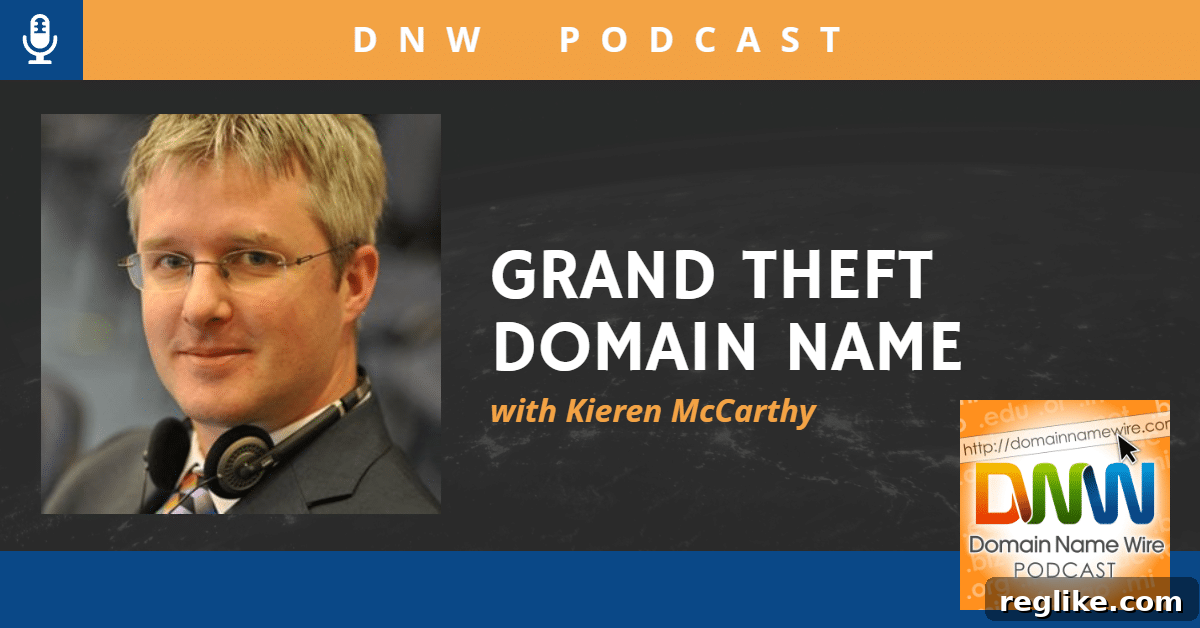
Kieren McCarthy discusses the astonishing story of the theft of the world’s most valuable domain name.
The Astonishing Tale of the Sex.com Domain Name Theft
In the nascent days of the internet, when the digital landscape was still largely uncharted territory, a name like Sex.com held unimaginable value. This wasn’t merely another website; it was a digital goldmine, representing immense potential for an emerging industry. Its theft in the late 1990s wasn’t just a simple act of digital delinquency; it was a saga that transcended typical cybercrime, unfolding into an epic tale involving colorful characters, audacious scams, international escapes, and a legal battle that would redefine digital property rights.
This landmark event, often dubbed “The Grand Theft Domain Name,” captured the world’s attention and revealed the vulnerabilities and nascent legal frameworks of the early internet. At the heart of this incredible story are two pivotal figures: Gary Kremen, an astute early internet entrepreneur who first registered the domain, and Stephen Michael Cohen, a career conman whose audacity knew no bounds. Their clash over Sex.com created a narrative filled with intrigue, hidden cash, stints in prison, a dramatic flight to Mexico, whispers of drug-fueled parties, and a legal expenditure soaring into the millions of dollars.
On today’s show, we delve deep into this captivating history with renowned reporter and author Kieren McCarthy. McCarthy, who meticulously documented this astonishing theft in his acclaimed book, brings to life the intricate details of how the world’s most valuable domain was stolen and the extraordinary lengths taken to reclaim it. His insights illuminate not only the technical aspects of the theft but also the human drama that played out on an unprecedented scale.
The Genesis of Value: Why Sex.com Mattered
To fully appreciate the gravity of the Sex.com theft, one must understand the internet’s landscape in the mid-1990s. This was a time before Google, before social media, and when most people were still connecting via dial-up modems. Generic, keyword-rich domain names were the real estate of the digital frontier. A domain like “Sex.com” was inherently valuable because of its direct and unmistakable appeal to a massive, emerging online audience. It was a brand in itself, instantly recognizable and highly desirable for anyone looking to enter or dominate the adult entertainment industry online, which was one of the earliest and most lucrative sectors on the internet.
Gary Kremen, a visionary entrepreneur who also founded Match.com, recognized this potential early on. He registered Sex.com in 1994, understanding that owning such a powerful, descriptive address would be a cornerstone for future ventures. For Kremen, it represented not just a web address, but a significant digital asset, a piece of prime internet real estate that held immense future wealth and influence. Its perceived market value quickly escalated into the millions, making it a target for those who saw an opportunity to exploit the nascent and often unregulated domain registration system.
The Audacious Heist: How Sex.com Was Stolen
The actual theft of Sex.com in 1995 was remarkably simple yet incredibly audacious, highlighting the severe lack of security protocols at Network Solutions Inc. (NSI), then the sole registrar for .com domains. Stephen Michael Cohen, a convicted felon with a history of con artistry, orchestrated the theft through a series of forged faxes. He exploited a gaping loophole: NSI’s reliance on paper-based authentication in a digital world.
Cohen sent faxes to NSI, falsely claiming to be Kremen, requesting the transfer of Sex.com to his control. These faxes included forged signatures and fabricated letterheads. Incredibly, NSI, without verifying the identity of the sender through a phone call or any robust digital check, proceeded to transfer ownership of the domain. This simple act of deception allowed Cohen to seize control of the valuable domain name, marking the beginning of a years-long nightmare for Kremen and setting a dangerous precedent for domain security.
Once he had control, Cohen quickly began monetizing Sex.com through adult content and advertising, reportedly raking in millions of dollars. He operated with impunity, leveraging the domain’s immense traffic to generate substantial illicit income. The ease with which this highly valuable asset was hijacked sent shockwaves through the budding internet community, underscoring the urgent need for more robust security measures and clearer legal definitions of online property.
The Epic Legal Battle and Cohen’s Downfall
Upon discovering the theft, Gary Kremen embarked on a relentless quest to reclaim his property, initiating a legal battle that would span years and set crucial precedents for intellectual property in the digital age. Kremen faced significant challenges; the legal system was ill-equipped to handle domain name disputes, as domain names were not yet clearly defined as property.
The legal proceedings unfolded in multiple courts, with Kremen eventually securing a landmark victory. In 2000, a California court ruled in Kremen’s favor, awarding him an unprecedented $65 million in damages against Cohen. This ruling was revolutionary, effectively recognizing domain names as tangible property, capable of being stolen and recovered through traditional legal channels. However, the challenge then shifted to collecting the judgment.
Stephen Cohen, a master manipulator and fugitive, proved elusive. After profiting immensely from Sex.com, he fled to Mexico, reportedly living a lavish lifestyle of drug-fueled parties and excessive spending. Despite his attempts to evade justice, U.S. authorities, working with Mexican officials, eventually tracked him down. Cohen was arrested and extradited back to the United States, where he served a prison sentence for his crimes. The saga concluded with the eventual return of Sex.com to Kremen, though the millions he spent on legal fees and the stress of the ordeal left an indelible mark. The Sex.com theft became a cautionary tale and a pivotal moment in the history of internet law, solidifying domain names as valuable assets deserving of legal protection.
Beyond the Scandal: Key Trends in the Domain Industry
While the Sex.com saga remains a fascinating historical account, the domain industry continues to evolve at a rapid pace. This episode also touches upon several contemporary issues shaping the landscape of domain names today, including strategic corporate acquisitions, critical governance processes, the lucrative market for premium domains, and innovative monetization strategies.
CentralNic Doubles Down on Growth
The podcast highlights that CentralNic is “doubling down,” a phrase that encapsulates their aggressive expansion strategy in the domain name market. CentralNic has positioned itself as a global leader in providing internet infrastructure services, from domain management to monetization platforms. In recent years, they have significantly expanded their portfolio through strategic acquisitions, integrating companies like Key-Systems, TPP Wholesale, and Dan.com (our sponsor). These acquisitions have allowed CentralNic to consolidate its market position, offering a comprehensive suite of services to registrars, resellers, and individual domain investors. Their strategy aims to capture a larger share of the domain lifecycle, from registration and management to sales and monetization, solidifying their influence across the domain ecosystem.
The .Org Appeal Process and Community Voice
Another significant topic is the .Org appeal process. This refers to the controversy surrounding the proposed sale of the .Org top-level domain (TLD) registry from the Public Interest Registry (PIR) to Ethos Capital. The move sparked widespread alarm among non-profits and civil society groups, who feared that a for-profit entity controlling the .Org domain might compromise its mission to serve the non-profit community. Concerns included potential price increases, censorship, and a shift away from community-focused governance.
The internet’s governing body, ICANN (Internet Corporation for Assigned Names and Numbers), ultimately rejected the transfer of ownership following intense public pressure and a formal review process. The “appeal process” mentioned likely refers to the mechanisms through which stakeholders voiced their opposition and ultimately influenced ICANN’s decision. This case underscored the importance of community input and the need for robust governance mechanisms to protect public interest domains from purely commercial interests.
The Lucrative World of Premium Domain Sales
The discussion also touches on premium domain sales, a high-value segment of the domain name market. Premium domains are typically short, memorable, generic, or highly brandable domain names that command significantly higher prices than standard registrations. Examples include single-word .coms or highly relevant industry terms. These domains are considered digital assets, akin to prime real estate, due to their inherent traffic potential, brand recognition, and SEO advantages. The market for premium domains is driven by businesses seeking strong online identities, investors looking for valuable digital assets, and entrepreneurs launching new ventures. Sales can range from tens of thousands to millions of dollars, reflecting the enduring value placed on a powerful and easily recognizable online presence. Understanding market trends, appraisal methods, and negotiation strategies is crucial for participants in this lucrative niche.
Leveraging Ad Networks for Domain Monetization
Finally, ad networks play a crucial role in domain monetization, particularly for domainers who own large portfolios of undeveloped domain names. Instead of building a full website, domainers can “park” their domains with specialized ad networks. These networks display advertisements on simple landing pages associated with the parked domains. When a visitor types in a parked domain, they see ads relevant to the domain’s keywords, and the domainer earns a share of the advertising revenue for clicks or impressions.
This strategy allows domainers to generate passive income from their assets while waiting for a potential sale or development opportunity. The effectiveness of this method depends on the domain’s traffic, keyword relevance, and the ad network’s optimization capabilities. As the digital advertising landscape evolves, so too do the strategies for domain monetization through ad networks, requiring continuous adaptation to maximize revenue from parked domains.
Connecting the Dots: A Dynamic Industry
From the audacious theft of Sex.com to the strategic maneuvers of CentralNic, the spirited debate around .Org, the high stakes of premium domain sales, and the evolving landscape of domain monetization via ad networks, the domain industry remains a vibrant and incredibly dynamic sector. Kieren McCarthy’s deep dive into the Sex.com saga serves as a potent reminder of the value inherent in digital assets and the complex interplay of technology, law, and human ambition that continues to shape our online world. This podcast offers invaluable insights into both the captivating past and the promising future of domain names.
Sponsor: Dan.com
Podcast: Play in new window | Download (Duration: 40:26 — 32.4MB) | Embed
Subscribe: Email | RSS
Subscribe via Apple Podcasts to listen to the Domain Name Wire podcast on your iPhone or iPad, or click play above or download to begin listening. (Listen to previous podcasts here.)