
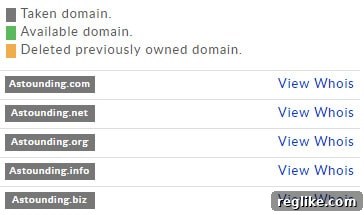
The number of TLDs a domain is registered under can be a misleading statistic.
Unlocking True Value: Why Raw TLD Counts Can Deceive Domain Investors
In the dynamic world of domain investing, identifying truly valuable digital assets requires a keen eye and a robust analytical framework. Domain investors meticulously evaluate numerous metrics to determine a domain name’s potential, with the ultimate goal of acquiring assets that promise significant returns. Among these popular metrics, the count of top-level domains (TLDs) under which a particular second-level domain (SLD) is registered stands out. The intuitive appeal of this metric is undeniable: if a term like “example” is registered across multiple TLDs such as .com, .net, .org, .info, and several new gTLDs, it often suggests a widespread recognition of its inherent value.
For instance, imagine you are considering purchasing example.com. A common initial step in due diligence is to check how many other extensions the term “example” is registered under. The conventional wisdom posits that each of these non-.com registrations represents a potential future buyer for the coveted .com version. The more TLDs a term is registered under, the stronger the perceived demand and, consequently, the higher the potential market value for the primary .com asset. This logic holds a certain truth, as a broader presence often signals brand recognition, market relevance, or even a deliberate brand protection strategy by various entities.
However, relying solely on this topline number can lead to significant misjudgments and suboptimal investment decisions. The landscape of domain registration is far more nuanced than a simple tally suggests. Before placing blind faith—and substantial capital—into a domain based on its TLD saturation, a deeper investigation into the actual ownership and usage patterns of these matching domains is paramount. This article delves into the critical factors that can skew this seemingly straightforward metric, offering insights for more astute domain valuation and investment strategies.
The Allure and Limitations of the TLD Saturation Metric
The “TLD saturation” metric, often seen as a quick indicator of a domain’s desirability, captures the extent to which a specific keyword or brandable term has been claimed across different domain extensions. Its appeal stems from several logical assumptions:
- Brand Recognition: A term registered across many TLDs implies it’s either a common word, a popular concept, or a specific brand with a strong presence, suggesting inherent value.
- Market Demand: Each unique registrant for a matching SLD under a different TLD theoretically represents a separate entity that recognizes the value of that term, thereby increasing the pool of potential buyers for the premium .com.
- Defensive Registrations: Businesses often register their brand name across various TLDs to protect their intellectual property and prevent cybersquatting or competitor encroachment. This defensive strategy indirectly validates the brand’s importance.
While these assumptions are not entirely unfounded, they overlook crucial details that can significantly alter a domain’s perceived value. A raw count fails to differentiate between types of registrants and their motivations, which is where the metric’s utility begins to diminish without further scrutiny.
Critical Flaw #1: The Same Registrant Phenomenon
One of the most significant reasons the raw number of TLD registrations can be misleading is when multiple extensions of the same second-level domain are registered by the exact same person or entity. This scenario is surprisingly common, especially when analyzing expired domains or those initially registered as part of a bulk acquisition strategy.
Why Do Registrants Own Multiple TLDs?
- Brand Protection: Businesses and individuals often acquire several TLDs (e.g.,
yourbrand.com,yourbrand.net,yourbrand.org, and sometimes even country-code TLDs likeyourbrand.co.uk) to comprehensively protect their brand online. This prevents competitors or squatters from acquiring similar domains and potentially confusing customers or diluting their brand identity. - Portfolio Management: Savvy domain investors or larger entities might bundle registrations to consolidate their digital assets under a single management umbrella. This streamlines renewals and administrative tasks.
- Registrar Incentives and Discounts: Registries and registrars frequently offer attractive discounts or bundled packages when a registrant secures multiple TLDs simultaneously. For instance, a person registering a new .com domain might be encouraged to add the .net and .org versions to their cart at a significantly reduced initial cost, making it an economically appealing option for comprehensive coverage.
The Impact on Valuation
When the .com, .net, and .org for a specific term are all owned by the same person and are, perhaps, even expiring at the same time, the fundamental premise of the “potential buyer” metric is undermined. In this instance, the owner of the .net and .org is not a separate potential buyer for the .com. They are merely a single entity that has already secured multiple facets of the brand. This means the actual number of independent entities interested in the term is far lower than the raw TLD count would suggest, dramatically reducing the perceived scarcity and demand for the .com version.
Before making a high bid on an expired domain, or any domain for that matter, always perform a thorough WHOIS lookup for each matching TLD. Look for consistent registrant names, email addresses, organizations, or even privacy service providers that might indicate common ownership. Uncovering a single owner for multiple TLDs is a crucial step in gaining a realistic perspective on true market demand.
Critical Flaw #2: Other Domains Owned by Fellow Investors
Even if different TLDs are registered by distinct individuals, their identities and motivations matter. Another common scenario is when the non-.com TLDs (like .net or .org) are registered by other domain investors rather than end-users.
Investor vs. End-User Prospects
- Signal of Value: If other domain investors have acquired matching non-.com TLDs, it can still be interpreted as a positive signal. It suggests that other experienced market participants also recognize the inherent value or potential of that specific term. Their investment validates the term’s appeal and suggests it’s not a completely obscure or worthless phrase.
- Not an End-User Prospect: However, a domain investor is generally not an “end-user prospect” in the same way a business, startup, or individual planning to develop a website would be. An end-user is typically driven by a direct need for branding, website development, or specific business goals, and often has a higher willingness to pay for the perfect .com. A fellow investor, on the other hand, is usually seeking to acquire and resell the domain for profit (domain flipping) or to hold it as part of a larger portfolio. While they might eventually sell to an end-user, their immediate interest in *your* .com is often speculative and highly price-sensitive, making them less likely to be a high-paying buyer.
Identifying Investor-Owned Domains
Identifying whether a matching TLD is owned by another investor often involves observing their usage patterns. Common indicators include:
- Parking Pages: Many investor-owned domains are “parked,” displaying generic templates with pay-per-click advertising, often offering the domain “for sale.”
- “For Sale” Banners: Clear indications on the landing page that the domain is actively for sale, sometimes with a contact form or listing price.
- Bulk Portfolios: Observing patterns of ownership across multiple domains in a registrant’s portfolio can reveal a professional investor rather than a business entity.
- Generic Email Addresses: Registrant email addresses that appear generic or are associated with known domain brokers or parking services.
While an investor-owned .net or .org confirms the term’s value, it adjusts the expectation of who might eventually purchase your .com, moving the prospect further down the sales funnel rather than directly to an eager end-user.
Beyond Ownership: The Crucial Role of Domain Usage
Beyond who owns the matching TLDs, how they are being used provides an even more profound insight into the true demand and potential value of the term. The usage pattern distinguishes between domains held for speculative purposes and those serving an active, tangible function.
The Strong Signal: Active Websites
If the matching .net, .org, or other TLDs are being used to host active, legitimate websites, this is an excellent sign. An active website signifies:
- Legitimate Business or Project: The registrant is likely an end-user who has invested time, effort, and resources into developing an online presence.
- Real-World Utility: The domain term has practical application and is actively serving a purpose, demonstrating its relevance and demand.
- Higher Propensity for .com Acquisition: A business or project operating on a non-.com TLD (especially an older, established one) often harbors an underlying desire for the authoritative .com version. They might want it for brand consistency, better memorability, or to gain a competitive edge. These end-users typically represent the most motivated and highest-paying buyers for a premium .com.
- Demonstrated Success: An active, successful website built on an alternative TLD indicates that the brand or concept has gained traction, making the .com even more desirable for expansion or consolidation.
The Weaker Signal: Parked Domains
Conversely, if the matching TLDs are simply parked, displaying generic templates, “for sale” messages, or basic advertising, it significantly weakens the “potential buyer” argument. Parked domains often suggest:
- Lack of Immediate Use: The domain is not actively being developed or utilized for a specific business purpose.
- Speculative Holding: It’s likely an investor holding the domain for future resale, with no immediate plans for development.
- Lower Urgency for .com: A registrant who hasn’t even developed their existing TLD is less likely to be urgently seeking to acquire the .com, as their current needs are minimal.
- Reduced Perceived Value: If no one is actively using the term for a developed website, it implies a lower real-world demand or immediate utility for that specific term, potentially dampening the .com’s market value.
When filtering through lists of expired domains or evaluating potential acquisitions, always take the time to visit the URLs of matching TLDs. A visual inspection of their usage provides invaluable context that mere numbers cannot convey. Tools like the Wayback Machine can also offer historical snapshots of how these domains were used in the past, revealing development efforts that might have since ceased.
Strategies for Deeper Domain Due Diligence
To avoid missteps and make truly informed domain investment decisions, a multi-layered approach to due diligence is essential. Here are advanced strategies to complement your TLD saturation analysis:
- Advanced WHOIS Analysis: Go beyond just the registrant name. Look for patterns in registrant email addresses, physical addresses, phone numbers, and even the registrars used. Inconsistencies or patterns can reveal hidden connections or distinct entities.
- Historical Data Review: Utilize services like DomainTools (a paid service) or the Internet Archive’s Wayback Machine to examine the historical usage of matching domains. See if they were previously developed, then parked, or have always been parked. This timeline provides critical context.
- Search Engine Presence: Check how prominent these non-.com domains are in search engine results. Do they rank well for relevant keywords? A strong SEO presence on an alternative TLD indicates a robust online operation that might benefit immensely from owning the .com.
- Social Media Cross-Referencing: Search for the domain term and its matching TLDs on major social media platforms. Are there active social profiles associated with these domains? This can further validate the existence of an active brand or project.
- Trademark Search: Conduct a comprehensive trademark search for the term. A registered trademark significantly enhances the value of a domain name, especially the .com, and can indicate an even more motivated end-user who needs the .com for brand consolidation.
- Industry and Market Trends: Research the industry verticals associated with the domain term. Is it a growing industry? Are there new startups or significant investments happening in that space? This broader market context can confirm the long-term viability and demand for the term.
A Holistic View of Domain Valuation
The TLD saturation metric, when properly dissected, remains a valuable piece of the domain valuation puzzle. However, it is merely one component, not the entirety of the picture. A truly informed investment decision requires a holistic perspective that integrates this information with other critical valuation factors:
- Keywords and Brandability: Is the domain a strong keyword (e.g., a common product or service) or a highly brandable, memorable term?
- Length and Memorability: Shorter, easier-to-remember domains generally command higher prices.
- Search Volume and Commercial Intent: Domains matching high-search-volume keywords, especially those with strong commercial intent, hold significant value.
- Exact Match vs. Brandable: Exact match domains (EMDs) can be powerful for SEO, while brandable domains offer unique identity.
- Monetization Potential: How easily can the domain be monetized through development, advertising, or resale?
- Risk Assessment: Are there any trademark conflicts, legal issues, or negative connotations associated with the term?
By layering the insights gained from a deep dive into TLD ownership and usage with these broader valuation principles, domain investors can develop a much more accurate understanding of a domain’s true market potential and make smarter, more profitable investment choices.
Conclusion: Investigate Before You Invest
The allure of a high number of matching TLD registrations can be a powerful draw for domain investors, suggesting widespread interest and a robust pool of potential buyers for a premium .com domain. However, as we’ve explored, this metric is prone to misinterpretation if not scrutinized with a critical eye. The presence of the same registrant across multiple TLDs or the prevalence of investor-owned, parked domains significantly alters the landscape of potential end-user acquisition.
To truly unlock a domain’s value and make informed investment decisions, always look beyond the initial count. Investigate who owns the matching domains, how they are being used, and what their motivations might be. A domain actively used for a legitimate website on an alternative TLD is a golden signal, indicating a highly motivated end-user prospect for the .com. Conversely, a parked domain, regardless of its owner, signifies a lower immediate demand.
In the competitive arena of domain investing, thorough due diligence is not just a recommendation; it’s an imperative. By understanding the nuances of TLD saturation and combining it with a comprehensive valuation strategy, you empower yourself to identify genuinely valuable opportunities and avoid costly assumptions. Investigate before you invest, and let informed insights guide your path to a successful domain portfolio.