
The Gap’s Legal Battle: Reclaiming TheGap.com from Cybersquatters and Protecting Brand Integrity
In an increasingly digital world, a brand’s online identity is as crucial as its physical presence. The Gap, Inc., a globally recognized apparel and accessories retailer, finds itself in a significant legal skirmish over the highly coveted domain name TheGap.com. The company has filed a lawsuit under robust U.S. anti-cybersquatting legislation, seeking to wrestle control of the domain from its current operators. This action underscores the relentless challenges businesses face in preserving their trademarks and ensuring the safety and trust of their consumers in the vast expanse of the internet.
The decision to pursue legal action, while not entirely unexpected given the circumstances, highlights a troubling trend of domain name exploitation. Although TheGap.com was initially registered as far back as 1994, its recent activities have veered sharply into problematic territory. The domain, which carries immense brand equity, has recently been observed redirecting users to various affiliate offers. Among these are enticing, yet misleading, promotions for “free Gap gift cards,” a tactic designed to lure unsuspecting individuals into potentially harmful schemes. This redirection not only dilutes The Gap’s brand but also poses a direct threat to consumer data privacy and financial security.
The Core of the Dispute: Deceptive Practices and Consumer Harm
The heart of The Gap, Inc.’s legal claim against TheGap.com lies in the domain’s alleged misuse for deceptive purposes. Cybersquatting, at its core, involves the bad-faith registration or use of a domain name that is identical or confusingly similar to a trademark belonging to another entity. The primary objective of such activity is typically to profit from the goodwill associated with the established brand, often through illicit means.
Specifically, The Gap alleges that any user attempting to navigate to TheGap.com is not greeted by the official Gap website. Instead, they are swiftly diverted to one of two different third-party websites. These sites are meticulously crafted to present tempting offers, particularly the aforementioned “free Gap gift cards.” However, these offers come with a significant catch: users are required to submit their personal information, often including sensitive details, and then complete a series of “sponsor offers.” These sponsor offers can range from signing up for subscription services to participating in lengthy surveys, all of which ultimately generate revenue for the domain’s operator rather than genuinely benefiting the user with a Gap gift card. This predatory model of affiliate marketing exploits the brand’s reputation for personal gain, leaving consumers frustrated and potentially vulnerable.
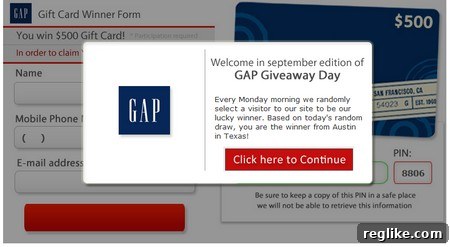
The manipulative tactics employed by the operators of TheGap.com extend beyond mere redirection. Should a user attempt to leave these deceptive pages, they are frequently confronted with an intrusive pop-up warning. This warning is not a simple navigational prompt; it often acts as another mechanism to redirect the user, potentially to a third, entirely different website. This continuous loop of redirection and misleading offers creates a disorienting and frustrating experience, further solidifying the bad-faith intent behind the domain’s operation. Such persistent attempts to retain user engagement on fraudulent sites are clear indicators of a calculated scheme to exploit the “Gap” brand for profit.
The Legal Recourse: Leveraging the Anticybersquatting Consumer Protection Act (ACPA)
In its pursuit to regain control of TheGap.com, The Gap, Inc. has initiated an in rem action. This specific legal procedure is directed against the property itself – in this instance, the domain name – rather than against an individual or corporation. The strategic choice of court for this lawsuit is the U.S. District Court for the Eastern District of Virginia. This jurisdiction is particularly relevant because it is the location where VeriSign, the official registry for all .com domain names, is physically based. By filing an in rem action in this court, The Gap, Inc. can effectively request the court to seize or transfer the domain name, even if the identity of the cybersquatter is unknown or located outside U.S. borders, thus overcoming common jurisdictional hurdles in international online disputes.
The primary legal instrument underpinning The Gap’s lawsuit is the Anticybersquatting Consumer Protection Act (ACPA), a federal statute enacted in 1999. The ACPA was a landmark piece of legislation designed to provide trademark owners with a powerful tool to combat the illicit registration and use of domain names that infringe upon their intellectual property. To succeed under the ACPA, The Gap will need to demonstrate several key points:
- That the “Gap” trademark is distinctive or famous.
- That the TheGap.com domain name is identical or confusingly similar to the Gap trademark.
- Crucially, that the person or entity who registered or used TheGap.com had a “bad-faith intent to profit” from the Gap mark.
The evidence presented in the lawsuit—the systematic redirection to affiliate marketing sites, the deceitful “free gift card” offers contingent on personal data submission and completion of sponsor offers, and the aggressive pop-up warnings—serves as compelling proof of such bad-faith intent. The ACPA provides significant remedies, including the transfer of the infringing domain name to the rightful trademark owner and, in some cases, statutory damages. While monetary damages can be substantial, The Gap, Inc.’s primary objective in this in rem filing appears to be the immediate and effective transfer of the domain name to protect its brand and consumers.
The Indispensable Value of Domain Ownership for Modern Brands
For any enterprise in the 21st century, particularly a consumer-facing giant like The Gap, a domain name transcends a simple web address. It is a strategic asset, embodying brand identity, fostering consumer trust, and serving as a critical hub for commerce and communication. The protection of such digital assets against cybersquatting is therefore not merely a legal nicety but an essential business imperative.
Consider the multifaceted importance of a domain like TheGap.com:
- Brand Identity and Recognition: A concise, memorable domain name is synonymous with the brand itself. Consumers instinctively type a company’s name followed by “.com” to find its official presence. Misdirection at this primary point of contact causes confusion and undermines brand consistency.
- Consumer Trust and Security: When a legitimate brand’s expected domain leads to scam sites, it severely erodes consumer trust. Users may be tricked into sharing personal information, making fraudulent purchases, or even becoming victims of identity theft. Ensuring secure and accurate domain resolution is paramount for protecting customers.
- E-commerce and Revenue Protection: For retail leaders, online sales channels are fundamental to their revenue streams. A cybersquatted domain can divert significant web traffic away from official e-commerce platforms, directly impacting sales and profitability. Secure domain ownership safeguards the core business model.
- Reputational Damage Control: The association of a reputable brand like The Gap with illicit online activities, such as scams or unsolicited solicitations, can inflict severe damage on its long-cultivated reputation. Years of brand building and marketing investment can be jeopardized by a single instance of domain misuse.
- Prevention of Phishing and Malware Distribution: Cybersquatted domains are frequently exploited as launching pads for phishing campaigns, malware distribution, and other cybercrimes. By reclaiming its domain, The Gap, Inc. actively removes a potential platform for these malicious activities, thereby contributing to a safer internet ecosystem for everyone.
A Historical Perspective: The Evolution of Domain Disputes
The struggle against cybersquatting is not a new phenomenon; it has evolved alongside the commercialization of the internet. In the early days of the world wide web, before comprehensive legal and policy frameworks were established, it was common for individuals to register domain names corresponding to famous trademarks, with the intent of selling them back to the rightful owners at exorbitant prices or exploiting them for advertising revenue. This “digital land rush” created a chaotic environment ripe for exploitation.
The late 1990s witnessed a flurry of high-profile domain name disputes that ultimately spurred legislative action. Internationally, the Uniform Domain-Name Dispute-Resolution Policy (UDRP) was implemented by the Internet Corporation for Assigned Names and Numbers (ICANN) to provide an expedited administrative process for resolving many common cybersquatting cases without requiring full court litigation. However, for more complex situations, or where trademark owners sought more robust remedies like statutory damages, national laws were necessary. The U.S. Anticybersquatting Consumer Protection Act (ACPA), signed into law in November 1999, specifically addressed the bad-faith registration of domain names, marking a critical turning point in intellectual property protection in the digital age. The Gap’s current lawsuit is a direct continuation of these historical efforts, demonstrating the enduring relevance and necessity of these legal instruments in safeguarding brand equity online.
Implications and The Road Ahead for The Gap
The outcome of The Gap, Inc.’s legal challenge against TheGap.com carries significant implications, not just for the apparel giant but for the broader landscape of digital brand protection. A favorable ruling for The Gap would not only secure a valuable domain name but also reinforce the legal precedent that trademark rights are enforceable against deceptive online practices. This case serves as a powerful reminder to all brands of the continuous need for vigilant domain monitoring and swift, decisive action against any form of infringement.
For consumers, this lawsuit offers a beacon of hope in an internet increasingly mired in scams and misleading offers. By actively fighting to reclaim and secure its rightful online presence, The Gap is indirectly contributing to a safer and more trustworthy digital environment. It highlights the implicit responsibility of major brands to not only protect their own assets but also to shield their customer base from the pervasive threat of online fraud and impersonation.
Should The Gap, Inc. succeed in its legal efforts, TheGap.com would almost certainly be transferred into the company’s control. This transfer would allow The Gap to redirect traffic to its official e-commerce site, use the domain for strategic marketing initiatives, or simply secure it to prevent future misuse. Such a victory would effectively neutralize the deceptive practices currently associated with the domain, restoring consumer confidence and ensuring that an iconic brand’s online presence accurately reflects its values and commitment to its customers. The battle for TheGap.com is more than a fight over a URL; it is a testament to the ongoing importance of safeguarding brand integrity and ensuring a secure and authentic online experience for millions of shoppers globally.