
Unraveling the .Sucks Enigma: The Deep-Seated Connections Between Vox Populi and This.Sucks
The digital landscape is constantly evolving, with new domain extensions and business models frequently emerging. However, few have generated as much controversy and intrigue as the .sucks Top-Level Domain (TLD) and the companies operating within its ecosystem. A prime example is the recent scrutiny surrounding This.Sucks, a novel company that burst onto the scene with an ambitious plan to offer .sucks domain names, many for free, in conjunction with a specialized platform. Yet, beneath the surface of this innovative venture lies a complex web of connections that has led many to question the true relationship between This.Sucks and the .sucks registry operator, Vox Populi.
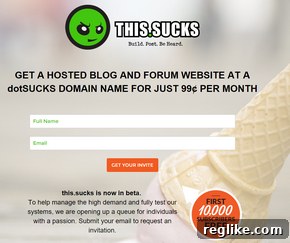
The Genesis of This.Sucks: A Business Model Mirroring Vox Populi’s Vision
A few weeks prior, the domain community observed the emergence of a new player named This.Sucks. Their proposed business model struck an immediate chord of familiarity with industry observers. This.Sucks aimed to provide .sucks domain names to users at significantly reduced annual rates, often even for free, contingent upon the user engaging with a specialized platform. This approach was strikingly similar to the very business model that Vox Populi, the registry responsible for the .sucks TLD, had long envisioned and hoped to foster within its nascent ecosystem.
From its inception, the .sucks TLD itself was contentious. Marketed as a platform for open criticism and dissent, it quickly drew ire from intellectual property (IP) owners who perceived it as a potential tool for defamation or brand harassment. Vox Populi’s challenge was to demonstrate the TLD’s utility and encourage adoption, often suggesting that a platform-based approach could drive registrations and engagement. The appearance of This.Sucks, seemingly fulfilling this exact vision, immediately sparked speculation about a deeper connection, raising eyebrows across the domain and IP sectors.
Initial Denials and the Unraveling Web of Connections
The remarkable resemblance between This.Sucks’ model and Vox Populi’s aspirations was so pronounced that many within the industry began to question if Vox Populi was, in fact, the driving force behind the new entity. In response to these growing suspicions, Phil Armstrong, speaking on behalf of This.Sucks, issued a direct denial to Domain Incite, stating:
We are not related to anything Vox Populi is doing. Not sure what they are up to, but hopefully they’ll be excited about what we are doing.
However, these denials proved to be short-lived. It didn’t take long for diligent journalists and industry insiders to begin connecting the dots, revealing a series of undeniable ties between the two companies that starkly contradicted Armstrong’s initial statement. The connections that surfaced were extensive and pointed to a collaboration far beyond mere coincidence or a shared vision. These included:
- Website Design Contest: Vox Populi openly ran a design contest specifically for the creation of the This.Sucks website, actively soliciting and overseeing its aesthetic and functional development. This is a significant direct involvement in the foundational branding and user interface of a supposedly independent company.
- Domain Hosting: The domain names for This.Sucks, as well as its related venture This.Rocks, were initially hosted on the very same servers utilized by Vox Populi. While temporary arrangements can occur, sustained hosting of a “separate” company’s core assets on a registry’s infrastructure is highly unusual and suggests a close operational link.
- Shared Legal Counsel: It was discovered that This.Sucks engaged the same Cayman Islands-based lawyers as Vox Populi. The selection of specific legal representation, especially in an offshore jurisdiction, often indicates shared strategic advice, financial structuring, or common beneficial ownership, further blurring the lines of independence.
- Personnel Recommendation: Perhaps one of the most direct links was the revelation that John Berard, a prominent spokesperson for Vox Populi, personally recommended Phil Armstrong for his role as spokesperson for This.Sucks. This direct endorsement and placement of key personnel raise serious questions about the arms-length nature of their relationship.
The accumulation of such evidence painted a clear picture: This.Sucks likely possessed more than “a little knowledge” about Vox Populi’s activities and, conversely, Vox Populi was undoubtedly “excited about” what This.Sucks was undertaking, contrary to the initial claims.
Vox Populi’s Acknowledgment: “Helpful Introductions” or Deeper Involvement?
Following the compelling revelations by DomainIncite, Vox Populi spokesperson John Berard finally addressed the mounting evidence. In a public comment, he acknowledged that Vox Populi had indeed provided assistance to This.Sucks, albeit framing it as providing “help that we offer as we can.” He elaborated:
This.sucks’ mission appears to be building a profitable social network pegged to new gTLDs. Pretty innovative, we think. We saw no reason not to help with some introductions.
This statement, while admitting involvement, still maintained a degree of separation by describing This.Sucks’ mission based on “appearances” and limiting Vox Populi’s role to mere “introductions.” However, the true depth of their relationship became clearer with the disclosure that John Berard and Phil Armstrong shared a long-standing personal and professional connection, having known each other for an astounding 35 years. Berard confirmed to Domain Name Wire that he had, in fact, recommended Armstrong for his position at This.Sucks. This level of recommendation, especially for a key leadership role, seems incongruous with merely observing a company’s mission from a distance or offering only “some introductions.” It strongly suggests a much closer, more collaborative genesis for This.Sucks than initially portrayed, and implies that Berard had significant insight into the company’s formation and objectives, not just its “apparent” mission.
The Intellectual Property Community’s Alarms: A Loophole for ‘Brand Protection’?
The intricate connections between Vox Populi and This.Sucks are not merely a matter of corporate transparency; they touch upon profound concerns within the intellectual property (IP) community. Many IP owners and their legal representatives view the entire .sucks TLD with apprehension, primarily due to its perceived potential for cybersquatting, brand tarnishment, and what some consider to be an “extortionate” pricing model.
The critics argue that the very existence of This.Sucks, offering .sucks domains for free or at significantly reduced rates through a platform, could be a calculated strategy designed to pressure intellectual property owners. The argument posits that IP owners would feel compelled to defensively register their brand names under the .sucks TLD at premium prices – often hundreds or thousands of dollars annually – not because they desire a “.sucks” platform, but to prevent detractors, competitors, or malicious actors from acquiring these domains cheaply and using them to criticize, defame, or otherwise harm their brand reputation. This fear of “haters” securing cheap .sucks domains creates immense pressure for brand protection. If a company can acquire a domain like “mybrand.sucks” for free or at a nominal fee, it amplifies the threat to legitimate brand holders.
Furthermore, some in the IP community argue that this model cleverly sidesteps certain requirements for registry services mandated by ICANN, the global internet governing body. Registries are typically expected to operate transparently and without unfairly leveraging their position to create artificial demand or to engage in practices that could be seen as predatory. The tight integration and shared interests between a registry (Vox Populi) and a major registrant offering “free” domains (This.Sucks) could be seen as a way to circumvent these ethical and operational guidelines, creating an unfair marketplace where brand owners are placed in a defensive, high-cost position.
This controversy highlights a long-standing tension in the new gTLD program: balancing innovation and open access with the legitimate need for brand protection and fair play. For many IP professionals, the This.Sucks situation represents a troubling development, potentially undermining the trust and integrity of the broader domain name system.
The Elusive Truth: Unanswered Questions on Ownership and Investment
At the heart of the ongoing controversy lies a single, pivotal question: Do the individuals or entities behind Vox Populi hold any ownership interest in This.Sucks? This question, if answered definitively, could either clarify the nature of their relationship or confirm the gravest suspicions of the IP community. Yet, despite repeated attempts to seek clarity, both parties have consistently provided evasive responses, creating a circular reference that obfuscates rather than enlightens.
When pressed on the matter, John Berard, spokesperson for Vox Populi, offered a carefully worded reply:
I am not sure I can or need to answer some of the questions in the manner you have posed them. For example, as This.Sucks, Inc. is a private company whose investors I can’t even know, let alone list. The same is true about whether Vox Populi Registry has a “relationship” with This.Sucks, Inc. Of course it does, it is a registrant with a business model that may lead to hundreds of dotSucks registrations. I have told Phil we are excited about that. It was during one of many times we have chatted. I have known him for 35 years. I referred him to This.Sucks, Inc. because I thought his experience and Midwestern temperament would serve the company well. It is not unusual for us to talk to registrants. Just take a look at our blog (www.blog.registry.sucks) for proof of that. In fact, because of their intentions, we sought to be as helpful as possible. It was in the cause of time-to-market that their domain names were first stood up on the same servers as we have used, with the intention, since completed, to move them to another service. The need for speedy web development likely similarly led to member of our team – in this case, Rob Hall – to leverage an industry contact.
Berard’s response is notable for several reasons. He claims he “can’t even know” the investors of a private company, yet he “referred” Armstrong to it. He justifies the “relationship” merely by This.Sucks being a registrant that might generate many registrations – a relationship any registry has with its large clients, but which doesn’t explain the depth of the initial assistance. He also attempts to downplay the hosting and design involvement, attributing it to “time-to-market” and leveraging an “industry contact” (which was merely an online design contest platform anyone could use). His detailed defense of assistance offered to “registrants” ironically highlights the exceptional level of “helpfulness” extended specifically to This.Sucks, far beyond what an ordinary registrant might expect, further fueling suspicions.
When This.Sucks spokesperson Phil Armstrong was asked directly about common investors, his response mirrored Berard’s evasiveness:
This.Sucks, Inc. is privately held, and at this point we are not disclosing investors.
Recognizing the general reluctance of private companies to name all investors, a follow-up question sought to clarify a more specific point: “I understand you don’t want to reveal investors names, but can you say whether any owners/investors in this.sucks are also owners/investors in Vox Populi?” Armstrong’s reply maintained the ambiguity:
We simply are not talking about our investors at this stage of the game, except to say they are optimistic that we can build a solid business based on this concept. Also, I am not that familiar with the ownership of Vox Populi, so once again I refer you to John.
This referral back to John Berard, who had already stated he “can’t even know” This.Sucks’ investors, creates a perfectly circular and impenetrable refusal to answer. Neither spokesperson is willing to provide a clear “yes” or “no” to the fundamental question of shared ownership, leaving a significant void in transparency.
Financial Underpinnings: The Critical Role of Shared Investment
The question of common ownership is not merely an academic exercise in corporate transparency; it has profound financial implications for This.Sucks’ operational viability and, by extension, for the integrity of the .sucks domain market. If, indeed, there are no common investors or shared beneficial ownership between Vox Populi and This.Sucks, then the latter faces an incredibly expensive startup proposition.
Registries typically charge a wholesale price to registrars for each domain registered. For .sucks domains, this wholesale price is substantial, often exceeding $200 per domain annually. This.Sucks has publicly stated its intention to give away up to 10,000 .sucks domain names for free or at highly subsidized rates. If This.Sucks is truly independent, it would be obligated to pay Vox Populi the full wholesale price for each of these 10,000 domains. This would amount to a staggering minimum of $2 million in annual wholesale costs for domains it is giving away for no revenue, making its business model unsustainable without an enormous, continuous external subsidy or an incredibly rapid and successful monetization strategy through its platform.
However, the financial calculus changes dramatically if there are common investors or shared ownership. In such a scenario, the wholesale payments from This.Sucks to Vox Populi would effectively become an internal transfer of funds – money moving from one pocket of a shared entity into another. In this context, the high wholesale cost per domain becomes far less of a concern, as the overarching financial group absorbs the cost internally. This would allow This.Sucks to offer “free” domains without facing an insurmountable independent financial burden, essentially making the “cost” an accounting entry rather than a true out-of-pocket expense for a separate entity.
The stark difference in financial implications underscores why the question of common ownership is so critical. It determines whether This.Sucks is a genuinely innovative, but potentially financially precarious, independent venture, or a strategically aligned operation designed to bolster the .sucks TLD’s adoption without traditional market constraints, possibly at the expense of genuine transparency and fair competition. The refusal to clarify this point leaves the financial motivations behind the “free domain” model shrouded in mystery.
The Broader Landscape of Domain Transparency and Trust
The controversy surrounding Vox Populi and This.Sucks extends beyond the specifics of their relationship, touching upon the broader principles of transparency and trust within the domain name industry. For the internet to function effectively and for users and businesses to confidently engage with the domain name system, there must be a clear understanding of who owns and operates what, especially when registries and large-scale registrants appear to be closely intertwined.
ICANN’s framework for new gTLDs was designed to foster competition and innovation, but also to uphold standards of fairness and accountability. When situations arise where the lines between a registry (a wholesaler) and a registrar/registrant (a retailer/end-user service provider) become blurred, it creates a potential for conflicts of interest, market manipulation, and a lack of fair competition. Such ambiguity can erode public confidence in the integrity of the domain system and raise questions about whether the rules are being applied equally to all participants.
Transparency is particularly vital in matters concerning intellectual property, where brand owners rely on clear and predictable systems to protect their assets. If the mechanisms for domain registration are perceived as opaque or exploitative, it undermines the trust necessary for brands to invest in new online identities and navigate the complex digital landscape. The ongoing ambiguity from both Vox Populi and This.Sucks regarding their financial and ownership links sets a concerning precedent, potentially encouraging similar arrangements that prioritize strategic advantages over clear corporate governance and ethical disclosure.
Drawing Your Own Conclusions from Persistent Ambiguity
Despite numerous inquiries and the presentation of compelling circumstantial evidence, neither Vox Populi nor This.Sucks has seized the opportunity to provide a definitive answer to a fundamentally simple question: Do they share common investors or ownership? Their consistent evasiveness, the circular referrals between their spokespersons, and the detailed justifications for assistance that contradict claims of independence all contribute to an atmosphere of unresolved suspicion.
The implications of this ambiguity are far-reaching, affecting perceptions of fair play in the domain industry, the financial pressures on intellectual property owners, and the very trustworthiness of new gTLD operations. In the absence of clear and direct answers, the industry and its stakeholders are left to weigh the evidence and draw their own conclusions about the true nature of the relationship between Vox Populi and This.Sucks.