
China’s Digital Silk Road: Reshaping Global E-commerce and Domain Strategies
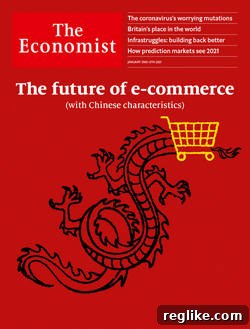
The global retail landscape is undergoing a monumental shift, with China at the forefront of this digital revolution. A captivating image on Economist.com, depicting a formidable dragon with a shopping cart for its head, perfectly encapsulates this transformation. This striking visual serves as a powerful metaphor for China’s ascendance as an e-commerce powerhouse, no longer just a market but a prolific innovator setting new benchmarks for digital commerce worldwide.
Indeed, the sentiment echoed by The Economist — that “it is in China, not the West, where the future of e-commerce is being staked out” — resonates deeply within the industry. Chinese internet retailers have pioneered numerous groundbreaking innovations that are now influencing global trends. From the explosive growth of live commerce, where celebrity influencers and key opinion leaders (KOLs) leverage real-time streaming to showcase and sell products, to the intricate ecosystems of super-apps that seamlessly integrate shopping, payments, and social interactions, China’s digital sphere is a hotbed of entrepreneurial creativity and technological advancement.
The profound impact of Chinese e-commerce operators extends far beyond their domestic market, influencing global business practices and consumer expectations. As these giants expand their reach and solidify their strategies, their preferences in critical areas like domain name selection offer invaluable insights for businesses and investors worldwide. Understanding these patterns provides a unique window into the future of online branding and digital asset valuation.
Deciphering Domain Preferences: Insights from China’s E-commerce Giants
To gain a clearer understanding of the domain strategies employed by China’s leading digital enterprises, I delved into the “2020 Hurun Top 10 Ecommerce Enterprises in China” (2020胡润中国10强电商), a reputable list published by the well-acclaimed Hurun Research Institute. This esteemed institution is known for its comprehensive reports on wealth and industry trends within China, making their selection of top e-commerce players a credible benchmark for market analysis.
Following the identification of these top-tier companies, a subsequent search using Baidu, China’s dominant search engine, was conducted to pinpoint the primary corporate domains they actively utilize. The findings from this research are meticulously presented in the table below, offering a concise overview of how these industry leaders manage their crucial online identities and highlighting their preference for specific domain name structures.
| Rank | Chinese Name | English Name | Primary Domain Used |
|---|---|---|---|
| 1 | 阿里巴巴 | Alibaba | Alibaba.com |
| 2 | 美团 | Meituan | Meituan.com |
| 3 | 京东 | Jing Dong | JD.com |
| 4 | 拼多多 | Pinduoduo | Pinduoduo.com |
| 5 | 滴滴出行 | Didi | DidiGlobal.com |
| 6 | 携程 | Ctrip | Ctrip.com |
| 7 | 唯品会 | Vipshop | VIP.com |
| 8 | 苏宁 | Suning | Suning.com |
| 9 | 车好多 | CARS (Che Hao Duo) | Guazi.com |
| 10 | 每日优鲜 | MissFresh | MissFresh.cn |
Key Domain Trends Among China’s E-commerce Leaders
The analysis of these top Chinese e-commerce players reveals several compelling trends that hold significant implications for domain investment and global branding strategies. These patterns underscore the universality of certain digital best practices, even within distinct national markets, and offer a glimpse into the future of online presence for major corporations.
The Unquestioned Dominance of .COM Domains
Perhaps the most striking observation from the list is the overwhelming preference for .com domains. With nine out of the ten leading companies actively utilizing a .com address, it unequivocally asserts that .com remains the main stage for serious online business, even in China. This mirrors the situation in Western markets, particularly the United States, where .com is the default and most trusted domain extension. Despite the availability and prominence of China’s country-code top-level domain (.cn), these top-tier enterprises consistently opt for .com for their primary online presence, even for their domestic operations.
This preference for .com stems from several strategic advantages. Globally, .com is synonymous with credibility, established presence, and universal accessibility. For companies with aspirations of international expansion, a .com domain provides instant recognition and avoids any perception of being limited to a specific geographic region. Domestically, it still conveys a sense of stability, professionalism, and market leadership, distinguishing top players from smaller, regional businesses that might more readily use ccTLDs. The inherent trust and global recognition associated with .com make it an indispensable asset for any company aiming for widespread market penetration.
The Strategic Advantage of Brevity: Short Domains Win
Another crucial trend highlighted by the data is the undeniable value placed on domain brevity. Shorter domains are not just aesthetically pleasing; they offer significant practical and branding advantages. This is exemplified by companies like Jing Dong, which, despite owning JingDong.com, primarily uses the succinct JD.com. Similarly, Vipshop, which could use Vipshop.com, opts for the more memorable VIP.com.
The reasons behind this preference are manifold. Short domains are inherently easier for customers to remember, type, and communicate verbally. In an increasingly mobile-first world, a shorter domain reduces the likelihood of typos on small screens and speeds up navigation. Furthermore, a concise domain lends itself to stronger branding, creating a more impactful and recognizable digital identity that is easier to integrate into marketing campaigns and logos. This strategic move to shorter, often acronym-based domains, suggests an ongoing process of brand refinement and optimization for maximum market penetration and user experience.
Given this clear trend, we can even speculate on future domain upgrades for other major players. For instance, Pinduoduo, already widely referred to as “PDD” in news and market discussions, could significantly enhance its brand agility and memorability by acquiring and utilizing PDD.com. Such an upgrade would align perfectly with the established preference for concise, impactful domains among its peers, offering a streamlined digital identity that resonates with market vernacular.
Brand-Matching: The Cornerstone of Digital Identity
A third fundamental principle evident among these e-commerce giants is the importance of brand-matching domains. A brand-matching domain is one that directly corresponds to the company’s widely recognized brand name or its most common market moniker. For example, while Jack Ma’s conglomerate is officially Alibaba Group Holding, its brand identity in the public consciousness is simply “Alibaba.” Consequently, Alibaba.com serves as the ideal, brand-matching domain, far more effective than longer, more formal alternatives like AlibabaGroup.com or AlibabaGroupHolding.com.
The power of a brand-matching domain lies in its ability to build instant trust and recognition. It simplifies marketing efforts, ensures customers can easily find the official online presence, and reinforces brand loyalty by creating a seamless connection between the company’s name and its digital home. While exact brand matches are highly coveted, the use of well-established acronyms, as seen with JD.com and VIP.com, also serves as an acceptable and highly effective form of brand-matching, especially when the acronym itself has become synonymous with the brand through extensive usage and marketing.
Strategic Opportunities: Identifying “Upgrade Paths” for Domain Investment
The domain strategies of China’s e-commerce leaders offer a treasure trove of insights for savvy domain investors. By understanding their current choices and potential future needs, one can identify valuable “upgrade paths” — domains that would significantly enhance a company’s brand, memorability, or global reach. Such domains, particularly exact-match .coms or highly relevant acronyms, represent substantial investment opportunities for those who can anticipate market movements.
The Case of DidiGlobal.com vs. Didi.com
Consider Didi, the ride-sharing behemoth that successfully outmaneuvered and acquired Uber China in 2016, establishing itself as the undisputed market leader. Despite its dominant brand presence as “Didi,” its current corporate domain is DidiGlobal.com. While “Global” might have been chosen to signal international ambitions or a specific corporate structure for an IPO, the true brand-matching domain remains Didi.com. The ownership of Didi.com by another entity or individual presents a clear acquisition target for the company. Securing Didi.com would consolidate its brand identity, streamline marketing, and eliminate any potential user confusion, making it an incredibly valuable asset in Didi’s long-term digital strategy and solidifying its primary digital footprint.
CARS (Che Hao Duo) and the Potential for Guazi.com Upgrades
Another compelling example is CARS (Che Hao Duo), a prominent used car marketplace, which currently utilizes its group domain, Guazi.com. While Guazi is a well-known brand within their portfolio, the broader “CARS” (Che Hao Duo) brand itself offers several interesting potential upgrade paths. Ideally, an exact-match Cars.com would be highly desirable, though its current developed status makes acquisition challenging and costly. However, other avenues exist. CheHaoDuo.com, while longer, would be a direct phonetic match to their full brand name and appears to be undeveloped, presenting a clear opportunity. Even more aligned with the “short is good” principle, CHD.com, a concise acronym that is not yet actively used, represents a prime candidate for a strategic acquisition to reinforce their corporate brand identity and enhance memorability.
MissFresh: The Value of an Exact-Match .COM
The situation with MissFresh, a leading online grocer, also illustrates a significant domain opportunity. Currently operating on MissFresh.cn, the company could significantly benefit from acquiring MissFresh.com. It appears that MissFresh.com is currently owned by Canada-based meal kit service provider Cook It (under ChefCookit.com) and is not actively being used for a competing service. This scenario creates an ideal “upgrade path” for the Chinese MissFresh. Owning the exact .com version of their brand would elevate their global standing, enhance brand trust, and provide a more universally recognized digital storefront, making MissFresh.com a highly strategic and valuable domain for them to pursue in strengthening their international identity and consumer reach.
Strategic Domain Investing: Beyond the Obvious
In essence, the rapidly evolving Chinese e-commerce landscape presents a plethora of opportunities for astute domain investors. The key to unlocking this value lies in diligent end-user research. This involves not just tracking the Hurun lists but also monitoring news about new company funding rounds, IPOs, rebranding efforts, and the colloquial names by which these companies are commonly referred in both professional and casual discourse. Understanding the linguistic and branding nuances specific to the Chinese market can also provide a distinct advantage.
Identifying domains that lie directly in the “upgrade path” of well-funded Chinese companies can yield significant returns. These are domains that, while currently held by others or perhaps undeveloped, would dramatically strengthen a major Chinese enterprise’s brand identity, user accessibility, and global reach. My own research, focused on these principles, has already revealed the immense potential inherent in domains such as PDD.com, Didi.com, CHD.com, and MissFresh.com. As China continues to innovate and expand its digital footprint globally, the strategic acquisition and divestment of such crucial digital assets will remain a highly lucrative venture for forward-thinking domain investors.