
The Exploding Market for NFT Domains: A Deep Dive into Digital Asset Naming
In the rapidly evolving landscape of digital innovation, few concepts have captured public imagination and investor interest as profoundly as Non-Fungible Tokens, or NFTs. These unique digital assets, verifiable on a blockchain, have redefined ownership in the digital realm, sparking a revolution across art, gaming, collectibles, and beyond. As NFTs gain mainstream traction, a parallel market is flourishing: the demand for domain names that incorporate the term “NFT.” Data unequivocally shows a significant surge in registrations for domains related to non-fungible tokens, highlighting a pivotal trend in the intersection of Web3 and traditional internet infrastructure.
This escalating interest in NFT domains signifies more than just a passing fad; it represents a fundamental shift in how businesses, creators, and investors perceive and secure their digital identities in a blockchain-centric world. The rush to register these domains is driven by a combination of speculative investment, strategic branding, and the necessity for a strong online presence in this burgeoning ecosystem. Understanding this phenomenon requires a closer look at what NFTs are, why they are so popular, and the unique opportunities and challenges this trend presents for the domain name industry.
Understanding the NFT Phenomenon and Its Digital Footprint
At its core, a Non-Fungible Token is a unique digital identifier recorded on a blockchain. Unlike cryptocurrencies such as Bitcoin or Ethereum, which are “fungible” (meaning each unit is interchangeable with another), an NFT is one-of-a-kind and cannot be replaced by another identical item. This inherent uniqueness allows NFTs to represent ownership of specific digital assets, ranging from digital art and music to virtual real estate, collectible items, and even tweets.
The sudden surge in NFT popularity can be attributed to several factors:
- Verifiable Ownership: Blockchain technology provides a transparent and immutable record of ownership, a game-changer for digital assets that were previously easy to copy or reproduce without clear provenance.
- Scarcity and Collectibility: Many NFTs are created in limited editions, fostering a sense of scarcity that drives collector demand, much like physical collectibles.
- Cultural Impact: High-profile sales, such as Beeple’s “Everydays: The First 5000 Days” fetching $69 million, and mainstream adoption by brands like NBA Top Shot, have brought NFTs into the global spotlight, attracting celebrities, artists, and investors alike.
- Community and Utility: Beyond simple ownership, many NFTs offer exclusive access to communities, events, or digital utilities within metaverses and gaming platforms, enhancing their perceived value.
As NFTs continue to integrate into various aspects of digital life, the importance of a clear, memorable, and relevant digital identity becomes paramount. This is where domain names, particularly those featuring the keyword “NFT,” come into play, serving as the essential gateway to these blockchain-based innovations.
Unprecedented Demand: Data Reveals a Massive Spike in NFT Domain Registrations
The adage “data doesn’t lie” holds true for the domain market’s response to the NFT boom. Evidence from leading top-level domain (TLD) registries clearly indicates a significant uptick in registrations incorporating the initialism “NFT.” This trend is particularly illuminating when observed through specific data points, such as those provided by Donuts, a prominent registry operator for a wide array of new gTLDs.
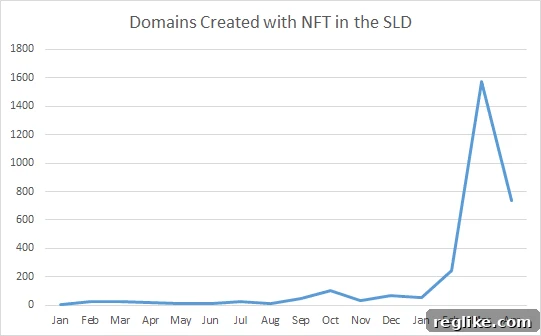
As illustrated by the provided graph, data from Donuts reveals a massive spike in domain registrations containing the term “NFT” during March and April. This visual representation underscores the rapid acceleration of interest and activity surrounding non-fungible tokens during that period. While Donuts’ standard monthly market reports typically identify trending dictionary words – for instance, their April report listed “coin” as the second most popular term in new registrations – the term “NFT” initially flew under the radar because it is an acronym, not a conventional dictionary word. However, a targeted inquiry into their extensive database quickly uncovered the profound and growing popularity of this specific initialism, highlighting the agility with which the domain market reacts to emerging technological trends and vernacular.
This spike signifies a proactive response from both domain investors and emerging NFT-centric businesses. It indicates a strategic move to secure valuable digital real estate, anticipating sustained growth and establishing foundational online presences for future projects. The data serves as a powerful indicator of market sentiment and the tangible impact of the NFT phenomenon on the broader internet infrastructure.
High-Value Sales: Illustrating the Worth of NFT-Branded Domains
The escalating demand for NFT-related domains is not just evident in registration volumes but also in the aftermarket sales. Specific examples of domains incorporating “NFT” demonstrate that these digital assets are commanding significant prices, underscoring their perceived value and strategic importance in the burgeoning blockchain economy.
Recent noteworthy sales include:
- NFT.app for $50,000: This sale highlights the premium placed on short, highly brandable domains that directly leverage the core keyword and a popular TLD like .app, which suggests innovation and utility.
- BuyNFT.com for $10,589: A clear call-to-action domain on the universally recognized .com TLD, signaling its potential as a marketplace or a gateway for NFT transactions.
- BitcoinNFT.org for $5,000: This domain combines two powerful and highly sought-after terms, “Bitcoin” and “NFT,” on the reputable .org TLD, reflecting the intersection of established cryptocurrency and the new wave of digital assets.
These figures are not merely arbitrary; they are driven by several critical factors. Firstly, brand recognition and immediate relevance are paramount in the fast-paced crypto space. A domain like NFT.app instantly communicates its purpose and authority. Secondly, scarcity plays a significant role; short, generic, and keyword-rich domains are finite assets. Finally, the perceived future growth of the NFT market fuels these valuations, as investors and businesses anticipate that these domains will become even more valuable as the sector expands and matures. These sales echo the early days of the internet domain boom, but with the added complexity and excitement of blockchain technology.
A New Frontier: The Unique Opportunity for Valuably Registered Domains
One of the most compelling aspects of the NFT domain surge is the unique opportunity it presents for domain registrants. Unlike many established industries where virtually all prime .com domains were registered decades ago, the term “NFT” is relatively new. It simply didn’t exist in common parlance during the initial internet boom of the 1990s or even the early 2000s.
This recency means that a vast array of valuable, keyword-rich “NFT” domains were not snatched up by early adopters. Consequently, there has been a significant wave of what is known as “hand registration” in the past couple of years – individuals and companies actively seeking out and registering desirable NFT-related domains directly, rather than having to acquire them on the expensive aftermarket. This offers a distinctive advantage for both seasoned domain investors and newcomers looking to enter the market.
For those looking to capitalize on this trend, several strategies can be employed:
- Keyword Research: Explore different permutations of “NFT” with other trending terms in the crypto space (e.g., metaverse, blockchain, crypto art, gaming, web3).
- Niche Focus: Consider specific sub-niches within the NFT ecosystem. For example, domains related to “NFT games,” “NFT music,” or “NFT galleries” could hold significant long-term value.
- Leverage New gTLDs: While .com remains king, new generic Top-Level Domains (gTLDs) like .art, .xyz, .app, .io, .tech, and even specific brand TLDs offer creative and memorable alternatives for NFT projects.
- Anticipate Future Trends: The NFT space is dynamic. Staying ahead by identifying emerging technologies or applications that will intersect with NFTs can lead to discovering the next wave of valuable domain names.
The window of opportunity for hand-registering truly valuable NFT domains might be narrowing as awareness grows, but the dynamic nature of the crypto world ensures that new terms and concepts are constantly emerging, opening up fresh avenues for strategic domain acquisition. Savvy registrants are those who can spot these trends early and act decisively.
Who is Registering These Domains? Investors vs. Innovators
The rapid acquisition of NFT-related domains is driven by two primary, yet distinct, groups: domain investors and companies actively building within the NFT ecosystem. Understanding the motivations and strategies of each group provides a clearer picture of the overall market dynamics.
Domain Investors
Domain investors are primarily motivated by the speculative value of these digital assets. They register domains with the intention of reselling them later for a profit, often anticipating significant price appreciation as the NFT market expands and matures. Their strategies typically include:
- Early Identification: Spotting trending keywords and acronyms like “NFT” early in their lifecycle.
- Portfolio Diversification: Adding crypto-related domains to their existing domain portfolios, betting on the long-term growth of Web3.
- Premium Keyword Acquisition: Targeting short, memorable, and highly relevant domains that could serve as cornerstone brands for future NFT projects.
- Market Analysis: Following domain sales data, industry reports, and blockchain news to inform their registration decisions.
For investors, an NFT domain is an asset in itself, potentially appreciating in value similar to a stock or real estate. They play a crucial role in validating market demand and setting benchmark prices for these emerging categories.
NFT Companies and Innovators
On the other side are the companies, startups, and individual creators who are building platforms, marketplaces, games, and art projects centered around NFTs. For them, a relevant domain name is an indispensable part of their brand identity and online presence. Their motivations include:
- Branding and Identity: A strong, keyword-rich domain like BuyNFT.com or NFTGallery.io immediately conveys the purpose and professionalism of their venture.
- Credibility and Trust: A well-chosen domain instills confidence in users and potential investors, signaling a serious and legitimate project in a space often prone to scams.
- User Accessibility: Easy-to-remember domains make it simpler for users to find and interact with their NFT platforms, improving user experience and adoption rates.
- Marketing and SEO: Domains containing “NFT” naturally lend themselves to better search engine visibility, driving organic traffic to their sites.
The symbiosis between these two groups is essential for a healthy domain market. Investors provide liquidity and a secondary market for valuable names, while innovators drive the fundamental utility and long-term value by building actual businesses on these domains. Both contribute to the robust and dynamic nature of the NFT domain ecosystem.
Navigating the Future of NFT Domains: Trends and Outlook
The proliferation of NFT domains is more than just a fleeting trend; it reflects a foundational shift in how digital assets are perceived and accessed. As the NFT space continues to mature, several key trends are likely to shape the future of domain name registrations in this sector.
Firstly, expect continued growth in registrations, particularly as more traditional brands and enterprises enter the NFT and metaverse arenas. These established entities will seek to protect their brand identities by securing relevant NFT domains, potentially leading to increased demand for premium names and a focus on brand protection strategies.
Secondly, the role of new gTLDs will become even more pronounced. While .com remains dominant, the sheer volume of innovation in the NFT space demands a broader range of options. TLDs like .art, .xyz, .digital, .gallery, and even geographically specific gTLDs could offer unique branding opportunities for niche NFT projects, providing alternatives when prime .coms are unavailable or too costly.
Thirdly, the intersection with decentralized or blockchain domains (e.g., .eth domains registered via ENS, or domains on Unstoppable Domains like .crypto, .nft, .wallet) will become increasingly significant. While distinct from traditional DNS domains, these blockchain-native naming systems represent another layer of digital identity in the Web3 paradigm. Businesses and individuals may increasingly register both traditional and blockchain domains to ensure a comprehensive digital presence.
Finally, the long-term impact on digital identity and online commerce is profound. As NFTs underpin more aspects of our digital lives – from identity verification to virtual property ownership – the domain names that serve as entry points to these assets will only grow in importance. The ability to secure a strong, memorable, and relevant domain name will be a critical competitive advantage for anyone looking to make a mark in the digital asset economy.
In conclusion, the data clearly indicates that the domain market is experiencing an unprecedented surge in interest and registrations for terms related to Non-Fungible Tokens. This phenomenon is a direct reflection of the NFT ecosystem’s rapid expansion and its growing importance in the digital world. The early opportunities for acquiring valuable NFT domains are still present, driven by a blend of speculative investors and innovative businesses looking to establish their online presence. As NFTs continue to redefine digital ownership and interaction, the strategic acquisition and management of relevant domain names will remain a critical component of success in this dynamic and evolving landscape. The digital frontier is always moving, and domain names remain the signposts guiding us through its ever-expanding territories.