
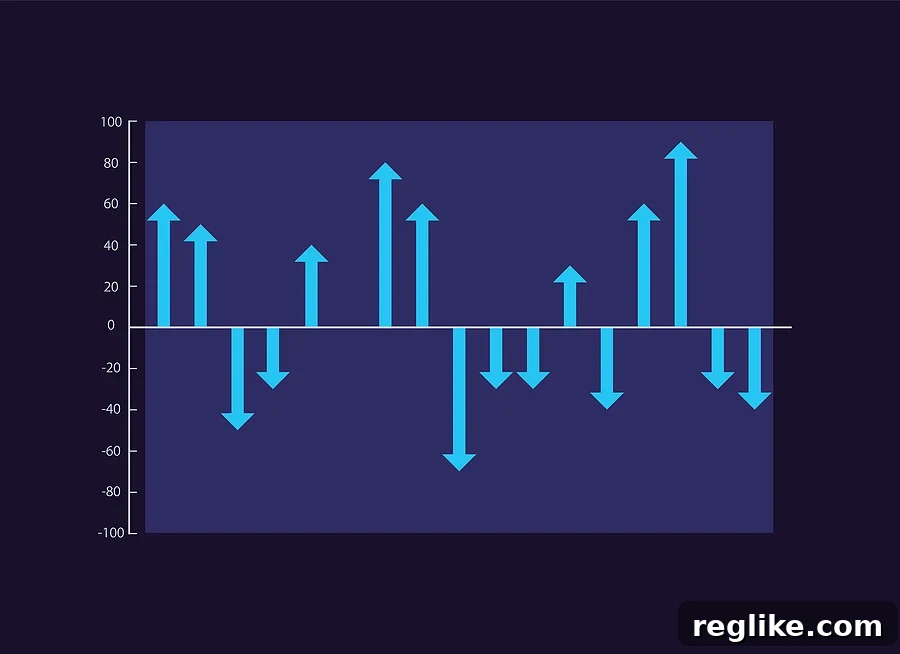
Up. Down. Up. Down. Up.
Navigating the Unpredictable Tides of Domain Investing: Lessons from a Seasoned Pro
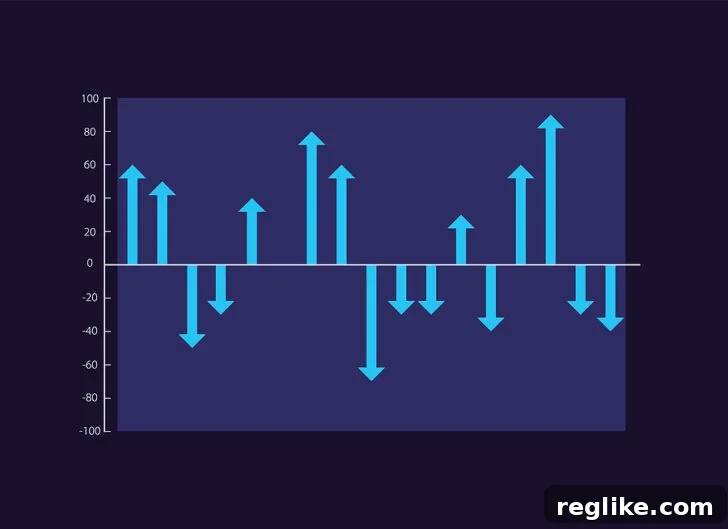
The world of domain investing is often characterized by exhilarating highs and frustrating lows. Much like the ebb and flow depicted in the chart above, the market for domain names rarely offers a steady, predictable journey. Even the most experienced investors with vast portfolios face the undeniable truth: consistency in domain sales is a rare commodity. This inherent volatility is a fundamental aspect that every aspiring and current domain investor must understand and prepare for.
One such successful domain investor who intimately understands these market fluctuations is AbdulBasit Makrani. With an impressive portfolio exceeding 8,000 domain names, Makrani is a prominent figure in the industry. Recently, he shared insights into some of his latest domain acquisitions, but it was his candid revelation about sales performance that truly captured the essence of domain market unpredictability:
…I would like to tell you that as of today I’ve 8,250 domains. There are still a lot of inconsistencies in sales like in December 2022 I just had one sale only! That month was the worst month in sales in over 6 years! Then in January 2023, I had 10 sales. This is just mind boggling. I’ve been consistently adding around 100 domains every month and fluctuation in sales keeps happening but December was a shocker to me.
The Stark Reality: Inconsistencies Even in Large Portfolios
Makrani’s experience serves as a powerful reminder for anyone involved in acquiring and selling online assets. Here is an investor with thousands of carefully selected domains, actively expanding his collection by approximately 100 names each month, yet still encountering drastic swings in sales volume. From a dismal single sale in December 2022—marking his worst month in over six years—to a more robust ten sales just the following month, the variance is indeed “mind-boggling.” This dramatic shift within a mere 30-day period underscores a critical lesson: the sheer size and consistent growth of a domain portfolio do not inherently guarantee a smooth, predictable revenue stream. Instead, investors must prepare for periods of stagnation interspersed with moments of activity.
Understanding this “randomness” is paramount for maintaining a healthy perspective and sustainable strategy in domain investing. It highlights that even robust acquisition strategies and a deep understanding of the market’s nuances cannot entirely shield an investor from the inherent caprice of buyer demand. This reality compels investors to adopt a long-term outlook, emphasizing resilience and patience above all else. The journey of building and monetizing a domain name portfolio is seldom linear, characterized instead by a series of peaks and valleys that test even the most seasoned professionals.
Deconstructing the Randomness of Domain Sales
The fluctuations described by AbdulBasit Makrani are not isolated incidents; they are symptomatic of the broader domain market. Unlike traditional stock markets which often react to macroeconomic indicators in more discernible patterns, the aftermarket domain space is influenced by a confluence of unique factors, making it inherently less predictable:
- Individual Buyer Needs: Most domain sales are driven by specific business needs, branding initiatives, or personal projects. These demands emerge sporadically, making it difficult to forecast when a buyer will materialize for a particular name.
- Economic Climate: While not directly tied to daily sales, broader economic health can impact discretionary spending on digital assets, particularly for speculative purchases or non-essential business expansions.
- Emerging Trends: Sudden shifts in technology, popular culture, or industry buzzwords can create fleeting demand for specific types of domains, only for interest to wane once the trend passes.
- Competitive Landscape: The availability of similar domains, new gTLDs, and varying pricing strategies across different marketplaces can all influence a buyer’s decision and the timing of a sale.
- Marketing and Exposure: Even premium domains require visibility. The timing of listings, marketing efforts, and even simple luck in a buyer encountering your domain can play a significant role.
These elements combine to create an environment where sales can appear sporadic, making it challenging for any investor, regardless of portfolio size, to forecast consistent monthly income. This is why managing expectations and adopting a long-term perspective are not just clichés but essential survival strategies for any serious domain investor.
The Illusion of Trends in Small Portfolios
Another crucial aspect of navigating the domain market is recognizing the limitations of personal data. For many investors, myself included, a portfolio of a few hundred or even a couple of thousand domains is not extensive enough to accurately discern overarching market trends. I recall selling 32 domains out of my portfolio of 2,000 last year. While these sales were welcome, such a small sample size—a mere 1.6% of my inventory—offers insufficient data to confidently conclude whether the domain market is experiencing an upward surge, a downturn, or simply maintaining equilibrium in any given quarter.
This challenge leads to what some call the “maestro trap.” You might make a few quick sales in a week, feel like you’ve cracked the code, and then endure months without a single transaction. This isn’t necessarily a reflection of your skill or the quality of your portfolio; it’s often a testament to the inherent randomness. To truly understand market dynamics, investors need to aggregate data from a much broader base. This is where community engagement becomes invaluable. Engaging with other domainers on forums like NamePros, attending industry conferences, and collaborating on data analysis can provide a much clearer, albeit still imperfect, picture of the market’s pulse. Reliance solely on one’s own portfolio performance can lead to skewed perceptions and potentially misinformed investment decisions.
Sales Are Anomalies: The Unspoken Truth of Domain Investing
Perhaps one of the most sobering realities of domain investing, often overlooked by newcomers, is that most domain names never sell. When you scroll through Twitter or domaining forums and see reports of significant sales, it’s essential to remember that these are often anomalies—the successes that defy the odds. They represent a minuscule fraction of the millions of registered domains and even a small percentage of domains held in active investment portfolios.
AbdulBasit Makrani’s 8,250 domains, while impressive, likely yield a sales rate that, when viewed annually, is still a small percentage of his total holdings. This fact is not meant to discourage but to set realistic expectations. The true value proposition of a domain name is highly specific, dependent on factors such as brandability, keyword relevance, memorability, the chosen TLD (Top-Level Domain), and its potential utility for a specific buyer. Many domains, even those acquired with good intentions, may simply never find the right buyer at the right price point. Therefore, prudent domain investors must cultivate patience, understand that the majority of their holdings may constitute long-term inventory, and focus on the quality of their acquisitions rather than expecting every name to be a quick flip.
Strategies for Thriving Amidst Volatility
Given the unpredictable nature of the domain market, what strategies can investors employ to not only survive but thrive? The core tenets revolve around a long-term perspective, continuous learning, and disciplined portfolio management:
- Embrace a Long-Term Vision: Understand that domain investing is a marathon, not a sprint. Significant returns often materialize over years, not months. Focus on acquiring timeless assets that will retain or increase value over time.
- Prioritize Quality Over Quantity: While large portfolios offer diversification, the success rate often hinges on the quality of individual names. Invest in domains with strong commercial appeal, clear brand potential, or high keyword relevance.
- Budget for Renewals: During dry spells, renewal fees can become a significant drain. Maintain a robust financial buffer to cover renewals for at least 1-2 years, preventing forced liquidations of potentially valuable assets.
- Diversify Acquisition Sources: Don’t put all your eggs in one basket. Explore various acquisition methods, including dropping domains, expired domain auctions, private acquisitions, and new registrations.
- Leverage Multiple Sales Channels: List your domains on various reputable marketplaces (e.g., Sedo, Afternic, Dan.com), use landers on your domains, and consider direct outreach for high-value names. Increased exposure can lead to more opportunities, even if sales remain sporadic.
- Stay Connected and Informed: Actively participate in domaining communities, follow industry news, and learn from seasoned investors. Collective wisdom can help you identify emerging trends and navigate market shifts more effectively.
- Maintain a Disciplined Pricing Strategy: Be realistic with your pricing. Overpricing can lead to endless holding costs, while underpricing can leave money on the table. Be willing to negotiate but understand the intrinsic value of your assets.
Conclusion: The Enduring Appeal of Domain Investing
The journey of domain investing, as exemplified by AbdulBasit Makrani’s candid insights, is undoubtedly marked by significant ups and downs. The notion of consistent, predictable sales is largely an illusion, even for those with expansive and actively managed portfolios. Instead, investors must confront the inherent randomness of the market, the limited insights offered by small portfolios, and the fundamental truth that sales are, by their nature, anomalies.
However, this reality does not diminish the enduring appeal and potential profitability of domain names as digital real estate. It simply underscores the necessity for realism, patience, and strategic resilience. By understanding the market’s unpredictable nature, setting realistic expectations, and adopting disciplined investment strategies, investors can better navigate the fluctuating tides and ultimately achieve success in this dynamic industry. To delve deeper into the experiences of a successful domain investor like AbdulBasit Makrani, we highly recommend you listen to this podcast, offering invaluable insights into his journey and strategies.