
Thermomix’s Failed Cybersquatting Claim: A Clear Case of Reverse Domain Name Hijacking
In the dynamic and often contentious landscape of domain name disputes and intellectual property rights, cases frequently emerge that underscore the complexities of online brand protection. One such recent incident involved Vorwerk International AG, the esteemed manufacturer behind the popular Thermomix line of kitchen appliances. Their attempt to secure the domain name TM7.com through a cybersquatting complaint against an existing registrant not only failed but resulted in a significant finding: Vorwerk was found guilty of reverse domain name hijacking (RDNH) by a World Intellectual Property Organization (WIPO) panel. This ruling serves as a crucial reminder for all businesses about the diligence required when pursuing domain name disputes and the potential pitfalls of an ill-prepared legal strategy.
Navigating Domain Name Disputes: Understanding Cybersquatting and the UDRP
At the heart of many online brand protection efforts is the battle against cybersquatting. Cybersquatting is generally defined as the bad-faith registration, trafficking in, or use of a domain name that is identical or confusingly similar to a trademark belonging to another. To combat this, the Internet Corporation for Assigned Names and Numbers (ICANN) established the Uniform Domain Name Dispute Resolution Policy (UDRP). This administrative procedure offers a streamlined alternative to costly litigation for resolving clear cases of cybersquatting.
Under the UDRP, a complainant seeking to transfer a domain name must successfully prove three cumulative elements:
- The domain name is identical or confusingly similar to a trademark or service mark in which the complainant has rights.
- The registrant of the domain name has no rights or legitimate interests in respect of the domain name.
- The domain name has been registered and is being used in bad faith.
A failure to establish any one of these three elements will lead to the denial of the complaint. However, the Thermomix case illustrates a more severe outcome: the finding of reverse domain name hijacking (RDNH), which occurs when a brand owner attempts to use the UDRP process improperly to seize a domain name from a legitimate registrant.
Vorwerk’s Bid for TM7.com: A Closer Look at the Complaint
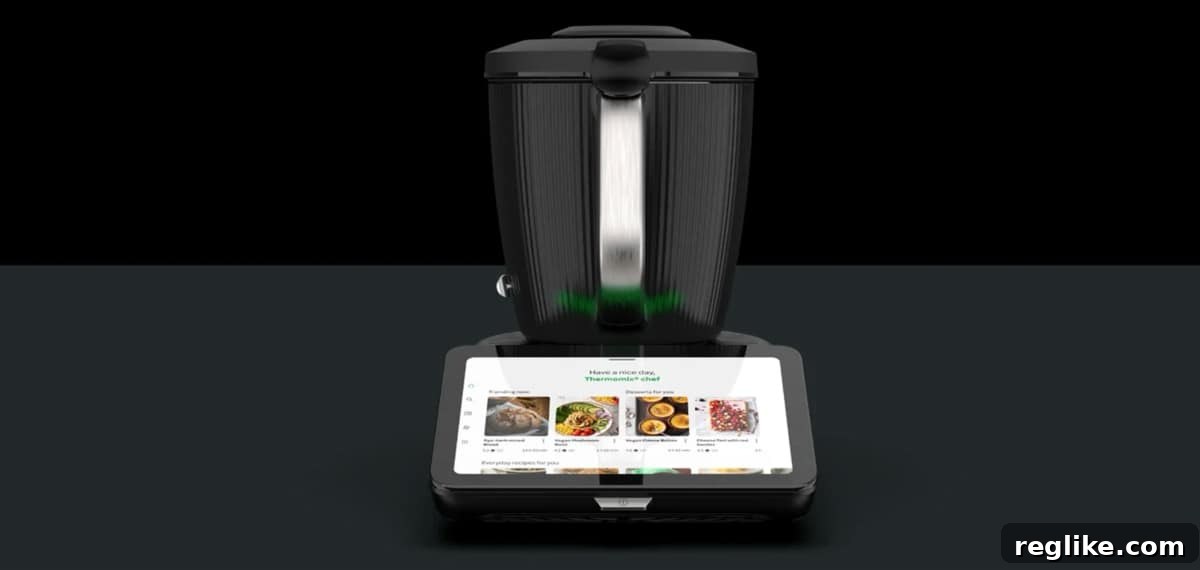
Vorwerk International AG filed a UDRP complaint with WIPO against the domain name TM7.com, motivated by the upcoming release of their new Thermomix product, the TM7. It’s a common and often justified practice for companies to seek domain names that perfectly match their product names. However, the details surrounding the TM7.com domain’s registration proved to be the Achilles’ heel of Vorwerk’s entire case.
The Critical Timeline: A Foreseeable Obstacle
The most significant flaw in Vorwerk’s complaint was the registration date of TM7.com. The domain was registered in 2001. At that time, Vorwerk’s Thermomix product range featured models such as the TM21, and its subsequent model, the TM31, was not released until 2004. The TM7 product, which served as the basis for Vorwerk’s complaint, was conceptualized and slated for launch approximately 24 years after TM7.com was initially registered.
This timeline is crucial because a fundamental requirement of the UDRP is to prove that the domain name was registered *in bad faith*. It is logically impossible for a third-party registrant in 2001 to have anticipated a Thermomix product named TM7 more than two decades in advance and to have registered the domain with the specific intent to profit from or unfairly target Vorwerk’s future trademark. The absence of this key element – bad faith registration – meant Vorwerk’s case was dead on arrival, irrespective of any potential current similarity to their emerging product name.
A Flawed Legal Submission: Irrelevant Arguments and Lack of Care
Beyond the unassailable timeline, the UDRP panel and the respondent’s legal counsel, John Berryhill, highlighted significant deficiencies in the preparation and content of Vorwerk’s complaint. Attorney Berryhill, representing the Chinese domain registrant, critically noted the complainant’s approach:
Whether bizarrely fictional allegations are inadvertently made through inept use of copypasta or AI, UDRP complainants do not have a right to inflict this sort of time-wasting exercise of weeding out irrelevant marks and nonsense allegations, on UDRP panelists working well below their hourly rate to provide a community service.
This statement underscores a broader concern within the UDRP system regarding the quality and relevance of arguments presented by some complainants. The panel’s own findings echoed this sentiment, delivering a stern rebuke to Vorwerk’s legal team:
Notwithstanding this, at the very least the Complaint has not been prepared with the care that it should have been. In this respect the Panel has already mentioned (a) the Complainant’s unintelligible claims by reference to Oki Data test as well as to the THERMOMIX and VORWERK marks, and (b) the unsubstantiated allegation that the Domain Name has been used in respect of products that compete with the Complainant. Why this has happened is not entirely clear. The Respondent suggestion that this is a result of the “inept use” of copy and paste from submissions in earlier UDRP complaints strikes the Panel as a plausible explanation. It is also the Panel’s sad experience that complaints are too often delegated to junior lawyers whose work is inadequately supervised. But whatever the cause, the lack of care with which the Complaint has been prepared reflects poorly on the Complainant’s legal advisers.
The panel’s critique revealed several critical flaws:
- Unintelligible and Irrelevant Claims: The complaint included references to the Oki Data test, a framework that was largely inapplicable to the specifics of this dispute, along with broad claims regarding THERMOMIX and VORWERK marks without demonstrating direct relevance to the TM7.com registration. This suggested a “kitchen sink” approach, throwing in various arguments without proper customization.
- Unsubstantiated Allegations: Vorwerk made claims that TM7.com was being used for products competitive with theirs, a crucial allegation that the panel found to be entirely without evidentiary support. Such baseless claims not only weaken a case but also indicate a fundamental lack of due diligence.
- “Copypasta” and Lack of Supervision: The panel found it plausible that the complaint suffered from “inept use of copy and paste from submissions in earlier UDRP complaints.” This practice, where boilerplate language from previous cases is used without proper adaptation, can introduce irrelevant information and obscure the pertinent facts. Furthermore, the panel lamented that complaints are “too often delegated to junior lawyers whose work is inadequately supervised,” highlighting a systemic issue in legal practice that can lead to such careless submissions.
The cumulative effect of these shortcomings, attributable to Vorwerk’s legal representatives, Moeller IP & Co S.A., was a complaint that lacked precision, relevance, and ultimately, credibility.
The Unfavorable Verdict: A Finding of Reverse Domain Name Hijacking (RDNH)
Unsurprisingly, the three-member UDRP panel ruled decisively against Vorwerk. They concluded that Vorwerk failed to prove that TM7.com was registered and used in bad faith. More importantly, the panel made the rare and severe finding of Reverse Domain Name Hijacking (RDNH).
What Constitutes Reverse Domain Name Hijacking?
A finding of RDNH signifies that the complainant (in this case, Vorwerk) attempted to abuse the UDRP administrative process to unfairly obtain a domain name from a legitimate registrant. It implies that the complainant knew, or reasonably should have known, that they did not have a strong case under the UDRP criteria but pursued the complaint anyway, perhaps to harass the domain owner, strong-arm them into a sale, or simply avoid the expense of a direct purchase.
Why RDNH Was Justified in the TM7.com Case
The panel’s decision to find RDNH against Vorwerk was based on compelling evidence:
- Obvious Lack of Bad Faith Registration: The 2001 registration date of TM7.com, predating any conceivable Thermomix TM7 product, made it patently clear that the domain could not have been registered in bad faith concerning Vorwerk’s future trademark. This fundamental flaw should have been evident to Vorwerk and its legal counsel from the outset.
- Inclusion of Irrelevant and Unsubstantiated Arguments: The presence of “unintelligible claims” and “unsubstantiated allegations” further indicated that Vorwerk’s complaint was either grossly negligent or a deliberate attempt to mislead the panel with extraneous arguments, hoping something would stick.
- Abuse of Process: By proceeding with a complaint so fundamentally flawed, Vorwerk essentially misused the UDRP as a mechanism to try and acquire a desirable domain name rather than as a tool to combat genuine cybersquatting. This constituted an abuse of the administrative proceeding.
The finding of RDNH serves as a powerful deterrent, signaling that the UDRP is a balanced policy designed to protect legitimate rights holders while simultaneously preventing opportunistic attempts by brand owners to unjustly seize domain names. It underscores the importance of a meticulous and ethical approach to online brand protection.
Key Takeaways and Best Practices for Brand Owners
The Vorwerk International AG v. TM7.com case offers a wealth of critical lessons for businesses and their legal advisers engaged in intellectual property and domain name management:
For Trademark Holders and Legal Counsel:
- Conduct Exhaustive Due Diligence: Before filing any UDRP complaint, a comprehensive investigation into the domain’s registration history, its past and present usage, and the registrant’s profile is non-negotiable. This step is crucial for assessing the viability of a claim and avoiding unsubstantiated allegations.
- Master UDRP Criteria: Legal teams must possess a deep understanding of the UDRP’s three elements and rigorously apply them to the facts of each case. Mere similarity to a trademark is rarely sufficient, especially when the crucial element of bad faith registration cannot be proven due to historical timelines.
- Avoid Boilerplate Submissions: Resist the temptation to use generic templates or “copy-paste” arguments from previous cases without thorough customization. Each UDRP complaint requires precise, fact-specific arguments supported by relevant evidence. Irrelevant information only dilutes the case and irritates panelists.
- Ensure Adequate Supervision: Senior legal professionals must provide diligent oversight for all UDRP submissions, particularly those drafted by junior lawyers. The quality and accuracy of the complaint directly reflect on the complainant’s credibility and the competence of their legal representation.
- Consider Alternatives: If a UDRP claim is weak, especially regarding the bad faith registration element, consider alternative strategies such as direct negotiation to purchase the domain name. It can often be more cost-effective and less damaging to reputation than a failed UDRP complaint resulting in an RDNH finding.
For Domain Name Registrants:
- Understand Your Rights: If you are a legitimate domain registrant, particularly of an older domain, understand that you have strong defenses against unwarranted UDRP complaints.
- Seek Expert Legal Representation: Facing a UDRP complaint can be intimidating. Engaging experienced legal counsel specializing in domain disputes, like John Berryhill in this instance, can significantly enhance your chances of a successful defense and ensure that any abuses of process by complainants are identified.
Conclusion
The Thermomix TM7.com case stands as a salient example in domain law, powerfully underscoring the necessity of meticulous preparation, legitimate claims, and ethical conduct within the UDRP framework. Vorwerk’s failed attempt to secure the domain, culminating in a finding of reverse domain name hijacking, serves as a stark warning to all brand owners. It reinforces the principle that the UDRP is a targeted mechanism to combat genuine cybersquatting and domain abuse, not a convenient shortcut for acquiring desirable domain names or rectifying internal brand management oversights. Companies committed to safeguarding their intellectual property online must approach these proceedings with the utmost care, a clear understanding of the policy’s stringent requirements, and a commitment to fair practice, lest they find their own legal strategies critically scrutinized and their reputation tarnished.