
Leveraging Automated Domain Appraisals for Smarter Domain Investing
In the dynamic world of domain investing, staying ahead means constantly re-evaluating your assets and understanding market movements. While many seasoned investors often dismiss automated domain appraisal tools, platforms like GoDaddy offer insights that, when used correctly, can significantly enhance your domain portfolio management. This article will explore why it’s a mistake to ignore these tools and how they can pinpoint hidden value or potential pricing adjustments in your domains, as a recent personal experience vividly demonstrated.
A Profitable Sale and a Thought-Provoking Discovery
The month kicked off with a truly encouraging start to domain sales, underscoring the potential for substantial returns in this market. One particular sale, a .com domain, fetched a respectable $6,000. This outcome was satisfying for several reasons. Firstly, the initial investment for this domain was a mere $164, acquired through a GoDaddy auction back in 2019. This translated into an impressive return on investment, a clear win in any book.
Secondly, a sense of vindication accompanied the sale. Back in 2020, I had a buyer agree to purchase this very domain for $1,750, only for the deal to fall through when the buyer never completed the payment. To now sell it for more than three times that initial offer felt not just good, but exceptionally rewarding, highlighting the patience and foresight often required in domain investing.
However, amidst the satisfaction, a new observation sparked a crucial internal audit: the GoDaddy appraisal for this specific domain was over $7,000. This revelation immediately raised a pertinent question: did I leave money on the table? Could I have secured an even higher price? This wasn’t a lament, but rather a catalyst for a deeper inquiry into my pricing strategy and the utility of automated valuation tools.
Further research into the domain’s history provided valuable context. Since its acquisition in 2019, numerous individuals had registered the same domain name across various other extensions. This proliferation of registrations in alternative TLDs (Top-Level Domains) strongly indicated a growing interest and demand for the specific “SLD” (Second-Level Domain) or keyword. It logically followed that the domain’s intrinsic value had increased significantly since I first bought it, explaining the higher appraisal and reinforcing the importance of continuous market monitoring.
Ultimately, I remain content with the $6,000 sale price; a substantial profit is always a good outcome. Yet, this experience served as a powerful reminder and spurred me into action. It highlighted the importance of not just passive observation, but active engagement with available data. My immediate next step was to systematically review my entire portfolio, focusing on domains that GoDaddy appraised particularly high, and comparing these valuations against my current listing prices.
Challenging the Conventional Wisdom: The True Value of GoDaddy Appraisals
It’s no secret that GoDaddy appraisals often draw skepticism, even outright disdain, from many within the domain investing community. The most frequent complaint I encounter is that these automated systems tend to undervalue domains, failing to capture the true market potential or brandability of premium names. However, my recent experience, where the appraisal exceeded my sale price, offered a different perspective.
This particular scenario strongly suggests that if GoDaddy appraisals are perceived to sometimes overvalue a domain, rather than undervalue it, then they become immensely useful as an indicator. In such cases, the system might have identified underlying trends or increases in demand for a specific SLD that I, as a human investor, might have overlooked in my daily portfolio management. GoDaddy’s algorithms process vast amounts of data, including registration patterns, search volumes, keyword popularity, comparable sales, and industry trends across millions of domains. While they may not grasp the nuanced qualitative aspects a human expert would, their quantitative analysis can reveal market shifts that are crucial.
Therefore, I contend that GoDaddy appraisals, despite their limitations, are very useful if employed correctly. Instead of blindly accepting them as gospel, they should be viewed as a powerful early warning system or a prompt for further investigation. When an automated appraisal suddenly surges for one of your domains, it signals that something has changed in the broader domain landscape – perhaps a new product launch has made a keyword highly relevant, or a new market niche is emerging. This is precisely the kind of actionable intelligence that can inform your pricing strategy and potentially unlock greater profits.
Practical Steps: Integrating Appraisals into Your Domain Strategy
Leveraging automated appraisals efficiently requires a structured approach. Fortunately, if your domains are registered with GoDaddy, integrating their appraisal values into your portfolio management is remarkably straightforward.
Streamlining Your Valuation Review on GoDaddy
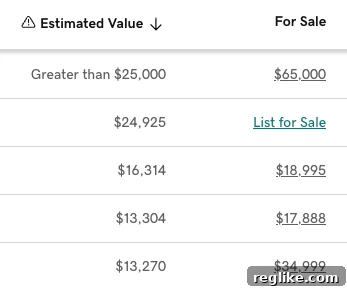
GoDaddy provides a user-friendly interface that allows you to customize your domain list views. You can easily add “GoDaddy Appraisal” as a data column, placing it directly alongside your current “List Price.” This side-by-side comparison eliminates manual cross-referencing and provides an immediate visual cue for any significant discrepancies.
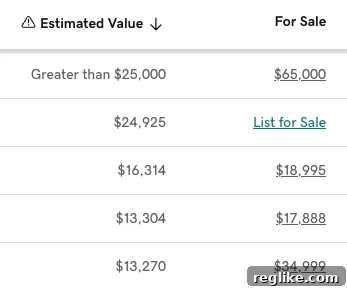
My proactive strategy involved systematically scrolling through every domain in my portfolio that GoDaddy appraised above a certain threshold – in my case, over $4,000. For each of these high-valued domains, I meticulously reviewed both the appraisal and my listed price. This isn’t about automatically adjusting prices upwards; it’s about making an informed decision. In some instances, after my own market research, I concluded that GoDaddy might be overvaluing certain domains, perhaps due to a temporary trend or an algorithmic anomaly. In such cases, I maintained my original, more conservative pricing.
Beyond Simple Price Matching: Strategic Pricing Decisions
While a high appraisal might tempt you to immediately raise your asking price, a more nuanced strategy often proves more effective. There’s a distinct advantage to pricing certain domains below their estimated appraisal value, particularly within the GoDaddy ecosystem. GoDaddy actively promotes domains that offer exceptional value – meaning their list price is significantly lower than their internal estimated value. This promotional tactic can be a powerful marketing tool.
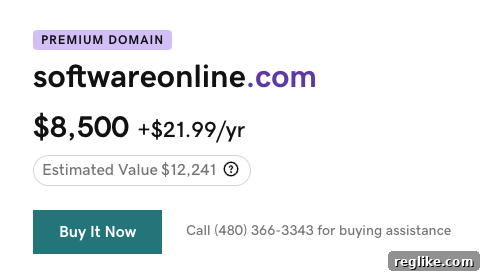
When a potential buyer searches for a domain name, and your domain is priced below its GoDaddy appraisal, the listing often features a prominent badge or message indicating this perceived “deal.” This visual cue immediately grabs a buyer’s attention, suggesting they are getting a bargain and increasing the likelihood of an inquiry or direct purchase. This strategy taps into the psychological appeal of value and scarcity, turning an automated appraisal into a competitive advantage.
The Broader Landscape of Automated Valuation Tools
While GoDaddy’s appraisal system is widely accessible, it’s important to remember it’s not the only player in the automated valuation field. Another prominent tool often used by domain investors is Estibot. Much like GoDaddy, Estibot employs sophisticated algorithms to estimate domain values based on a wide array of data points, including keyword search volume, CPC (Cost Per Click) data, comparable sales, and domain age.
The core principle behind all these automated tools is to provide a data-driven baseline. They are designed to process vast datasets far quicker than any human could, identifying patterns and correlations that influence value. However, it’s crucial to understand their inherent limitations. Automated appraisals are algorithms; they don’t possess intuition, understand complex branding nuances, or anticipate emerging market trends with the same foresight as a highly experienced human broker. They primarily reflect past and current data, and sometimes struggle with highly unique or brandable domains that lack direct comparable sales.
Therefore, the most effective approach is to use these tools not as definitive pronouncements of value, but as intelligent starting points for your own due diligence. If GoDaddy or Estibot flags a domain with a high appraisal, consider it a signal to dig deeper. Investigate the keywords, check recent sales of similar domains on platforms like NameBio, explore competitor activity, and assess the broader market demand. Combine the quantitative insights from automated tools with your qualitative understanding of the domain market to arrive at a truly optimized pricing strategy.
Maximizing Your Domain Portfolio’s Potential
The journey of a successful domain investor is one of continuous learning and adaptation. Ignoring automated appraisals means potentially missing out on critical market signals that could unlock significant value within your portfolio. Here’s how to integrate this understanding into your ongoing strategy:
- Regular Review Schedule: Make it a habit to periodically review the automated appraisal values for your entire domain portfolio. This could be monthly, quarterly, or whenever significant market news breaks.
- Focus on Discrepancies: Pay close attention to domains where your current listing price significantly diverges from the automated appraisal. Both lower and higher appraisals warrant investigation.
- Conduct Independent Research: For domains flagged with high appraisals, don’t just increase the price blindly. Use the appraisal as a prompt to conduct thorough independent market research. Look at Google Trends for keyword popularity, check recent sales on NameBio, and analyze competitor websites.
- Understand the ‘Why’: Try to understand why an appraisal might have changed. Is there a new technology making a keyword more relevant? Has a particular industry experienced a boom? Are there new startups entering a niche?
- Experiment with Pricing: Don’t be afraid to test different price points. If a domain is highly appraised, consider a modest price increase and monitor inquiries. Similarly, if a domain is stagnant, consider pricing it strategically below its appraisal to leverage GoDaddy’s promotional benefits.
- Diversify Your Tools: While GoDaddy is convenient, consider cross-referencing with other automated tools like Estibot to get a broader perspective. Each tool has its own algorithm and data sources, offering different insights.
The bottom line remains: automated appraisal tools, whether from GoDaddy, Estibot, or others, are valuable assets for domain investors when utilized correctly. They are not infallible, nor are they replacements for human expertise and market intuition. Instead, they serve as powerful complementary tools that can highlight opportunities, inform pricing decisions, and ultimately help you manage your domain portfolio more proactively and profitably. Don’t let skepticism prevent you from harnessing data that could be revealing the next big sale in your inventory. Embrace them as part of your sophisticated toolkit, and watch your portfolio thrive.