
The True Story Behind Fluctuating New Top-Level Domain Registrations: Beyond the Headline Drops
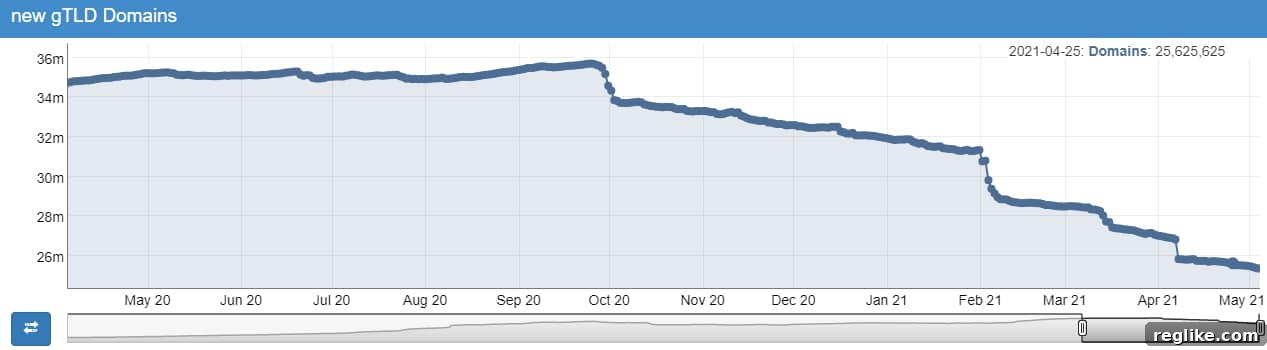
In the dynamic world of online identity, Top-Level Domains (TLDs) serve as the foundation of every website address. For years, the internet was largely confined to a handful of traditional TLDs like .com, .org, and .net. However, with the introduction of hundreds of new generic Top-Level Domains (gTLDs) over the past decade, the landscape of online naming has been dramatically reshaped, offering businesses and individuals unprecedented choices. This expansion promised a more diverse, specific, and navigable internet, opening doors for niche communities, geographical identifiers, and brand-specific extensions. Yet, recent data from various domain industry analytics platforms might suggest a concerning trend: a significant contraction in the total number of new TLDs under management (DUM).
A superficial glance at reports, such as those provided by nTLDStats, could paint an alarming picture. The raw figures indicate a substantial decline, with registered domains under management (DUM) for new TLDs purportedly falling by nearly 30% in a relatively short period, specifically from 35 million in October 2020 to approximately 25 million by May 2021. Such a sharp drop might lead many to conclude that the enthusiasm for new TLDs is waning, or that the market for these extensions is fundamentally unstable. However, like many complex data sets, the initial numbers rarely tell the whole story. A more meticulous examination reveals that this overall decline is not a systemic issue affecting the entire new TLD ecosystem but rather a concentrated phenomenon primarily attributable to a select group of domain names employing a specific and often controversial registration model.
Understanding the Apparent Decline: The “Low-High” Registration Model
The perceived plummet in new TLD registrations can largely be attributed to a particular business strategy adopted by a handful of registries, commonly known as the “low-high” or “landrush” pricing model. This approach is designed to rapidly boost initial registration numbers by offering domain names at extremely low prices, sometimes even for free, during their first year. The underlying hope is that a significant portion of these initial registrants, having established their online presence, will choose to renew their domains at the full, standard price upon the first anniversary. While this strategy can generate considerable buzz and inflate domain counts in the short term, it inherently carries a high risk of churn, as many registrants—especially those who acquired domains speculatively or without a clear long-term plan—will opt not to renew when faced with a substantially higher renewal fee.
This model creates a boom-and-bust cycle within the registration data. The initial “boom” phase sees millions of domains registered as individuals and businesses capitalize on the low entry cost. However, once these domains approach their renewal date, the “bust” phase kicks in. The dramatic price increase from near-zero to regular market rates acts as a filter, causing a significant percentage of these registrations to lapse. This phenomenon is precisely what accounts for the bulk of the reported decrease in overall DUM figures. It’s not necessarily a reflection of dwindling interest in new TLDs as a whole, but rather the natural consequence of a pricing strategy designed for rapid acquisition rather than long-term retention at scale.
Key Players Driving the Fluctuation: Specific TLDs Under the Microscope
The impact of the low-high registration model becomes strikingly clear when examining the performance of specific new TLDs during the period in question. A few extensions stand out as having contributed disproportionately to the observed decline in overall domain counts:
- .ICU: This particular TLD experienced one of the most significant contractions. From October 2020 to the reference week, .ICU shed over 4 million domains, settling at approximately 1.3 million. Its aggressive promotional strategies, often involving very low initial registration fees, led to immense initial growth, which was then followed by an equally dramatic reduction as renewal periods passed.
- .Top: Another high-volume TLD, .Top, saw its domain count drop from an impressive 3.3 million domains under management to about 1.2 million. Similar to .ICU, .Top had previously relied heavily on promotional pricing to attract a massive user base, many of whom did not carry their registrations beyond the initial cheap period.
- .Site: This TLD also contributed significantly to the overall decrease, losing approximately 600,000 domains and bringing its total down to 1.2 million. The pattern here mirrors that of other extensions employing similar pricing tactics.
- .Club, .VIP, and .Buzz: These three TLDs, while not experiencing drops as massive as .ICU or .Top individually, collectively lost a substantial number of domains. Each shed between 250,000 and 350,000 registrations during the same time frame. These drops underscore that the low-high model isn’t exclusive to one or two major players but is a strategy employed across various new TLDs to varying degrees of success and subsequent churn.
The cumulative effect of these specific TLDs alone accounts for the vast majority of the 10 million domain drop reported by nTLDStats. This segmentation of data is crucial because it allows us to differentiate between the general health of the new TLD market and the specific outcomes of certain business models. Without this granular analysis, one might mistakenly assume a widespread rejection of new TLDs, when in reality, it’s a recalibration of inflated numbers from a few specific extensions.
The Resilience of “Core” New TLD Registrations
While the focus often gravitates towards the dramatic drops caused by the low-high model, it’s imperative to shine a light on the segment of the market that demonstrates genuine, sustainable growth: “core” registrations for new top-level domains. These are the domains registered by end-users with concrete plans for their usage—whether it’s building a website, setting up professional email, creating a specific online identity, or launching a new brand. Unlike speculative or promotional registrations, these domains are typically acquired through registries and registrars that maintain fairly regular and transparent pricing models, emphasizing long-term value over short-term volume.
In this “core” segment of the market, the narrative is distinctly different. There isn’t the “rocketship growth” seen during the initial promotional phases of some TLDs, but there is a consistent and healthy upward trend. People are actively discovering and registering domains in new extensions that truly resonate with their personal or business needs. This steady adoption is a testament to the fundamental value proposition of new TLDs: offering more relevant, memorable, and brandable domain names than were previously available. Industries, communities, and individuals are finding homes in extensions like .tech, .app, .store, .online, .blog, and many others, establishing digital identities that are precise and meaningful.
This underlying stability suggests a maturing market where utility and relevance are becoming the primary drivers of registration, rather than speculative acquisition. The growth might be slower, but it is also more robust and indicative of actual usage, which is ultimately more beneficial for the internet ecosystem. These domains are less likely to lapse due to price increases, as their registrants have invested time, effort, and resources into developing the content or services associated with them.
Looking Ahead: The Evolving Landscape of New TLDs
The future of the new TLD landscape is likely to be a blend of these contrasting trends. We will undoubtedly continue to see a handful of new TLDs adopting or maintaining the low-high registration model. This strategy, while leading to temporary spikes in registration numbers followed by predictable declines at renewal time, can still serve as an effective way for some registries to gain initial market penetration and brand awareness. For investors and market observers, understanding this cyclical nature will be key to accurately interpreting future data spikes and drops.
Simultaneously, the steady adoption of new top-level domains for genuine use cases is expected to continue its upward trajectory. As the internet grows and niche communities become more defined, the demand for specific and relevant domain names will only increase. Registries that focus on providing real value, maintaining stable pricing, and fostering vibrant communities around their extensions will see sustained, organic growth. The market is increasingly segmenting into extensions that cater to broad audiences, those that serve specific industries, and those that appeal to particular geographical or cultural groups.
The overall trend points towards a more sophisticated and diversified domain market. Speculation will always play a role, but the long-term success of new TLDs will hinge on their ability to offer compelling value propositions to end-users. As the initial “Wild West” phase of new gTLD rollouts subsides, the industry is entering a period of consolidation and refinement, where quality, relevance, and sustainable business models will ultimately prevail. The headline numbers, therefore, should always be viewed through the lens of underlying market dynamics and specific pricing strategies, rather than as a universal indicator of the health or failure of the innovative new TLD program.