
The Audacious Pursuit of Trademarks: Unpacking 47 / 72 Inc.’s Controversial Filings
In the complex and often contentious landscape of intellectual property, a bold new player has emerged, drawing significant negative attention from celebrities and established brands alike. 47 / 72 Inc., a company founded by early LinkedIn employee Mike Lin, has embarked on an ambitious, and some would say audacious, strategy: filing over 70 trademark applications for terms closely associated with famous brands, popular slogans, and the distinctive identities of well-known personalities. This aggressive approach has ignited a firestorm of controversy, raising critical questions about brand protection, trademark law, and the ethical boundaries of intellectual property acquisition in the digital age.
Mike Lin has openly shared his company’s vision, as relayed to Domain Name Wire: the primary goal is to leverage these contested trademarks by placing them on various merchandise, particularly t-shirts and other printable items. This strategy hinges on the intricate nuances of trademark classification, where the same word or phrase can be registered by different entities for distinct categories of goods or services. Lin’s company is specifically targeting the online retail and apparel sectors, aiming to capitalize on what he perceives as gaps in existing brand owners’ intellectual property portfolios.
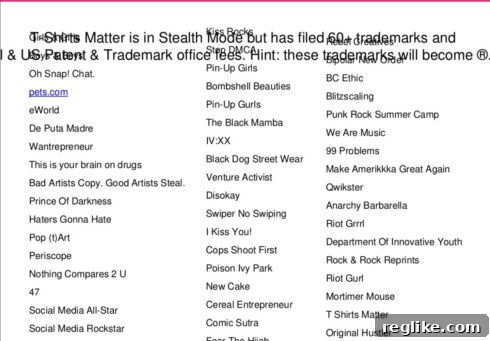
The scale of this operation is substantial, with Lin reportedly investing $34,000 solely in trademark filing fees. The targets are anything but obscure, encompassing a wide array of cultural touchstones. Applications have been filed for instantly recognizable terms such as “Periscope,” the popular live-streaming app; “House of Mouse,” an iconic moniker for Disney; and “Swiper No Swiping,” a memorable catchphrase from the children’s show Dora the Explorer. Even contemporary digital phenomena haven’t been spared, with applications for “Oh Snap! Chat.” and the names of popular Pokémon Go teams like “Team Valor” being pursued. This broad sweep demonstrates a clear intent to claim ownership over phrases deeply embedded in public consciousness and digital culture.
Beyond popular culture, 47 / 72 Inc. has also set its sights on historically significant and highly valuable domain names. Among their filings are applications matching Pets.com and X.com. Pets.com, a prominent symbol of the dot-com bubble, now redirects to PetSmart.com, while X.com served as a predecessor to the global payment giant PayPal. By targeting such illustrious names, the company highlights a strategy that aims to encompass not just current cultural relevance but also historical brand equity, leveraging the lingering recognition associated with these digital relics.
Lin’s legal argument, articulated to Domain Name Wire, rests on the assertion that many of these terms, despite their fame, have not been trademarked by their original owners for the specific class of goods 47 / 72 Inc. intends to use them for, namely online retail and apparel. All of these applications have been filed on an “intent-to-use” basis, a common provision in trademark law that allows an applicant to reserve a mark before actual commercial use, provided they demonstrate a bona fide intention to use it in commerce within a specified period. This strategy exploits a critical facet of trademark law, where protection is typically granted within specific “classes” of goods and services, meaning a mark protected for software might not be protected for t-shirts without additional filings.
A presentation detailing 47 / 72 Inc.’s plans offers a revealing glimpse into the company’s aggressive strategy. This presentation showcases many of the trademark applications filed and, remarkably, expresses confidence that these applications will ultimately be registered. Such a public declaration, amidst evident controversy, underscores the company’s unwavering belief in the validity of its legal position and its determination to proceed despite potential opposition.
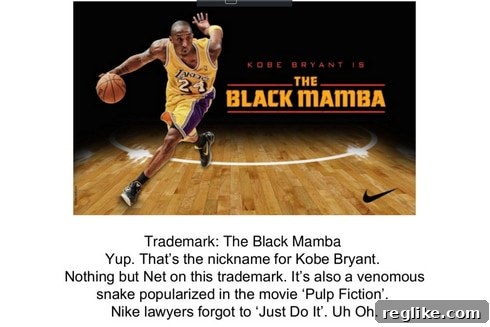
One particular instance highlighted in the presentation exemplifies the company’s provocative approach: the filing to register “Black Mamba,” the iconic nickname of the late basketball legend Kobe Bryant. The slide related to this application brazenly proclaims, “Nothing but Net on this trademark” and provocatively adds, “Nike lawyers forgot to ‘Just Do It'”. This statement is a direct challenge to the robust intellectual property enforcement reputation of Nike, a company synonymous with athlete endorsements and aggressive brand protection. Such a direct taunt highlights the high-stakes nature of these filings, positioning 47 / 72 Inc. as a challenger to even the most formidable legal teams.
Unsurprisingly, these aggressive filings have triggered a swift and decisive response from affected parties. Lin himself confirmed that lawyers for Kobe Bryant have already issued a cease and desist letter, initiating a formal challenge to the “Black Mamba” application. Similarly, pop superstar Beyoncé has also sent a cease and desist, and Lin anticipates receiving another for the company’s trademark application related to “Prophets of Rage,” a well-known supergroup. These legal warnings signify that the controversy is far from theoretical; it has escalated into concrete legal disputes, likely leading to opposition proceedings at the trademark office or even potential litigation. For celebrities, protecting their personal brand and associated monikers is paramount, especially when those identifiers are intrinsically linked to their public image and earning potential.
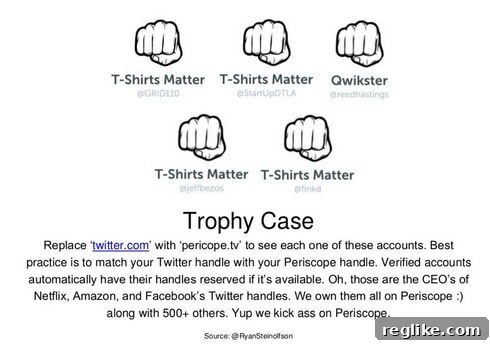
The scope of 47 / 72 Inc.’s ambition extends beyond traditional trademarks to include other forms of digital identity. Lin’s presentation also promotes a “cache of good Periscope handles,” indicating a broader strategy to acquire and potentially monetize digital assets associated with popular online platforms. This tactic underscores a growing trend in the digital economy where not just names and slogans, but also social media handles and online usernames, are recognized as valuable components of a brand’s identity and reach.
The legal work for these numerous trademark applications has been handled by Luke Brean of BreanLaw, LLC. When approached for comment by Domain Name Wire, Brean declined to speak directly about the filings, instead referring inquiries to Mike Lin. This refusal to comment is standard practice in cases involving high-profile and controversial intellectual property disputes, often to maintain client confidentiality and control the narrative surrounding ongoing legal challenges.
Perhaps the most telling filing by 47 / 72 Inc. is its application for the popular saying, “Bad artists copy. Good artists steal.” This quote, often attributed to Pablo Picasso (though its origin is debated), carries significant weight in the realm of creativity and intellectual property. When asked about this particular application, Lin offered a cryptic response: “I can read into that application however I’d like.” This statement, whether interpreted as a philosophical stance on appropriation or a clever acknowledgment of the company’s strategy, invites contemplation on the fine line between inspiration, emulation, and outright exploitation in the quest for brand ownership.
The actions of 47 / 72 Inc. represent a fascinating, if concerning, case study in modern intellectual property. By systematically targeting famous names and slogans across various sectors, and leveraging specific interpretations of trademark classification, the company has initiated a series of legal battles that will undoubtedly reshape discussions around brand protection. This saga serves as a stark reminder for brand owners, celebrities, and digital content creators to remain hyper-vigilant in securing their intellectual property across all relevant categories and platforms. The outcome of these numerous disputes will likely set precedents for how widely recognized terms and personal brands are protected in an increasingly complex and interconnected commercial landscape.