
The digital landscape is constantly evolving, presenting both opportunities and challenges for brand owners seeking to protect their intellectual property online. In this dynamic environment, mechanisms designed to safeguard trademarks play a crucial role. One such pivotal initiative is the Trademark Clearinghouse (TMCH), a centralized database established specifically to serve the needs of trademark holders in the era of new generic Top-Level Domains (gTLDs).
Booming Growth: Trademark Clearinghouse Records Soar Amidst New gTLD Expansion
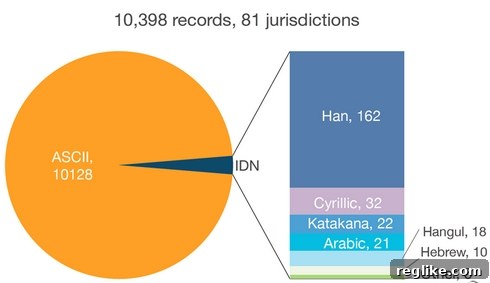
The Trademark Clearinghouse has emerged as an indispensable tool for brand owners navigating the complex world of new gTLDs. Recent statistics highlight its rapidly expanding adoption, underscoring the increasing awareness and proactive strategies employed by companies to secure their digital identities. As of the close of August, the Trademark Clearinghouse proudly reported a substantial figure of 10,398 trademark records. This impressive number marks a significant milestone, representing a doubling of its records since mid-July, an indicator of accelerating engagement among intellectual property rights holders.
Understanding the Trademark Clearinghouse (TMCH)
To fully appreciate the significance of this growth, it’s essential to understand the core function and purpose of the TMCH. Launched as a cornerstone of ICANN’s (Internet Corporation for Assigned Names and Numbers) new gTLD program, the Trademark Clearinghouse acts as a global, centralized repository for validated trademark information. Its primary objective is to enhance brand protection and mitigate potential cybersquatting and intellectual property infringement during the rollout of hundreds of new domain extensions, such as .app, .shop, .tech, and many more. By submitting their trademark data to the TMCH, brand owners can consolidate their intellectual property (IP) protection efforts across a vast and expanding digital frontier.
The process of submitting a trademark to the TMCH involves rigorous validation by an appointed third-party validator. This ensures the authenticity and legitimacy of each trademark record, providing a trusted foundation for subsequent protective measures. Once validated, a trademark record in the TMCH grants brand owners access to two critical mechanisms: the Sunrise Period and the Trademark Claims Service, both of which are fundamental for proactive brand management in the new gTLD space.
Unprecedented Growth: A Deep Dive into the Numbers
The doubling of trademark records from approximately 5,000 in mid-July to over 10,000 by the end of August speaks volumes about the perceived value and strategic importance of the TMCH. This accelerated registration rate suggests a heightened sense of urgency among brand owners as more new gTLDs become available. Each record represents a validated trademark that is now better positioned to defend itself against potential misuse, offering a critical layer of defense in the increasingly crowded online ecosystem.
This rapid expansion is not merely a quantitative increase; it reflects a qualitative shift in how businesses are approaching online brand protection. Companies are recognizing that a fragmented approach to safeguarding their trademarks across hundreds of new domain extensions is neither efficient nor effective. The TMCH offers a streamlined, centralized solution, which is proving to be a compelling proposition for legal and marketing teams alike.
ASCII Dominance and the Rise of Internationalized Domain Names (IDNs)
Delving deeper into the statistics reveals an interesting characteristic of the current TMCH database: a significant majority of records pertain to ASCII characters. Over 97% of the total records are for traditional ASCII-based trademarks, which are the Latin-script characters familiar to most users (e.g., ‘example.com’). This dominance is largely a reflection of the historical prevalence of ASCII in domain names and the current global distribution of trademark registrations.
However, while ASCII remains the predominant character set, the presence of Internationalized Domain Name (IDN) records signals a growing recognition of the global nature of the internet. With 270 records specifically for internationalized domain names, the TMCH is gradually accommodating trademarks expressed in non-Latin scripts. IDNs allow users to register domain names in their native languages and scripts, fostering greater inclusivity and accessibility on the internet for billions of non-English speakers.
Global Reach: Top Non-ASCII Scripts and Future Trends
The existing IDN records within the TMCH already paint a picture of global diversity. Leading the charge among non-ASCII scripts is Han, with a notable 162 records. Han characters are crucial for trademarks targeting markets in China, Japan, and Korea, reflecting the economic significance of these regions. Other prominent scripts on the list include Cyrillic, vital for Russian and Eastern European markets; Katakana, another key script for Japan; Arabic, essential for the Middle East and North Africa; Hangul, the script of Korea; and Hebrew, important for Israel and Jewish communities globally.
The inclusion of these scripts within the TMCH signifies a forward-looking approach to brand protection, acknowledging that a truly global internet must support diverse linguistic and cultural contexts. As internet penetration grows in non-English speaking regions, the importance of IDNs for brand recognition and market penetration will only intensify. Future trends suggest a continued increase in IDN registrations, making the TMCH’s capability to manage these diverse character sets increasingly critical.
Core Benefits of TMCH for Trademark Holders
The value proposition of the Trademark Clearinghouse for intellectual property owners is multifaceted, offering two primary benefits that are indispensable in the new gTLD landscape:
Strategic Advantage in Sunrise Periods
The first significant advantage of a TMCH record is its role in facilitating participation in the “Sunrise Period.” For every new gTLD launched, a special pre-general availability phase, known as the Sunrise Period, is allocated exclusively for trademark holders. During this limited window, only those who have a validated trademark record in the TMCH are eligible to register domain names matching their marks before they become available to the general public. This mechanism is designed to give brand owners a crucial head start, allowing them to proactively secure their brand’s presence under relevant new domain extensions.
Participating in the Sunrise Period is a strategic imperative for trademark holders. It enables them to obtain exact matches or close variants of their trademarks under new gTLDs, thereby preventing potential cybersquatters from registering these names first. Without a TMCH record, a trademark holder would have to wait for the general availability phase, risking their desired domain names being taken by others. The TMCH thus serves as a critical gateway, offering an exclusive opportunity for proactive brand defense and strategic domain acquisition.
Proactive Brand Protection: The Trademark Claims Service (TCS)
The second, equally vital benefit is the Trademark Claims Service (TCS). This service operates during the initial 90-day period following the general availability launch of any new gTLD. Its purpose is to act as an early warning system for both potential registrants and trademark holders.
Here’s how it works: If a prospective domain registrant attempts to register a domain name that precisely matches a trademark recorded in the TMCH, they will receive an immediate notification (a “claim notice”). This notice informs them that the domain name they are trying to register corresponds to a validated trademark in the Clearinghouse. Importantly, this notification does not prevent the registrant from proceeding with the registration; however, it puts them on formal notice of a potential intellectual property conflict. This notice is a powerful deterrent, as it can be used in subsequent legal proceedings (such as UDRP – Uniform Domain-Name Dispute-Resolution Policy) to demonstrate bad faith on the part of the registrant, should they proceed despite the warning.
Concurrently, if a domain name matching a TMCH-registered trademark is successfully registered by a third party, the trademark holder themselves receives an alert. This notification empowers brand owners to take timely action, whether it involves monitoring the use of the domain, initiating a dispute resolution process, or contacting the registrant directly. The Claims Service acts as a vital surveillance mechanism, providing trademark holders with the intelligence needed to respond effectively to potential infringements and maintain control over their brand’s online reputation.
Navigating the Controversies: The 50-String Addition Rule
While largely celebrated for its protective features, the Trademark Clearinghouse program has also faced certain controversies. One notable addition to the program allows trademark holders to append up to 50 additional strings to each validated record. This provision applies specifically when a trademark has a documented history of being abused or exploited in the past, particularly by cybersquatters. The rationale behind this rule is to offer enhanced protection to trademarks that are known targets, allowing brand owners to proactively safeguard variations or common misspellings of their mark that have previously been exploited.
However, this “50-string rule” has also sparked debate among various stakeholders. Critics raise concerns about its potential for overreach, suggesting it could allow powerful brand owners to preemptively “reserve” numerous similar domain names, potentially stifling competition or legitimate use by others. The definition and proof of “past abuse” can also be subjective, leading to questions about the criteria for eligibility and the fairness of its application. Proponents, however, argue that it is a necessary measure to combat persistent bad actors and offers a practical solution for brands that have historically suffered significant losses due to domain abuse. Navigating such complexities underscores the ongoing challenge of balancing intellectual property rights with an open and accessible internet.
The Broader Landscape: TMCH’s Role in the New gTLD Era
The substantial growth in Trademark Clearinghouse records is a clear indicator of its integral role within the broader landscape of new gTLDs. The expansion of the domain name system has introduced unprecedented challenges for brand protection, as the sheer number of available domain extensions makes it difficult for trademark owners to monitor every potential infringement. The TMCH provides a centralized, scalable solution to this problem, offering a vital layer of defense against cybersquatting and brand dilution.
Its existence reflects a significant effort by ICANN and the intellectual property community to establish a robust framework for managing trademark rights in the digital age. As the internet continues to evolve and new gTLDs proliferate, the importance of such mechanisms will only increase. For brand owners, integrating TMCH registration into their comprehensive IP strategy is no longer optional; it is a fundamental requirement for maintaining a secure and authoritative online presence.
Conclusion: The Future of Brand Protection in a Crowded Digital World
The remarkable doubling of Trademark Clearinghouse records since mid-July serves as a powerful testament to its growing influence and necessity. This surge in registrations highlights an increasing awareness among brand owners of the critical importance of proactive intellectual property protection in the new gTLD environment. By offering vital services like the Sunrise Period and the Trademark Claims Service, the TMCH empowers businesses to defend their brands, mitigate infringement risks, and strategically secure their digital assets.
While the dominance of ASCII records still reflects current internet usage patterns, the steady inclusion of Internationalized Domain Names points towards a future where global brands will increasingly leverage native scripts to connect with diverse audiences worldwide. Despite some controversial aspects, the TMCH remains a cornerstone of digital brand protection. As the new gTLD program continues to unfold, the Trademark Clearinghouse will undoubtedly play an even more pivotal role in shaping how intellectual property rights are upheld and enforced in the ever-expanding online universe.