
The Unprecedented Trademark Attempt: Can “Make Offer” Be Owned in the Domain Industry?
In the fast-paced world of domain name transactions, certain terms are as fundamental as the internet itself. “Make Offer” is arguably one of the most universally recognized phrases, signifying a core mechanism for negotiation in the sale of unpriced digital assets. It’s a ubiquitous term, ingrained in the operational fabric of leading domain marketplaces and brokerage services worldwide. Yet, a recent trademark application has brought this common industry staple under scrutiny, raising questions about the very essence of open market communication.
This article delves into the details of an ambitious attempt to trademark “makeOffer” for specific computer services, primarily domain forwarding. We’ll explore the implications of such an intellectual property claim on an industry built on widely understood terminology, analyze the applicant’s perspective, and discuss the broader impact this could have on domain buyers, sellers, and brokers alike.
The Controversial Trademark Application: Details and Discrepancies
An Austin-based individual, Mark Estabrook, has initiated a formal trademark application with the United States Patent and Trademark Office (USPTO) for the term “makeOffer.” Filed under serial number 88833592, the application specifically targets “Computer services, namely, domain forwarding services.” The requested protection for this term, which is presented as a single, lower-cased word, immediately signals a potential conflict with established industry practices.
The premise of the application hinges on the assertion that “makeOffer” can function as a distinctive identifier for a specific service. However, the domain name industry has long embraced “make offer” (often written as two words or as part of a phrase like “Make an Offer”) as a standard call to action for domains without a fixed price. This discrepancy between a proposed proprietary term and its widespread generic use forms the crux of the controversy. The application cites a first use date of March 8, 2020, suggesting that the applicant views this as the genesis of their unique service offering.
“Make Offer”: A Universal Standard in Domain Transactions
“Make offer” is not merely a common phrase; it’s a foundational element of domain name negotiation and sales. For countless domain investors, businesses, and individuals, it represents the primary mechanism for acquiring unpriced domain assets. When a domain owner lists a name without a definitive sale price, they invite interested parties to “make an offer,” initiating a dialogue that can lead to a successful transaction. This approach is prevalent across all major domain marketplaces and brokerage platforms, including:
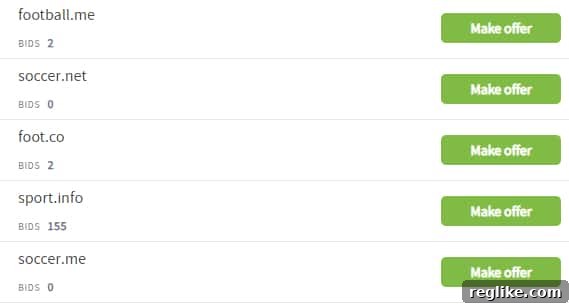
- Sedo: As depicted in the provided screenshot, Sedo, one of the world’s largest domain marketplaces, routinely employs “make offer” buttons and prompts to facilitate buyer interest in premium unpriced domains.
- GoDaddy Auctions: Many premium domain listings on GoDaddy’s auction platform feature a “make offer” option, allowing buyers to propose a price outside of standard bidding.
- Namecheap Market: Similar functionalities exist, empowering users to express interest and negotiate prices for desirable domains.
- Afternic & Dan.com: These platforms also integrate “make offer” features as a crucial part of their sales processes, especially for domains listed with “Price on Request” or as part of a brokerage service.
The ubiquity of “make offer” stems from its practical utility. It provides flexibility for sellers who may not know the exact market value of a unique domain, and it empowers buyers to propose a price they deem fair. Without such a mechanism, the negotiation process for unpriced domains would be significantly hampered, requiring more laborious direct communication and potentially slowing down the entire market. It serves as a clear, concise instruction, universally understood by anyone involved in buying or selling domains, regardless of their native language or technical expertise.
Understanding the Applicant’s Service: MakeOffer.site
Mark Estabrook operates a website located at MakeOffer.site, which he presents as the operational basis for his trademark application. The specimen submitted to the USPTO is a screenshot from this site, providing insight into how he intends to use the “makeOffer” concept. The page content outlines a specific service:
makeOffer
you landed here because the domain name you typed in your browser’s URL was forwarded here. a person or organization owns the name and wants us to broker it for them privately. it can be yours. to begin the process, tell us which name you are interested in and SUBMIT a reasonable offer. as seller’s agent, we will forward your offer and if seller wants to respond we will contact you.
This description indicates that MakeOffer.site functions as a specialized domain forwarding and brokerage service. When a user types a specific domain name into their browser, and that domain is configured to forward to MakeOffer.site, the user is presented with an opportunity to submit an offer for the forwarded domain. Estabrook’s service acts as an intermediary, an agent for the seller, facilitating private negotiations. While this business model for domain brokerage is certainly legitimate, the attempt to claim a proprietary right over the phrase “makeOffer” in this context is what raises significant concerns.
The applicant’s service essentially leverages the common understanding of “make an offer” to streamline their specific brokerage process. However, the critical question remains: does providing a service that utilizes a generic, descriptive term transform that term into a distinctive brand element warranting trademark protection? The answer, according to established trademark law principles, is usually a resounding no, especially when the term directly describes the nature of the service itself.
Implications and Precedents: The Trademark Battleground for Descriptive Terms
Trademark law is designed to protect consumers from confusion about the source of goods and services and to reward businesses for developing distinctive brands. A fundamental principle of trademark distinctiveness is that generic or descriptive terms generally cannot be trademarked. A generic term is the common name for a product or service (e.g., “coffee” for a coffee shop). A descriptive term describes a characteristic or feature of a product or service (e.g., “Cold and Creamy” for ice cream).
“Make offer” falls squarely into the descriptive category for domain forwarding and brokerage services. It directly describes the action buyers take and the function of the service itself. Granting a trademark for such a universally understood term could lead to several detrimental outcomes:
- Market Confusion: If “makeOffer” were trademarked, other legitimate domain marketplaces and brokers might face legal challenges for using a term essential to their operations. This could confuse consumers who expect to “make an offer” when purchasing an unpriced domain.
- Unfair Competition: A trademark on “makeOffer” would provide an undue competitive advantage to the applicant, potentially stifling innovation and fair competition within the domain industry. Competitors would be forced to invent less intuitive, more convoluted phrases to describe the same process.
- Chilling Effect on Communication: The fear of infringement claims could lead to a “chilling effect,” where industry players hesitate to use clear, effective language for fear of legal repercussions, making the market less efficient for everyone.
- Legal Precedent Concerns: Granting a trademark for “makeOffer” could set a dangerous precedent, opening the door for other entities to claim ownership over similarly descriptive terms crucial to various industries.
The USPTO often rejects trademark applications for descriptive terms unless they have acquired “secondary meaning” – meaning consumers primarily associate the term with a specific source, not just the product or service itself. Given the widespread use of “make offer” across the entire domain industry, proving secondary meaning for a relatively new service like MakeOffer.site would be an immense challenge.
The Future of “Make Offer” in Domain Transactions
The outcome of this trademark application holds significant implications for the domain name ecosystem. If the USPTO were to grant the trademark for “makeOffer,” it would undoubtedly trigger substantial opposition and potential legal battles from numerous stakeholders. Domain marketplaces, individual brokers, and domain investors who rely on this phrase would likely challenge the decision, arguing for its generic or highly descriptive nature.
Conversely, if the application is rejected – which is the more probable scenario given trademark principles – it would reinforce the understanding that fundamental, descriptive terms essential to an industry’s function remain in the public domain, free for all to use. This would safeguard the clarity and efficiency of domain transactions, ensuring that buyers and sellers can continue to communicate using universally understood language without fear of infringement.
For domain buyers and sellers, the ability to “make an offer” remains a cornerstone of flexible domain acquisition. It enables dynamic pricing, allows for negotiation based on perceived value, and fosters a more liquid market for unique digital assets. The process typically involves:
- Identification: A buyer finds an unpriced domain of interest.
- Offer Submission: The buyer uses a “make offer” form or contacts a broker to submit their proposed price.
- Negotiation: The seller (or their agent) considers the offer and may accept, reject, or counter-offer.
- Agreement & Transfer: Once a price is agreed upon, the domain transfer process is initiated.
This well-established process is built on the clear, unambiguous meaning of “make offer.” Any attempt to privatize this term could inject unnecessary friction and legal complexity into what should be a straightforward commercial interaction. The domain industry thrives on clear communication and accessible tools, and the phrase “make offer” is an integral part of that foundation.
Conclusion: Protecting the Lexicon of the Domain Name Industry
The trademark application for “makeOffer” serves as a critical reminder of the importance of preserving common language in specialized industries. While innovation and brand distinction are vital, they must not come at the expense of clarity and accessibility for the entire market. “Make offer” is more than just a phrase; it’s a fundamental interaction model that has facilitated countless domain transactions globally. It represents an open invitation to negotiate, a standard protocol understood by millions.
The potential implications of granting a trademark for such a widely used, descriptive term extend far beyond a single business. It could disrupt established practices, introduce legal ambiguities, and ultimately hinder the fluidity of the domain marketplace. As the domain industry continues to evolve, maintaining a shared lexicon for core transactional processes like “make offer” is essential for its health, growth, and continued accessibility to everyone involved in buying and selling digital real estate.