
The Daily Caller Acquires KeithOlbermann.com: A Digital Statement in Political Media Rivalry
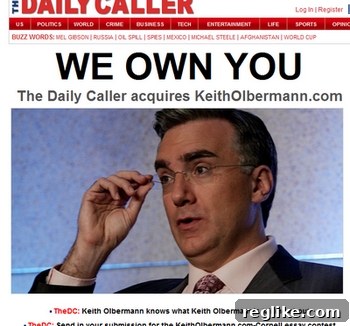
In a notable maneuver that blurs the lines between political punditry and digital warfare, Tucker Carlson’s prominent publication, The Daily Caller, has officially acquired the domain name KeithOlbermann.com. This bold move is more than just a simple domain registration; it’s a highly symbolic, public declaration in the ongoing, often acrimonious, rivalry between two of America’s most recognizable, and often controversial, media personalities. The acquisition sends a clear, provocative message echoing the sentiment, “From one political pundit to another: I own you!”
The announcement, initially made by The Daily Caller itself, swiftly captured the attention of media observers and political commentators alike. On July 14, 2010, the publication proudly declared its new digital asset, linking directly to the news of the acquisition. This wasn’t merely a strategic purchase; it was a deliberate and public act designed to assert dominance and perhaps, to needle a frequent critic. When visitors now type KeithOlbermann.com into their browsers, they are greeted not by content associated with the renowned MSNBC host, but by the digital presence of The Daily Caller. This immediate redirection or content display, as depicted in various media reports at the time, visually underscored the nature of the acquisition, fundamentally altering the expected online experience for those seeking Olbermann’s digital footprint.
The Genesis of a Digital Confrontation: Olbermann vs. The Daily Caller
The backstory to this domain acquisition is steeped in the contentious relationship between Keith Olbermann and Tucker Carlson’s publication. At the time of the purchase, Olbermann had reportedly been a vocal and persistent critic, frequently blasting The Daily Caller’s reporting, editorial stance, and overall conservative viewpoint. In the highly polarized landscape of American political media, such verbal sparring is commonplace. However, The Daily Caller’s response escalated the conflict into the digital realm, transforming a war of words into a strategic territorial claim. The publication seized the opportunity to acquire the domain name from its then-owner, an individual in Virginia who was simply “parking” the domain – a common practice where domains are registered without active content, often for speculative resale or future use. This acquisition, therefore, wasn’t a direct challenge to Olbermann’s registered trademarks (if any for his personal name as a domain) but rather a savvy move to occupy a significant piece of his potential online real estate.
The Critical Importance of Online Presence for Public Figures
In the digital age, a personal domain name like KeithOlbermann.com or TuckerCarlson.com is far more than just a web address. It serves as a vital component of a public figure’s personal brand, an anchor for their online identity, and a primary channel for direct communication with their audience. For prominent media personalities, journalists, and pundits, owning their namesake domain is crucial for several reasons. It helps to control narrative, consolidate content, prevent impersonation, and safeguard against what is commonly known as “cybersquatting” – the act of registering, trafficking in, or using a domain name with bad faith intent to profit from the goodwill of a trademark belonging to someone else. Failure to secure one’s own domain can lead to brand dilution, misinformation, and, as this case illustrates, an embarrassing digital takeover by a rival.
Tucker Carlson’s Own Domain Name Battle: A Taste of His Own Medicine?
The irony of The Daily Caller’s acquisition of KeithOlbermann.com is not lost on those familiar with Tucker Carlson’s own history with domain names. Lest one assume Olbermann is unique in not having secured his personal domain from the outset, Carlson himself faced a similar predicament years prior. The conservative pundit had to engage in a formal dispute process to gain control of TuckerCarlson.com. His journey involved appealing to the World Intellectual Property Organization (WIPO) for arbitration under the Uniform Domain-Name Dispute-Resolution Policy (UDRP).
Understanding the Uniform Domain-Name Dispute-Resolution Policy (UDRP)
The UDRP is an international system established by the Internet Corporation for Assigned Names and Numbers (ICANN) to resolve disputes regarding the registration of domain names. It provides a streamlined, administrative process to challenge domain registrations that are deemed to be abusive cybersquatting. To succeed in a UDRP complaint, a complainant must prove three key elements:
- The domain name is identical or confusingly similar to a trademark or service mark in which the complainant has rights.
- The registrant (domain holder) has no rights or legitimate interests in respect of the domain name.
- The domain name has been registered and is being used in bad faith.
Carlson successfully navigated this process to reclaim his name, highlighting the importance of trademark protection and proactive domain management. His prior experience makes The Daily Caller’s move even more potent, as it demonstrates a deep understanding of domain name dynamics and the potential vulnerabilities of public figures who don’t maintain a tight grip on their digital identity.
Given Carlson’s own arbitration history, the acquisition of KeithOlbermann.com naturally led many to wonder if Olbermann would respond in kind. Would he initiate a UDRP complaint against The Daily Caller, arguing that the domain was registered and used in bad faith, infringing on his personal brand? Such a counter-move would undoubtedly add another layer to their ongoing media feud, potentially placing Carlson, or rather his publication, on the receiving end of the very legal framework he once used to secure his own digital presence.
The Legal and Ethical Maze of Domain Acquisitions in Media
This incident opens up a broader discussion about the legal and ethical boundaries of domain name acquisitions, especially when they involve public figures and media entities. While purchasing an expired or squatted domain name is generally legal, the intent behind such an acquisition can be scrutinized. If the intent is solely to disrupt a rival’s brand, create confusion, or leverage their fame for one’s own gain, it could potentially cross into legally contentious territory. For Olbermann, a potential legal challenge would hinge on whether his name “Keith Olbermann” qualifies as a trademark (even an unregistered common law trademark, which can still be protected) and whether The Daily Caller’s use constitutes bad faith.
Ethically, this tactic raises questions about the nature of political discourse in the digital age. Is it fair play, or does it verge on digital harassment or unfair competition? While aggressive tactics are common in political media, seizing a rival’s potential digital identity is a particularly potent form of engagement, signaling a willingness to leverage all available tools, including digital real estate, to gain an advantage.
Broader Implications for Online Media and Digital Identity Management
The Daily Caller’s acquisition of KeithOlbermann.com serves as a powerful case study and a stark reminder for all public figures, brands, and organizations about the critical importance of a robust digital identity strategy. In an increasingly digital-first world, controlling one’s own narrative starts with owning the foundational elements of one’s online presence, primarily domain names.
Key Takeaways for Proactive Domain Protection:
- Register Early and Broadly: Public figures and brands should proactively register their primary domain names, including common variations (.com, .net, .org, and newer TLDs) as early as possible.
- Secure Personal Names: For individuals, especially those in media or politics, securing “firstname lastname.com” is paramount.
- Trademark Your Name/Brand: While personal names can gain common law trademark rights through use, official registration strengthens legal standing in disputes like UDRP.
- Monitor Domain Registrations: Regularly monitor newly registered domains that might be confusingly similar to your name or brand.
- Consider Defensive Registrations: Registering domains that are common misspellings or variations of your name can prevent others from exploiting them.
- Establish Clear Online Brand Guidelines: Have a strategy for how your name and brand are represented across all digital platforms.
This incident underscored how digital assets have become integral to strategic communication and competitive positioning in media. It highlighted that the battle for influence extends beyond traditional airwaves and print to the very addresses people type into their web browsers. For The Daily Caller, it was a symbolic victory, a statement of digital prowess and a direct challenge to a vocal opponent. For Keith Olbermann, it was a wake-up call, emphasizing the vulnerabilities that can arise from not fully securing one’s digital persona.
Conclusion: A New Frontier in Media Rivalry
The acquisition of KeithOlbermann.com by The Daily Caller represents more than just a domain transaction; it signifies a pivotal moment in the digital age of political punditry. It is a testament to the escalating intensity of media rivalries and the increasing importance of digital real estate as a battleground for influence and brand control. While the legal repercussions for Olbermann remained to be seen at the time, the message from Tucker Carlson’s publication was unequivocally clear: in the intricate dance of digital identity and media power, securing your online territory is not just a best practice—it’s a critical imperative. This incident serves as a lasting reminder that in the fast-paced world of online media, vigilance and strategic foresight are as crucial as the content itself.