
The Intersection of Digital Identity and Roadside Recognition: Domain Name License Plates
In an increasingly digital world, the lines between our online personas and our real-world identities are constantly blurring. One fascinating example of this convergence can be found on our roadways: custom license plates featuring domain names. These personalized plates are more than just a means of identification; they are a bold statement, a marketing tool, and a unique form of self-expression. They transform a mundane vehicle accessory into a dynamic billboard for a website, a brand, or a passion project.
The concept of custom or “vanity” license plates has captivated car owners for decades, offering a small canvas to display humor, pride, or personal affiliations. However, the advent of the internet and the proliferation of domain names introduced an entirely new dimension to this trend. Now, it’s not uncommon to spot vehicles proudly displaying their digital addresses, ranging from personal blogs to thriving businesses. This article delves into the intriguing world of domain name license plates, spotlighting two particularly memorable examples: X13.com from Colorado and ATU2COM from Washington state, while also exploring the broader appeal and regulatory landscape surrounding these unique identifiers.
A Journey Through Custom Plates: From Texas to the Nation
The phenomenon of .com license plates is not new. Indeed, the author has previously chronicled the sightings of two such plates in Texas, one of which proudly belongs to them. This personal connection underscores the enthusiasm many domain owners feel for integrating their digital real estate into their physical presence. It’s a subtle yet powerful way to extend an online brand’s reach into the tangible world, sparking curiosity and brand recall wherever the vehicle travels.
Following these initial anecdotes, several readers were inspired to share their own unique license plate stories from various states, highlighting the widespread appeal and diverse interpretations of custom vehicle identification. These submissions paint a vivid picture of how individuals and businesses leverage this small space to make a significant impression. The stories behind these plates often involve a blend of personal passion, clever branding, and sometimes, even a humorous encounter with local authorities, as we’ll see with our first featured plate.
Spotlight on X13.com: A Colorado Tale of Dots and Dedication
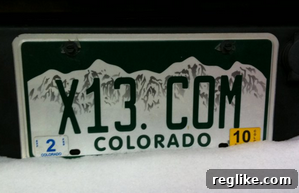
Our first noteworthy submission comes from Scott Galvin in Colorado, featuring his distinctive X13.com license plate. This particular plate is a prime example of how states’ individual regulations can lead to unique and sometimes challenging situations for custom plate enthusiasts. Colorado, much like Texas, is among the states that permit the inclusion of a “dot” character on license plates, allowing for a more accurate and recognizable representation of a domain name.
The Curious Case of the Colorado Dot
While the dot might seem like a minor detail, its inclusion or exclusion significantly impacts the visual fidelity of a domain name. For those who own domains like X13.com, having the literal dot on their plate ensures that their digital address is unmistakable. However, this feature isn’t without its quirks, as Scott Galvin humorously recounts.
Galvin shared a memorable incident where he was pulled over by a police officer in Boulder, Colorado. The officer, observing the dot on his license plate, initially believed it to be an unauthorized alteration or a sticker added by Galvin himself. This misconception led to a brief but tense interaction, with the officer expressing concern about tampering with official vehicle identification. The situation, however, quickly diffused when the officer performed a quick inspection, rubbing the “dot” and realizing it was an integral, officially embossed part of the license plate, not a sticker or an aftermarket addition.
Commenting on the incident with characteristic wit, Galvin joked, “If I had added it, I would’ve at least centered it!” This anecdote highlights not only the novelty of such domain name plates but also the varying levels of awareness among law enforcement regarding the specific design nuances permitted by state motor vehicle departments. It’s a testament to the distinctiveness of these plates that they can sometimes lead to such unique encounters.
The choice of “X13.com” itself suggests a unique identity or brand. In the domain name world, short, memorable, and often cryptic domains like X13.com hold significant value. Translating such a digital asset to a physical license plate reinforces its brand identity and offers a constant, mobile advertisement. For Scott Galvin, his X13.com plate is clearly more than just a registration number; it’s a conversation starter and a symbol of his online presence.
ATU2COM: A Decade of Dedication in Washington State
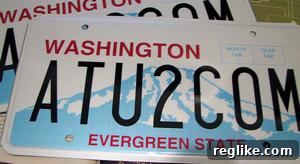
Our second entry takes us to Washington state, where the regulatory environment differs significantly from Colorado, particularly concerning the inclusion of special characters like the “dot.” This entry comes courtesy of Matt McGee, the esteemed Founder/Editor of @U2, a long-standing and well-respected fan site dedicated to the iconic band U2. Matt’s license plate, prominently displaying ATU2COM, has been a fixture on his vehicle for over a decade, showcasing an enduring passion and commitment to his online community.
Navigating State Regulations: No Dots in Washington
Unlike Colorado, Washington state does not permit the use of a “dot” character on its license plates. This means that domain names displayed on Washington plates must often be rendered without the traditional dot separator, requiring creative adaptation. In Matt McGee’s case, “ATU2COM” is an elegant solution, effectively conveying the domain ATU2.com even without the literal dot. This common practice in states with stricter character limitations demonstrates the ingenuity of custom plate owners in making their digital identities recognizable.
The longevity of Matt’s ATU2COM plate—over a decade—speaks volumes about the personal significance and brand loyalty it represents. For fans of U2, the “@U2” community is a vital hub for news, discussion, and shared enthusiasm. Having “ATU2COM” on his license plate is a constant, public affirmation of his dedication to the band and the vibrant online community he helps foster. It serves as a mobile advertisement for his website, potentially drawing in new visitors and reinforcing the site’s presence among existing members.
This example beautifully illustrates how domain name license plates can extend beyond pure commercial branding to encompass personal interests, fan communities, and long-term passion projects. In a state that doesn’t allow the dot, the clear and concise rendering of “ATU2COM” is a clever workaround that maintains brand integrity and recognition.
The Broader Appeal: Why Domain Name License Plates Matter
The cases of X13.com and ATU2COM are just two examples of a much larger trend. People choose domain name license plates for a variety of compelling reasons, reflecting a blend of practical utility and personal expression:
- Brand Visibility and Marketing: For businesses or personal brands, a domain name plate acts as a mobile billboard, constantly promoting a website. It’s a subtle yet effective form of guerrilla marketing, catching the eye of potential customers or visitors in traffic, parking lots, or anywhere the vehicle goes.
- Personal Expression and Identity: Much like a tattoo or a favorite T-shirt, a custom plate can reflect a significant part of one’s identity. For Scott Galvin, it’s his domain; for Matt McGee, it’s his dedication to the U2 community. It’s a declaration of what matters to them.
- Memorability: A short, catchy domain name on a plate is often easier to remember than a standard alphanumeric sequence. This can lead to increased traffic or engagement for the associated website.
- Connecting Online and Offline: In an era where many businesses operate primarily online, a physical reminder like a license plate helps bridge the gap between the digital and physical worlds, making an online entity feel more tangible and accessible.
- Uniqueness and Status: Custom plates, especially those with desirable domain names, are often hard to acquire and can signify a certain level of status or dedication. They stand out in a sea of generic plates, reflecting the owner’s individuality.
Navigating the Regulatory Landscape of Custom Plates
The ability to acquire and design a domain name license plate is heavily dependent on individual state regulations. Each state has its own set of rules regarding:
- Character Limits: Most states impose a maximum number of characters, typically ranging from 6 to 8. This often necessitates creative abbreviations or omissions when a full domain name is too long.
- Special Characters: As seen with Colorado and Washington, the allowance for characters like dots, hyphens, or spaces varies widely. This is a critical factor for accurate domain representation.
- Offensive Language Filters: All states have systems in place to reject plates deemed offensive, profane, or inappropriate.
- Availability: The most desirable combinations are often taken, requiring applicants to submit multiple choices.
- Fees: Custom plates usually incur an additional annual fee beyond standard registration costs.
Understanding these regulations is crucial for anyone hoping to turn their domain name into a distinctive license plate. The process often involves checking online databases for availability, submitting an application with preferred options, and paying the associated fees.
A Note on Privacy and Public Display
As a quick but crucial side note, it’s important to consider the legalities and ethical implications of sharing images of license plates. The author previously discovered that publishing a photo of a license plate in Texas is illegal without the express permission of the plate owner. While the precise application of such rules to content published on the internet can be ambiguous and jurisdiction-dependent, the general best practice remains clear: it is always advisable to obtain explicit permission from the plate owner before posting a photo of their license plate online. This respects individual privacy, avoids potential legal complications, and fosters a sense of trust within communities that share such content.
The Enduring Charm of Personalized Vehicle Identification
The phenomenon of domain name license plates is a captivating testament to human creativity, entrepreneurial spirit, and the evolving nature of personal and brand identity in the digital age. From Scott Galvin’s unique X13.com plate navigating Colorado’s dot-friendly regulations to Matt McGee’s enduring ATU2COM plate representing a decade of U2 fandom in Washington, these plates offer a window into the diverse ways individuals choose to express themselves and promote their online endeavors in the physical world.
These plates are more than just numbers and letters; they are miniature billboards, conversation starters, and powerful symbols that bridge the gap between our online lives and our everyday journeys. They remind us that even in the most mundane aspects of our daily routines, there are opportunities for personalization, branding, and a touch of digital flair. As technology continues to integrate more deeply into our lives, we can expect to see even more innovative and creative ways in which people choose to represent their digital identities in the tangible world, making our roads a little more interesting and our online connections a little more visible.