
A landmark controversy involving the sale of the .org domain registry has captured the attention of prominent U.S. lawmakers, including presidential candidate Elizabeth Warren, who have voiced significant concerns over the proposed transaction. The venerable .org domain, long considered a digital haven for non-profit organizations, charities, and open-source projects worldwide, faces an uncertain future following its planned acquisition by a private equity firm. This proposed sale has ignited a fierce debate about the fundamental principles of internet governance, the digital commons, and the safeguarding of public interest in an increasingly commercialized online landscape.
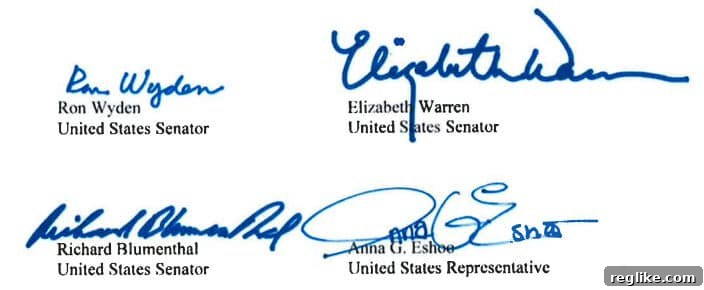
The proposed sale of the Public Interest Registry (PIR), the entity responsible for managing the .org domain, by the Internet Society (ISOC) to Ethos Capital has triggered a wave of apprehension across the internet community. This concern has escalated to the highest levels of U.S. government, with a powerful quartet of lawmakers taking a decisive stand. Three U.S. Senators and a U.S. Representative have sent a detailed letter directly to Ethos Capital, the Internet Society, and the Public Interest Registry, meticulously questioning the rationale and potential ramifications of selling one of the internet’s most trusted top-level domains to a private equity firm.
The signatories of this pivotal letter include Senator Ron Wyden (D-Ore.), Senator Richard Blumenthal (D-Conn.), presidential candidate Senator Elizabeth Warren (D-Mass.), and Representative Anna Eshoo (D-Calif.). Their collective intervention underscores the profound digital policy implications of the transaction. Their communication is not merely a formality; it comprises nine pointed questions that delve deep into the mechanics, motivations, and potential consequences of the proposed acquisition. These lawmakers represent a significant voice in Congress, and their unified stance against the deal highlights the critical public interest issues at stake, signaling a robust demand for accountability and transparency.
At the core of the lawmakers’ profound concerns are several critical areas that could fundamentally alter the landscape for hundreds of thousands of non-profit organizations, educational institutions, and open-source initiatives that rely on the .org domain. These concerns are not merely technical; they touch upon the very ethos of a domain that has historically operated under a stewardship model designed to serve the public good rather than commercial profit.
- Censorship: A Threat to Free Expression and Non-Profit Missions: The prospect of censorship is perhaps the most alarming concern. For decades, .org has been a neutral, reliable platform for diverse voices, including human rights advocates, dissident groups, and organizations operating in politically sensitive regions. Should a private equity firm, driven primarily by profit and potentially beholden to external pressures, gain control, there is a tangible fear that domain names could be removed or suppressed based on commercial interests, political motivations, or even direct governmental requests. This could undermine the fundamental principle of a free and open internet, especially for organizations whose missions inherently involve challenging established norms or reporting on sensitive issues. The non-profit sector depends on the freedom to operate without fear of arbitrary censorship, and any perceived threat to this freedom could have chilling effects globally.
- Jurisdictional Shift: The Risk of Operating Outside U.S. Legal Protections: Another major apprehension revolves around the potential for the .org registry to move its operational jurisdiction outside the United States. Such a move could expose the vast network of .org domain holders to the legal frameworks of different countries, which may not offer the same robust protections for free speech, privacy, and due process as U.S. law. This shift could complicate legal recourse for domain holders, potentially exposing them to varying international interpretations of intellectual property, content moderation, and data governance. The stability and predictability offered by the current U.S. jurisdiction are crucial for organizations whose operations often span international borders and deal with sensitive information or advocacy.
- Price Control: Ensuring Accessibility for the Non-Profit Community: Historically, the .org domain has been managed with strict price caps, a critical measure to ensure affordability and accessibility for non-profit organizations, many of which operate on shoestring budgets. The recent decision by ICANN (Internet Corporation for Assigned Names and Numbers) to remove these price caps, followed swiftly by the proposed sale to Ethos Capital, has raised alarms about potential predatory pricing. Private equity firms typically seek to maximize returns on investment. This model, when applied to a public good like .org, could lead to significant and unsustainable price increases, potentially forcing smaller non-profits offline or diverting crucial funds from their core charitable missions towards domain registration fees. The long-term financial stability of the non-profit sector heavily relies on predictable and affordable operating costs, and the removal of price controls coupled with a for-profit ownership model presents a direct threat to this stability.
- The Efficacy of the Proposed .org Stewardship Council: To mitigate some of these concerns, Ethos Capital has proposed the establishment of a “stewardship council.” However, the lawmakers are deeply skeptical about the true power and independence of this council. Their questions specifically probe whether this council will have genuine veto power over critical decisions, particularly those related to pricing, policy changes, and content moderation. Without real, independent veto authority, such a council could be merely advisory, lacking the necessary teeth to genuinely safeguard the interests of the .org community against commercial imperatives. The non-profit community demands assurances that any oversight body will be truly empowered to protect the domain’s public interest mission, rather than serving as a symbolic gesture.
Beyond these specific concerns, the Senators and Representative have also made a strong demand for transparency, urging that critical documents related to the transaction be made public. Specifically, they want the registry transfer request – the formal application submitted to ICANN for approval of the sale – and all answers to ICANN’s latest questions regarding the deal to be released for public scrutiny. This call for transparency is paramount. The sale of a domain as significant as .org, which serves as foundational infrastructure for millions of public interest organizations, cannot occur behind closed doors. Public access to these documents would allow the broader internet community, non-profit organizations, legal experts, and the general public to understand the full scope of the agreement, the rationale behind it, and the potential risks and safeguards involved. It is an essential step towards ensuring accountability and maintaining trust in the governance of crucial internet resources.
The controversy surrounding the .org sale is not an isolated incident; it reflects broader anxieties about the increasing commercialization of the internet’s core infrastructure. The .org domain was initially established in 1985 specifically for “organizations that did not fit other categories,” quickly becoming the default home for non-profits and other entities serving the public good. Its stewardship under the Public Interest Registry (PIR), an organization created by the Internet Society (ISOC) with a clear mandate to serve the non-commercial community, cemented its role as a trusted space. The proposed transfer of this stewardship from a mission-driven organization to a private equity firm, whose primary objective is to maximize shareholder value, represents a fundamental shift in philosophy and governance.
Ethos Capital, as a private equity firm, operates on a business model that involves acquiring companies, enhancing their profitability, and eventually selling them for a significant return. While this model is legitimate in many sectors, its application to a public utility like the .org domain raises profound ethical and operational questions. The concern is that the pursuit of profit could inevitably clash with the public interest mission that .org has traditionally upheld, leading to decisions that prioritize revenue generation over the needs of the non-profit community. This tension is at the heart of the outcry from lawmakers and a vast coalition of civil society organizations, digital rights advocates, and non-profits worldwide who have united to oppose the sale.
The role of ICANN, the global multi-stakeholder organization responsible for coordinating the internet’s domain name system, is crucial in this transaction. ICANN’s approval is required for the transfer of the .org registry. Its decision will set a significant precedent for how critical internet infrastructure is managed and whether public interest considerations will continue to outweigh commercial pressures. The lawmakers’ demands for transparency and their probing questions are effectively putting pressure on ICANN to conduct a thorough and publicly accountable review of the proposed sale, ensuring that the long-term health and accessibility of the .org domain are prioritized over immediate financial gains.
In conclusion, the fate of the .org domain transcends a mere business transaction; it is a battle for the soul of a segment of the internet that has been dedicated to public good. The strong intervention by leading U.S. lawmakers, including presidential candidate Elizabeth Warren, signals a growing recognition of the profound implications of such sales for free speech, digital rights, and the operational viability of non-profit organizations globally. The coming months will be critical, as the internet community and policymakers await ICANN’s decision and continue to advocate for a resolution that safeguards the public interest mission of the .org domain for generations to come.