
You shouldn’t file a UDRP just because you’ve lost the keys to your domain name.
Navigating Domain Disputes: Why UDRP Isn’t a Solution for Lost Credentials
In the digital age, a domain name is more than just an address; it’s a critical business asset, representing a brand’s online identity and a gateway for customer interaction. Losing access to it can be a significant setback, leading many organizations to seek quick solutions. However, a common misconception often leads companies down the wrong path: attempting to use the Uniform Domain-Name Dispute-Resolution Policy (UDRP) for domain recovery when the issue stems from internal mismanagement rather than malicious cybersquatting. This article explores the specific purpose of the UDRP and highlights why it is not a suitable remedy for situations where “keys” to a domain name have simply been misplaced or forgotten, using a recent case involving a Hawaiian condo association as a prime example.
The UDRP was meticulously crafted to address clear-cut cases of cybersquatting – the abusive registration of domain names in bad faith. Yet, businesses frequently try to shoehorn a myriad of domain-related problems into this policy, often driven by frustration or a lack of understanding regarding its strict parameters. The Moana Pacific dispute perfectly illustrates this common misapplication.
Understanding the UDRP: A Targeted Tool Against Cybersquatting
Before delving into the Moana Pacific case, it’s crucial to grasp the fundamental principles of the UDRP. This policy, established by the Internet Corporation for Assigned Names and Numbers (ICANN), provides an administrative procedure for resolving disputes concerning domain names. Its primary objective is to offer a streamlined, cost-effective alternative to traditional litigation for trademark holders whose brands are being exploited through abusive domain registrations.
The Three Pillars of a Successful UDRP Claim
For a complainant to succeed in a UDRP proceeding and have a domain name transferred or canceled, they must convincingly demonstrate the presence of three cumulative elements:
- The domain name is identical or confusingly similar to a trademark or service mark in which the complainant has rights. This typically involves comparing the disputed domain name to a registered trademark or a common law trademark established through extensive use.
- The respondent has no rights or legitimate interests in respect of the domain name. This element requires the complainant to show that the domain holder lacks any legitimate reason to use the domain, such as offering goods or services under that name, being commonly known by the domain name, or making a legitimate noncommercial or fair use of the domain.
- The domain name has been registered and is being used in bad faith. This is often the most challenging element to prove. Bad faith typically involves demonstrating an intent to profit from a trademark, disrupt a competitor’s business, prevent a trademark owner from registering the domain, or create a likelihood of confusion for commercial gain. Examples include registering multiple domains to prevent trademark owners from doing so, selling the domain for profit above out-of-pocket costs, or using it to host phishing sites.
Crucially, all three of these elements must be established by the complainant. Failure to prove even one of them will result in the denial of the UDRP complaint. This strict requirement is central to why the UDRP is not a catch-all solution for every domain name issue.
The Moana Pacific Predicament: A Case Study in Domain Management Failures
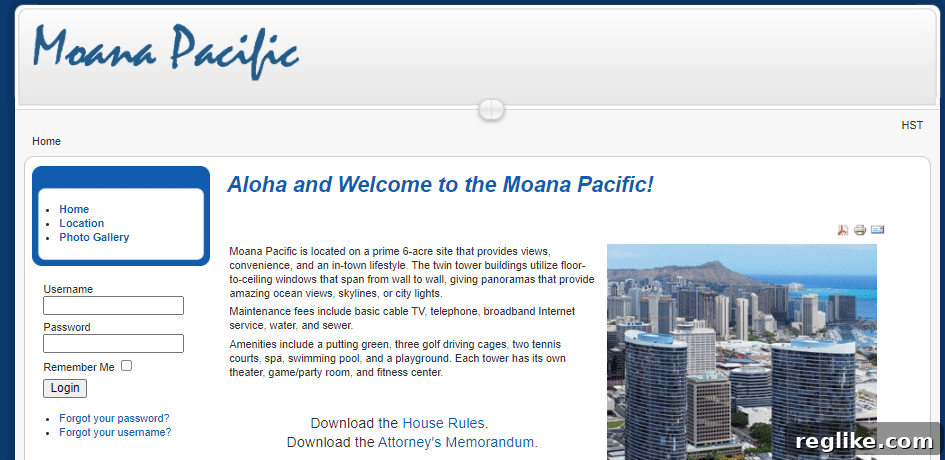
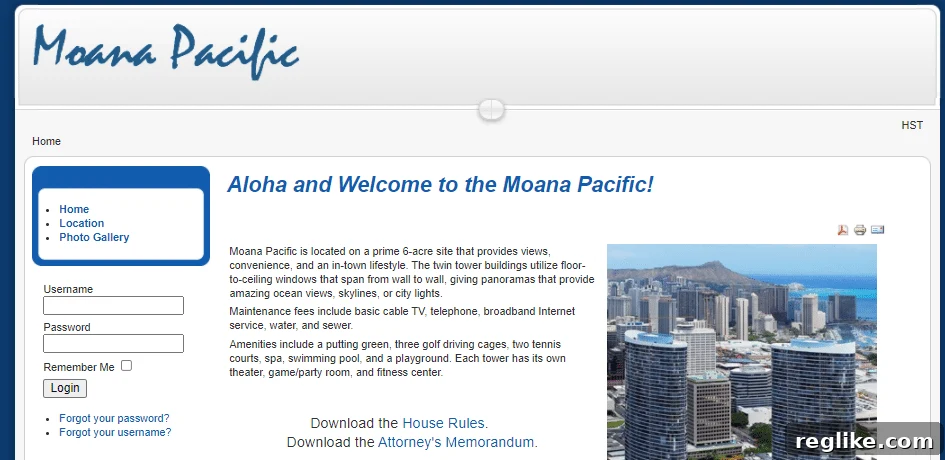
The Association of Apartment Owners of Moana Pacific, a Hawaiian condo association, found itself in a digital bind. Faced with the inability to access their critical online asset, moanapacific.org, they turned to the UDRP as a means to regain control. Their situation, however, was a classic example of internal operational oversight rather than a deliberate act of cybersquatting.
The “Lost Keys” Scenario Unfolds
According to the complaint filed by the Association of Apartment Owners of Moana Pacific through a UDRP filing, the domain name moanapacific.org was initially registered by its “former general manager,” identified as Mr. Allman, who was named as the Respondent. Subsequently, another “employee” and “successor manager,” Eric Lau (who was initially named as a respondent in the proceeding before being removed), also had access to the domain. The complaint meticulously detailed the association’s predicament:
The Complainant explains that the Domain Name was registered by its “former general manager”, the Respondent Mr. Allman, and then by another “employee” and “successor manager”, Eric Lau (who was initially named as the Respondent in this proceeding). According to the Complaint, “Complainant has been locked out of the domain account and unable to access many of its important documents and emails. Complainant has attempted to work with Respondent and Eric Lau but both either forgotten [sic] the information, have been uncooperative, unresponsive, and/or claims they do not have the information to assist.” Mr. Lau said in an email that he provided the login information to “Jerrie” when he left employment with the Complainant, but the Complainant has not found that helpful.
This account paints a clear picture: the association had simply lost the “keys” to its digital property. A series of managerial changes, forgotten passwords, and a lack of clear handover protocols led to a complete lockout. With the domain name resolving to a parked page and critical information inaccessible, the condo association, in a state of understandable desperation, looked to the UDRP as a potential lifeline.
Why UDRP Was Not the Solution for Moana Pacific
Despite the complainant’s distress, the UDRP panel’s role is to apply the policy strictly to the facts presented. In the Moana Pacific case, Panelist W. Scott Blackmer delivered a ruling that underscored the precise limitations of the UDRP, particularly concerning the “bad faith” element.
The Absence of Bad Faith Registration
Panelist Blackmer’s summary was unequivocal:
The Complainant may well wish it had insisted on keeping the login credentials and updating the registration details, but the facts here do not support a conclusion of bad faith, especially going back to the time of the original registration. The Policy was not designed as a remedy for poor management.
The core issue here was the lack of bad faith at the time of registration and subsequent use. The domain was initially registered by an employee or former manager *for* the association’s legitimate use, not with the intent to profit from or exploit the “Moana Pacific” trademark. The subsequent inability to access the domain was a consequence of internal administrative lapses, not an act of cybersquatting. The UDRP expressly requires both bad faith registration *and* bad faith use to be proven, neither of which was evident in this situation.
The panel correctly identified that the UDRP is not a mechanism to rectify internal operational deficiencies, inadequate record-keeping, or a failure to implement robust domain management protocols. It is not a generic domain recovery service for situations where login credentials are lost or where employees leave without proper handover procedures.
Alternative Avenues for Domain Recovery
While UDRP was not the answer, the Moana Pacific association is not entirely without recourse. For situations involving lost domain access due to internal issues, other avenues might include:
- Direct contact with the registrar: Providing sufficient proof of ownership (e.g., business registration documents, prior invoices for the domain) might convince the registrar to reset access or transfer control.
- Legal action in a court of competent jurisdiction: If there’s a contractual dispute or a clear legal right to the domain that can be proven, a court might order the transfer of the domain.
- Negotiation with the current registrant: Although challenging if contact information is outdated or the registrant is unresponsive, direct negotiation can sometimes yield results.
- Re-registering a new domain: In some cases, if the original domain is permanently lost, establishing a new online presence under a slightly different or entirely new domain might be the most practical solution, albeit a costly one in terms of brand continuity.
Best Practices for Robust Domain Name Management
The Moana Pacific case serves as a stark reminder of the critical importance of diligent domain name management. To avoid similar predicaments and protect valuable online assets, organizations should implement robust strategies:
- Centralized Management and Ownership: Designate a single department or, for smaller organizations, a specific individual, with ultimate responsibility for the entire domain portfolio. This prevents fragmentation and ensures clear accountability. Avoid relying solely on personal employee accounts.
- Secure Credential Management:
- Strong, Unique Passwords: Use complex, unique passwords for registrar accounts.
- Two-Factor Authentication (2FA): Implement 2FA wherever possible to add an extra layer of security, making it significantly harder for unauthorized individuals to gain access.
- Password Managers: Utilize secure password managers to store and manage login credentials for all domain-related services.
- Regular Audits: Periodically review and update passwords and access permissions.
- Accurate and Accessible Contact Information: Ensure that the WHOIS records for all domain names are accurate and up-to-date. Crucially, use generic, organizational email addresses (e.g.,
[email protected]) instead of personal employee emails. This ensures continuity even if an employee leaves. - Comprehensive Succession Planning: Establish clear and documented handover procedures for critical digital assets like domain names when employees depart or change roles. This includes transferring all login details, account information, and registrar contacts to the designated successor.
- Utilize Registrar Locks: Implement a registrar lock (also known as a domain lock) on all important domain names. This feature prevents unauthorized transfers of the domain to another registrar, providing a crucial safeguard against hijacking.
- Maintain Comprehensive Records: Keep meticulous, secure records of all domain registration details, including registration dates, expiration dates, registrar account numbers, associated email addresses, and contact information. Store these records in multiple, secure locations.
- Regular Portfolio Audits: Periodically review your entire domain portfolio to ensure all domains are necessary, actively used, and correctly managed. Identify and address any domains with outdated information or vulnerable settings.
- Engage Legal Counsel When Necessary: When faced with complex domain issues, consult with intellectual property attorneys who specialize in domain law. They can provide guidance on appropriate legal recourse and ensure compliance with relevant policies and regulations.
The Broader Implications: Preventing Future Misunderstandings
The Moana Pacific case underscores a broader need for education and awareness among businesses regarding the specific scope and limitations of dispute resolution policies like the UDRP. While valuable for combating genuine cybersquatting, it is not a panacea for all domain-related challenges.
Businesses, regardless of their size, must recognize that domain names are digital real estate requiring diligent stewardship. Proactive measures, including robust internal management policies, secure technical protocols, and clear succession planning, are far more effective and less costly than attempting to retrofit a complex internal issue into an external dispute resolution mechanism designed for an entirely different purpose.
Conclusion
The saga of the Moana Pacific condo association’s attempt to recover its domain name through the UDRP offers a clear and compelling lesson: the UDRP is a powerful, specific tool for combating cybersquatting, not a generic solution for rectifying poor domain name management. The inability to access a domain due to forgotten credentials, internal miscommunication, or a lack of proper handover protocols, while frustrating, does not meet the “bad faith” criteria essential for a successful UDRP claim.
This case serves as a critical reminder for all organizations: secure your digital assets with the same diligence you apply to physical property. Implement strong domain management practices, safeguard your login credentials, maintain accurate records, and establish clear succession plans. By taking proactive steps, businesses can avoid the costly and time-consuming frustration of being locked out of their own digital storefront and prevent the misguided pursuit of remedies designed for different types of disputes. Diligent domain stewardship is not just a best practice; it’s a fundamental requirement for operating effectively in today’s interconnected world.