
FIMO.club UDRP Case: Fan Site Defense Prevails Against Staedtler Mars GmbH
In a compelling decision that underscores the nuanced application of domain name dispute resolution policies, a single-member World Intellectual Property Organization (WIPO) panel recently denied a Uniform Domain Name Dispute Resolution Policy (UDRP) complaint filed by Staedtler Mars GmbH. The German stationery giant sought to reclaim the domain name FIMO.club, alleging bad faith registration and use by the respondent. However, the panel’s ruling highlighted the potential for legitimate, non-commercial use, particularly in the context of fan sites, setting an important precedent for future UDRP cases regarding brand protection and online communities.
Understanding the UDRP Process: A Framework for Domain Disputes
Before delving into the specifics of the FIMO.club case, it’s essential to grasp the fundamentals of the UDRP. Established by the Internet Corporation for Assigned Names and Numbers (ICANN), the UDRP provides an efficient and cost-effective administrative procedure for resolving disputes over domain names. It serves as an alternative to traditional litigation, offering a streamlined process for trademark holders to address cybersquatting – the practice of registering domain names that are identical or confusingly similar to existing trademarks with the intent to profit from the brand’s goodwill or to disrupt its business.
For a complainant to succeed under the UDRP, they must prove three cumulative elements. These elements are rigorously applied by UDRP panels worldwide to ensure fairness and consistency in domain name dispute resolution:
- Identical or Confusingly Similar: The domain name in dispute must be identical or confusingly similar to a trademark or service mark in which the complainant has rights. This typically means the domain closely resembles a registered trademark, potentially leading to consumer confusion.
- No Rights or Legitimate Interests: The respondent must have no rights or legitimate interests in respect of the domain name. Legitimate interests can include using the domain for a bona fide offering of goods or services, being commonly known by the domain name, or making a legitimate non-commercial or fair use of the domain name without intent for commercial gain.
- Registered and Used in Bad Faith: The domain name must have been registered and is being used in bad faith. This is often the most challenging element to prove, as it requires an assessment of the respondent’s intent. Examples of bad faith include registering the domain primarily to sell it to the trademark owner for profit, to prevent the trademark owner from reflecting the mark in a corresponding domain name, or to disrupt the business of a competitor.
Failure to prove any one of these three elements will result in the denial of the complaint, as was ultimately the determination in the case involving FIMO.club.
The Parties and the Product: Staedtler Mars GmbH and the Beloved FIMO Brand
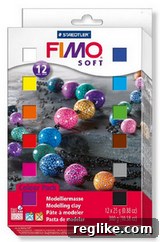
Staedtler Mars GmbH is a globally recognized manufacturer of high-quality writing instruments, art supplies, and modelling materials, boasting a history spanning over 180 years. Among its diverse and innovative product portfolio, FIMO clay stands out as a particularly popular and beloved brand. FIMO is a type of polymer modelling clay, renowned for its exceptional versatility, vibrant colors, and impressive durability after baking. These qualities make it a consistent favorite among hobbyists, professional artists, and crafters worldwide, who use it for everything from intricate jewelry to sculptures and home décor.
The FIMO brand’s strong recognition, extensive use in creative communities, and significant market presence mean that the FIMO trademark carries substantial goodwill and commercial value. Companies like Staedtler Mars GmbH invest heavily in building and maintaining such brand equity, making vigilant protection of their intellectual property rights, including their domain name portfolio, a top priority. The company’s concern over the FIMO.club domain name thus stemmed from its understandable desire to safeguard its brand from potential misuse, dilution, or unauthorized commercial exploitation in the digital realm.
 The respondent in this particular UDRP case was an individual who had a prior, albeit unauthorized, business relationship with FIMO products. Interestingly, she had previously acted as a distributor of FIMO materials through a separate business venture, adding a unique layer of background to the dispute. This history suggested a pre-existing familiarity with the FIMO brand and its market. The respondent openly admitted to registering not just FIMO.club, but several other domain names incorporating the FIMO mark. Such a practice, when viewed in isolation, might typically raise red flags for a trademark holder concerned about potential cybersquatting.
The Respondent’s Intent: A Legitimate Fan Site for FIMO Enthusiasts
Crucially, the respondent steadfastly asserted that her intention behind registering FIMO.club was not to infringe upon Staedtler’s trademark rights or to profit unfairly from its established reputation. Instead, she claimed her purpose was to establish what she described as “essentially a fan site” dedicated to FIMO clay. In this context, a FIMO fan site would serve as a vibrant, non-commercial platform for enthusiasts to connect, share their creative projects, discuss modelling techniques, offer inspiration, and collectively celebrate their passion for FIMO products. The key distinguishing factor here was the stated absence of intent to directly compete with Staedtler’s official FIMO brand or to mislead consumers into believing the site was an official endorsement.
The concept of a fan site plays an increasingly significant role in contemporary internet culture and, consequently, in trademark law. Genuine fan sites are typically non-commercial ventures created by admirers of a product, person, or brand. They often contribute positively to a brand’s ecosystem by fostering community, encouraging enthusiasm, and organically promoting user-generated content. While trademark law primarily seeks to prevent consumer confusion, protect brand owners from unauthorized commercial use, and safeguard the distinctiveness of a mark, it also acknowledges that not every use of a trademark, particularly in a transparent, non-commercial, and descriptive context, necessarily constitutes infringement or bad faith.
The Panel’s Deliberation and Crucial Finding on Bad Faith
Panelist Brigitte Joppich was tasked with the critical responsibility of evaluating the evidence presented by both Staedtler Mars GmbH and the respondent, with particular focus on the third UDRP element: whether the domain name FIMO.club was registered and subsequently used in bad faith. This element is frequently the most contentious and challenging for complainants to prove, as it requires a thorough assessment of the respondent’s subjective intent at the time of domain registration and throughout its active use.
Despite the respondent’s prior association as an unauthorized distributor and her candid admission of registering multiple FIMO-related domains – circumstances that could indeed raise initial suspicions – Panelist Joppich ultimately determined that Staedtler Mars GmbH had failed to convincingly prove bad faith registration and use of FIMO.club. Several key factors contributed to this pivotal finding:
- Transparency of the Respondent: A significant factor in the panel’s decision was the respondent’s forthright and transparent conduct throughout the dispute process. She actively replied to the complaint, provided accurate contact details, and made no attempt to conceal her identity. Such transparency is often viewed favorably by UDRP panels, as attempts to hide identity, use false information, or avoid communication can be strong indicators of malicious or bad faith intent.
- Absence of Overt Commercial Exploitation: Crucially, there was no concrete evidence presented that the respondent was actively using the FIMO.club domain to sell competing products, redirect internet traffic for illicit commercial gain, engage in phishing, or otherwise commercially exploit the FIMO trademark in a misleading or detrimental way at the time of the complaint.
- Plausible Stated Intent for a Fan Site: The respondent’s consistent and credible assertion that the domain was intended for a non-commercial fan site provided a plausible, non-bad-faith explanation for the registration. This intent suggested a desire to celebrate the brand rather than undermine it for personal gain.
In her clear and concise decision, Panelist Joppich explicitly granted the benefit of the doubt to the registrant, stating:
However, the Respondent replied to the Complaint, did not provide false contact details and did not try to conceal her identity. Because of the above mentioned facts and the Respondent’s submissions in this matter, the Panel finds that the Complainant has failed to prove registration and use in bad faith.
This excerpt powerfully underscores the weight given to the respondent’s truthful engagement with the UDRP process and the lack of overt deceptive or commercially exploitative practices.
The “Premature Complaint” Doctrine and Future Implications
Perhaps one of the most significant and jurisprudentially important aspects of Panelist Joppich’s decision was her finding that the complaint itself was premature. She reasoned that “it is conceivable that the Respondent will use the disputed domain name without seeking to unfairly profit from the goodwill attached to Complainant’s FIMO Marks.” This concept is profoundly crucial in UDRP jurisprudence: panels typically rule on the current circumstances and available evidence. If a legitimate, non-commercial use is plausible and has not yet been demonstrated to be harmful or an instance of bad faith, a complaint might be deemed premature, effectively punting the ball back to the complainant.
This ruling, however, does not grant the respondent unlimited freedom or “carte blanche” to use the FIMO.club domain however she pleases indefinitely. Instead, it places the onus squarely back on the complainant, Staedtler Mars GmbH, to actively monitor the respondent’s future actions and the actual content and purpose of the FIMO.club website. As Panelist Joppich clearly noted, should the respondent, at any point in the future, use the disputed domain name in a manner that constitutes bad faith – for instance, by developing a commercial site that misleads consumers, directly competes with Staedtler’s official FIMO presence, or otherwise attempts to unfairly capitalize on the trademark – the complainant would then have legitimate grounds to file a new UDRP case with updated evidence.
Broader Implications for Brand Protection and Fan Communities in the Digital Age
The FIMO.club UDRP decision carries significant and wide-ranging implications for both trademark holders and individuals seeking to register domain names related to popular brands, particularly for non-commercial purposes. For brand owners, it serves as an essential reminder that not every registration of a trademarked term as a domain name automatically constitutes bad faith under the UDRP. While vigilance in monitoring domain registrations is undoubtedly crucial for brand protection, an equally important aspect is a nuanced understanding of what constitutes “legitimate interest” and the potential for bona fide non-commercial uses, such as fan sites.
For fan communities, hobbyists, and individuals passionate about specific products or brands, this case offers a degree of reassurance and clarifies boundaries. It suggests that registering a domain name for a genuine, non-commercial fan site, where transparency is meticulously maintained and there is no overt intent to unfairly profit or mislead consumers, can indeed be considered a legitimate interest by UDRP panels. However, it also underscores the delicate balance involved. Any future shift towards commercial exploitation, deceptive practices, or actions that create consumer confusion could quickly alter the legal landscape and potentially lead to a successful UDRP complaint against the registrant.
In conclusion, the FIMO.club UDRP case stands as a notable example of the UDRP’s flexibility and its capacity to differentiate between malicious cybersquatting, which aims to exploit a brand unfairly, and potentially legitimate, albeit unauthorized, uses that contribute to a brand’s cultural ecosystem. It reinforces the fundamental principle that both intent and actual use are paramount in determining bad faith under the UDRP, and that the door remains open for genuine fan sites to coexist harmoniously with established trademarks, provided they adhere strictly to ethical, non-commercial boundaries and transparent practices.