
A significant legal battle is brewing in the digital realm, highlighting the pervasive threat of typo-squatting and the diligent efforts required for brand protection. A formal complaint has been lodged against the domain name oogle.com, a site known for its substantial traffic and controversial redirection practices, funneling unsuspecting users towards deceptive survey pages and inappropriate adult content. This case underscores the complex challenges businesses face in safeguarding their intellectual property and user experience in the vast landscape of the internet.
The Anatomy of a Cybersquatting Complaint: oogle.com Under Scrutiny
The National Arbitration Forum (NAF), a leading provider of dispute resolution services, has officially registered a complaint concerning the highly trafficked domain, oogle.com. While the NAF maintains strict confidentiality regarding the complainant’s identity until a final decision is rendered, industry observers and legal experts widely speculate that the tech giant Google is the aggrieved party. This inference is hardly surprising, given the uncanny resemblance of “oogle” to “Google,” a prime target for typo-squatting schemes designed to exploit minor typing errors made by millions of internet users daily.
Typo-Squatting: A Digital Menace Exploiting Human Error
Typo-squatting, also known as URL hijacking or a “fat finger” attack, is a malicious practice where cybersquatters register domain names that are slight misspellings or typographical errors of popular websites. The goal is simple: to capitalize on common human errors. In the case of oogle.com, the omission of a single ‘g’ from “Google” is enough to divert a massive stream of traffic. This strategy preys on the subconscious habit of users who might rush typing, leading them to an entirely different, and often harmful, destination.
The motivations behind typo-squatting are diverse but invariably revolve around illicit gains. These can range from generating advertising revenue through traffic redirection to more sinister activities like phishing, distributing malware, or collecting sensitive user data. For brand owners, typo-squatting represents a significant threat to their reputation, customer trust, and even financial stability. It dilutes brand equity, creates confusion, and exposes users to potential security risks, making proactive brand protection strategies absolutely essential.
The Alarming Traffic and Monetization Strategy of oogle.com
The sheer volume of traffic attracted by oogle.com is a testament to the effectiveness of this cybersquatting tactic. In April of the previous year, a poster on the prominent domain forum DNForum revealed that the site was pulling in an astounding 450,000 unique visitors every month. This staggering number almost certainly originates from individuals inadvertently omitting the initial ‘g’ when attempting to navigate to Google’s search engine.
This massive influx of traffic was not accidental; it was a carefully monetized asset. The DNForum post further indicated that the domain owner was actively attempting to sell oogle.com for a substantial sum of $300,000 or lease it for $5,000 per month. Such a valuation underscores the significant financial incentives driving sophisticated cybersquatting operations, turning common typing errors into a lucrative enterprise at the expense of legitimate brands and unsuspecting users.
Deceptive Redirects: From “Free Apple Products” to Adult Content
Upon typing oogle.com into a browser, users are typically redirected to various destinations, primarily deceptive “survey” sites. These pages often present an alluring proposition: the chance to receive a high-value Apple product – such as an iPhone, iPad, or MacBook – simply by completing a survey. While the font used on these pages may not directly mimic Google’s iconic logo, a closer inspection often reveals subtle visual cues. For instance, the image below shows a present icon next to the title, featuring colors strongly reminiscent of Google’s vibrant branding, designed to create a subconscious association and foster a false sense of legitimacy.
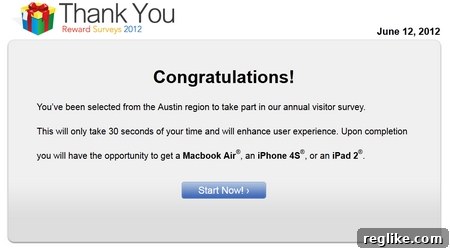
These “free product” surveys are a common tactic in online scams. They rarely deliver on their promises, instead serving as a sophisticated mechanism for collecting personal user data, signing individuals up for unwanted subscriptions, or simply exposing them to a barrage of advertisements. The illusion of a reward serves as a powerful lure, trapping users in a web of commercial exploitation.
Adding another layer of complexity and controversy, evidence suggests that the owner of oogle.com has also been splitting the considerable traffic to redirect users to adult content. According to a YouTube video, the domain has consistently forwarded to survey sites since at least the previous year. However, historical records paint a broader picture. Screenshots.com, a service that archives website appearances, notably shows a NSFW (Not Safe For Work) landing page for Ashley Madison, a prominent adult dating service, on March 25, 2012. This dual-pronged monetization strategy — leveraging both deceptive surveys and adult content — further underscores the malicious intent behind the domain’s operation and its potential to inflict significant reputational damage on the targeted brand.
The Uniform Domain-Name Dispute-Resolution Policy (UDRP)
The complaint filed against oogle.com falls under the Uniform Domain-Name Dispute-Resolution Policy (UDRP), an international framework established by the Internet Corporation for Assigned Names and Numbers (ICANN). The UDRP provides a streamlined and cost-effective administrative procedure for resolving disputes concerning the abusive registration of domain names, particularly those involving trademark infringement. It offers brand owners a powerful tool to reclaim domain names that have been registered in bad faith and are confusingly similar to their trademarks.
To succeed in a UDRP complaint, the complainant must demonstrate three key elements:
- The domain name is identical or confusingly similar to a trademark or service mark in which the complainant has rights.
- The registrant has no rights or legitimate interests in respect of the domain name.
- The domain name has been registered and is being used in bad faith.
Given the global recognition of the Google brand and the clear intent to profit from its goodwill by exploiting a common typo, a strong case can be made for all three elements against oogle.com. The NAF, alongside other providers like the World Intellectual Property Organization (WIPO), plays a crucial role in adjudicating these disputes, offering an alternative to lengthy and expensive traditional court litigation.
Tracing the Registrant: Blue Arctic LLC
The domain oogle.com is currently registered to Blue Arctic LLC, a web hosting company based in Florida. While domain registrants often operate under the veil of privacy, UDRP proceedings frequently expose the entities behind such controversial domain registrations. The involvement of a web hosting company as the registrant raises questions about accountability and the responsibilities of service providers in combating domain name abuse. Domain registrars and hosting companies have a role to play in enforcing terms of service and responding to legitimate complaints about malicious activities hosted on their infrastructure.
Protecting Your Brand and Yourself in the Digital Age
The case of oogle.com serves as a potent reminder for both brand owners and individual internet users about the persistent threats in the digital landscape.
For Brand Owners:
- Proactive Monitoring: Implement robust domain monitoring services to detect potential typo-squatting and trademark infringements early.
- Defensive Registrations: Consider defensively registering common misspellings or variations of your brand name to prevent abuse.
- Swift Action: Be prepared to act quickly through UDRP complaints or other legal avenues when infringement is detected.
- User Education: Educate your users about potential scams and how to identify legitimate communications and websites.
For Internet Users:
- Double-Check URLs: Always verify the URL in your browser’s address bar before entering sensitive information or interacting with a website.
- Bookmark Important Sites: Instead of typing frequently visited URLs, use bookmarks to ensure you land on the correct site.
- Use Reliable Search Engines: Rely on reputable search engines like Google to find desired websites, as they typically filter out malicious sites.
- Beware of Too-Good-To-Be-True Offers: Be skeptical of unsolicited offers for free products or services, especially those requiring personal data or survey completion.
- Employ Security Software: Keep your operating system, browser, and security software (antivirus, anti-malware) up to date.
Conclusion: A Continuous Battle for Digital Integrity
The dispute over oogle.com is more than just a legal battle; it’s a microcosm of the ongoing struggle to maintain integrity and trust in the digital ecosystem. As long as brands hold value and human beings make typing errors, typo-squatting will remain a prevalent threat. The robust framework of the UDRP provides a vital mechanism for brand owners like Google to assert their rights and protect their intellectual property. Simultaneously, it highlights the critical need for internet users to remain vigilant and informed about the deceptive tactics employed by cybersquatters. Ultimately, the success of brand protection efforts and the safety of online experiences depend on a collective commitment to awareness, diligence, and proactive measures against digital fraud. This case will undoubtedly set another precedent in the ever-evolving landscape of domain name disputes, reinforcing the importance of a secure and trustworthy internet.